65.º aniversario de la Convención de 1961: Aspectos destacados del evento mundial y acciones clave para acabar con la apatridia.
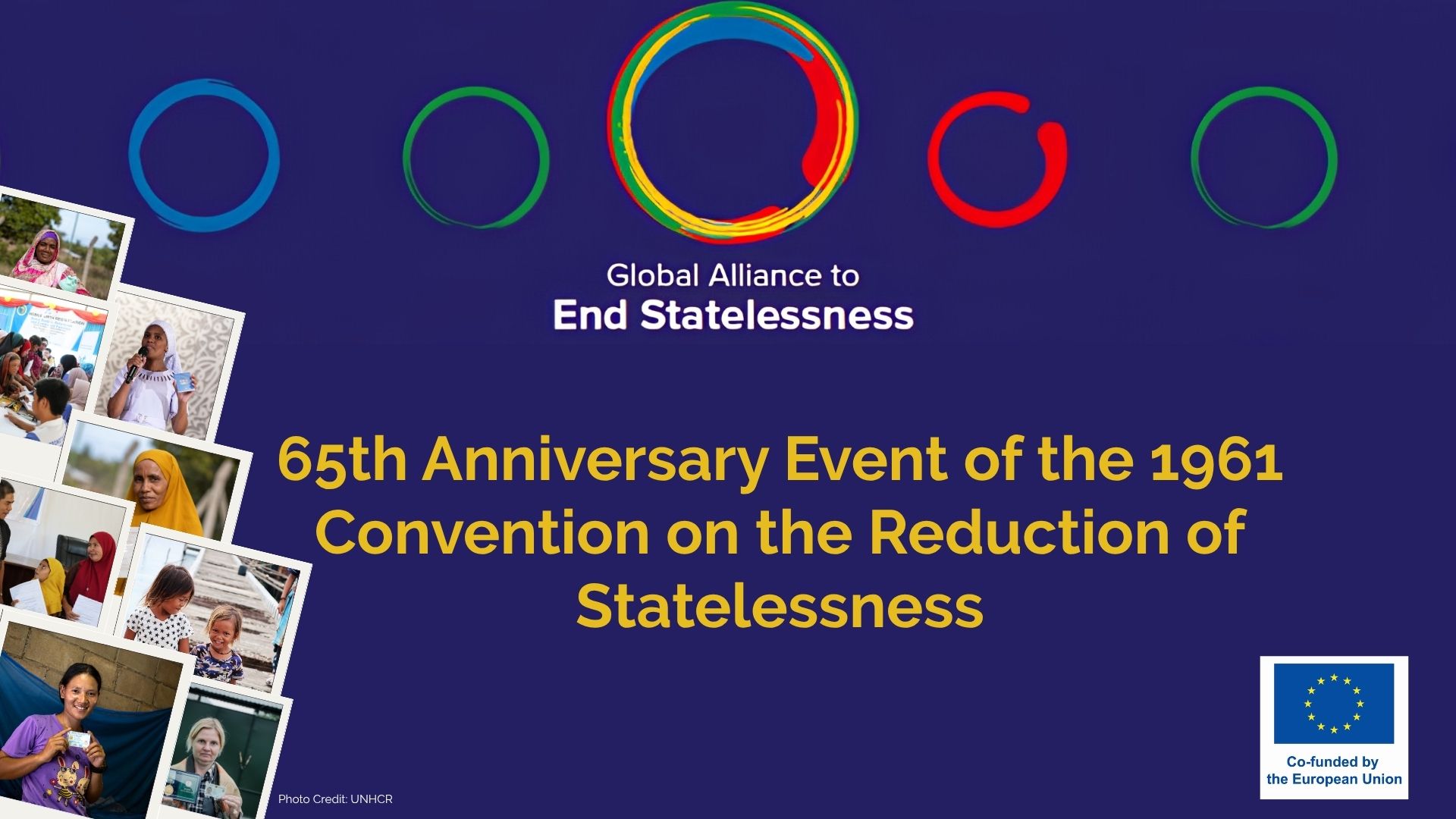
En 2 September 2026, el Alianza mundial para acabar con la apatridia convocó un evento en línea de alto nivel para conmemorar el 65.º aniversario de la Convención de 1961 para la Reducción de los Apátridas Bajo el lema "Prevención y resolución de la apatridia en la práctica".
El evento reunió a gobiernos, agencias de la ONU, organizaciones regionales, la sociedad civil y grupos liderados por personas apátridas para intercambiar experiencias y destacar soluciones prácticas para garantizar que ningún niño nazca sin nacionalidad. Moderado por Aleksandra Semeriak GavrilenokEn la intervención de la vicepresidenta del Patronato de la Red Europea sobre la Apatridia, el debate hizo hincapié en el impacto humano de la apatridia, la importancia de traducir las normas internacionales en acciones nacionales y el papel fundamental de la experiencia vivida para impulsar la reforma.
Liderazgo estatal y cooperación internacional
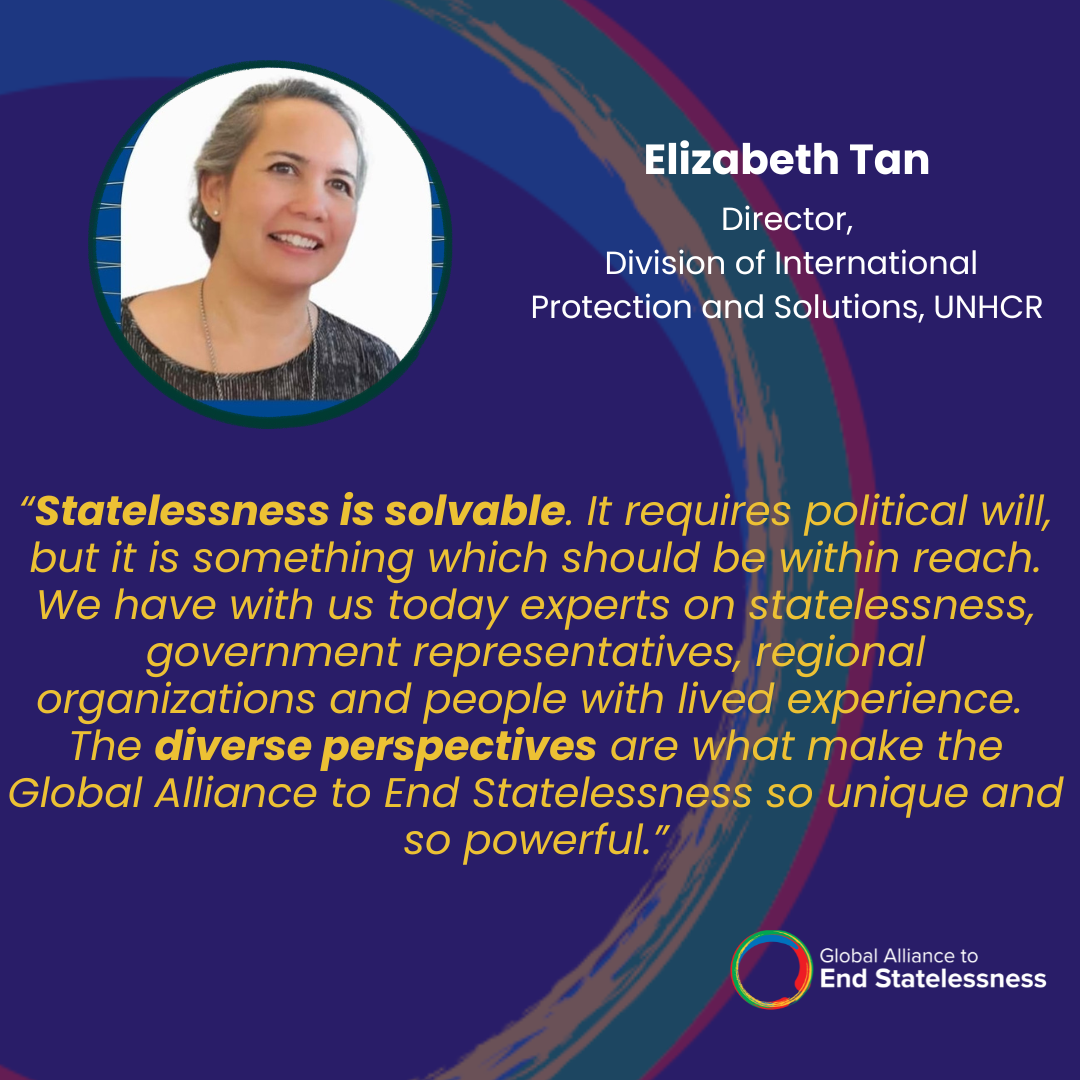
Abriendo el debate, Elizabeth Tan, La directora de la División de Protección y Soluciones Internacionales del ACNUR destacó que la apatridia es un problema que tiene solución y que requiere principalmente voluntad política. «La apatridia tiene solución. Requiere voluntad política, pero es algo que debería estar a nuestro alcance», afirmó Tan. Hizo hincapié en que las diversas perspectivas representadas en el evento, que incluyen funcionarios gubernamentales, organismos regionales, expertos legales y personas con experiencia directa, son las que hacen que la Alianza Global para Acabar con la Apatridia sea única y poderosa.
Añadiendo perspectivas operativas nacionales, Frédéric Odzala LendoumaEl director de Asuntos Jurídicos Internacionales y Cooperación del Ministerio de Justicia de la República del Congo y secretario ejecutivo del Comité Nacional para la Erradicación de la Apatridia, destacó que la adhesión a la Convención de 1961 debe ir acompañada de un enfoque interministerial. Señaló que, mediante el diálogo y la sensibilización en el parlamento y los ministerios gubernamentales, se puede lograr un apoyo intergubernamental eficaz para la adhesión y la implementación.
Buenas prácticas para prevenir la apatridia
Los oradores hicieron hincapié en que los Estados desempeñan un papel fundamental en la prevención de la apatridia mediante marcos jurídicos sólidos, garantías robustas contra la discriminación y procedimientos administrativos eficaces.
Dra. Bronwen ManbyExperta en apatridia, leyes de nacionalidad e identidad jurídica, se centró en las protecciones cruciales contra la discriminación contempladas en los artículos 9 y 8 de la Convención. Subrayó que el artículo 9 prohíbe estrictamente a los Estados privar a cualquier persona o grupo de su nacionalidad por motivos raciales, étnicos, religiosos o políticos.
“El artículo 9 establece que un Estado contratante no podrá privar a ninguna persona o grupo de personas de su nacionalidad por motivos raciales, étnicos, religiosos o políticos… Observamos tendencias hacia la idea de que los vínculos extremadamente fuertes de una persona con un territorio determinado le otorgan el derecho a una nacionalidad, y que la denegación de esa nacionalidad constituye una decisión arbitraria.”
El Dr. Manby destacó cómo la jurisprudencia en materia de derechos humanos reconoce cada vez más que no solo debe abordarse el impacto discriminatorio en el texto legal directo, sino también que los fuertes vínculos y las contribuciones a un país deberían otorgar a las personas el derecho a adquirir la nacionalidad.
Anne Laakko, Oficial Superior de Asuntos de Apatridia en la División de Protección y Soluciones Internacionales del ACNUR, subrayó el impacto generacional de las salvaguardias de los tratados:
El artículo 1 es una de las salvaguardias más importantes de la Convención de 1961, ya que ayuda a prevenir la apatridia infantil. De hecho, si se aplicara a nivel mundial, evitaría que la apatridia se transmitiera de una generación a otra.
Representando la implementación nacional, Sra. Anna-Mari Wong HämäläinenLa Ministra y Representante Permanente Adjunta de la Misión Permanente de Finlandia ante la Oficina de las Naciones Unidas en Ginebra destacó el enfoque de Finlandia respecto a la salvaguardia del Artículo 1 de la Convención de 1961. Explicó que la aplicación de dicha salvaguardia no depende de la situación de residencia de los padres del niño, reflejando el principio de que los derechos del niño no pueden depender de las circunstancias de sus padres. Asimismo, señaló que, por lo general, la ciudadanía finlandesa no puede ser renunciada, perdida ni revocada si ello resultara en apatridia.
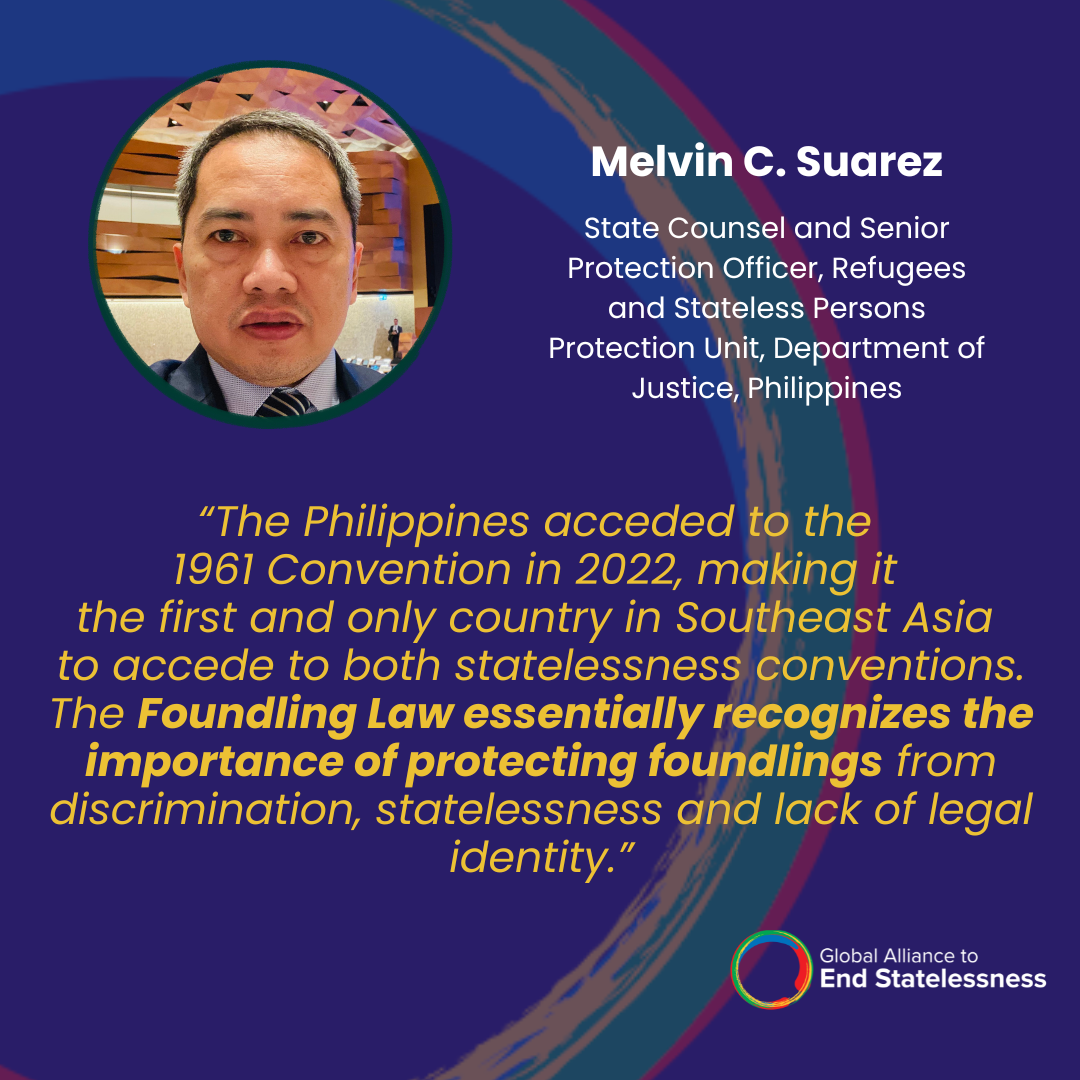
Ofreciendo una perspectiva desde el sudeste asiático, Melvin C. Suárez, State Counsel and Senior Protection Officer at the Department of Justice in the Philippines, shared his country’s milestones. The Philippines acceded to the 1961 Convention in 2022, becoming the first and only country in Southeast Asia to accede to both statelessness conventions. Suarez highlighted the domestic Foundling Law, which recognizes the critical importance of protecting foundlings from discrimination, statelessness, and a lack of legal identity.
Prácticas prometedoras y medidas de seguridad prácticas
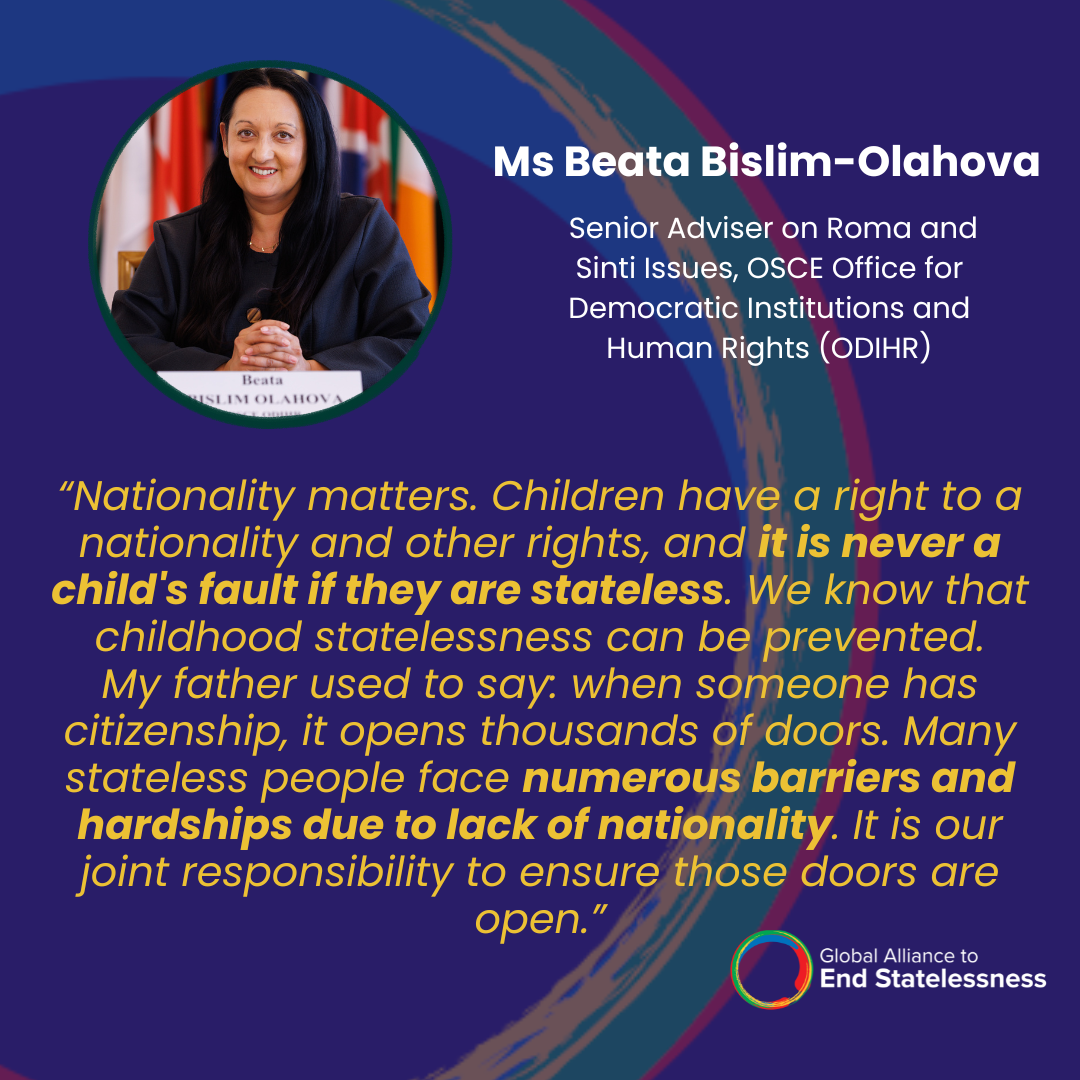
Añadiendo una perspectiva regional de derechos humanos, La Sra. Beata Bislim-Olahova, Asesor principal en asuntos romaníes y sinti en la Oficina de Instituciones Democráticas y Derechos Humanos de la OSCE (OIDDH), Enfatizó que la apatridia infantil es prevenible y destacó la importancia de implementar salvaguardias prácticas para garantizar que cada niño adquiera una nacionalidad. Haciendo referencia a la publicación conjunta recientemente lanzada por la OSCE-ODIHR, el Alto Comisionado de la OSCE para las Minorías Nacionales (HCNM) y el ACNUR, Abriendo puertas para los niños: Prevención de la apatridia infantil – Buenas prácticas en la zona de la OSCE, señaló que los Estados de la región de la OSCE han demostrado la eficacia de las medidas legales y administrativas para prevenir la apatridia infantil y defender el derecho de cada niño a una nacionalidad.
La nacionalidad importa. Los niños tienen derecho a una nacionalidad y a otros derechos, y nunca es culpa de un niño ser apátrida. Sabemos que la apatridia infantil se puede prevenir. Mi padre solía decir: cuando alguien tiene ciudadanía, se le abren miles de puertas. Muchas personas apátridas se enfrentan a numerosas barreras y dificultades por falta de nacionalidad. Es nuestra responsabilidad conjunta garantizar que esas puertas permanezcan abiertas.
Garantizar la rendición de cuentas y la inclusión.
El evento dio especial protagonismo a las voces de las comunidades directamente afectadas por la apatridia, examinando cómo funcionan en la práctica los marcos jurídicos.
Sihle NxumaloNxumalo, una persona que antes era apátrida y activista de Sudáfrica, señaló la brecha crucial entre las protecciones legales en teoría y la realidad administrativa. «Las salvaguardias existen en el papel, pero la resistencia de los funcionarios a implementarlas es el mayor obstáculo», compartió Nxumalo. Describió cómo le tomó 19 años llamar a puertas y buscar ayuda de organizaciones antes de que los funcionarios implementaran lo que la ley estipulaba, lo que resultó en casi dos décadas de oportunidades perdidas.
Haciendo hincapié en la necesidad de liderazgo por parte de las comunidades afectadas, Christy ChitenguColíder y Líder de Alianzas del Movimiento Global contra la Apatridia, abogó por el empoderamiento directo. Afirmó que las personas apátridas no deberían tener que esperar a que otros hablen en su nombre, sino que deben contar con los recursos, las plataformas, las oportunidades y el poder para liderar las soluciones.

Para finalizar el evento, Aleksandra Semeriak Gavrilenok Recordó a los participantes la tarea colectiva que tienen por delante: consolidar los progresos alcanzados, impulsar la adhesión universal a las salvaguardias de la Convención de 1961 y fortalecer su aplicación, y trabajar colectivamente por un mundo en el que cada individuo disfrute del derecho a una nacionalidad.
Para obtener más información sobre la Convención de 1961 y los esfuerzos que se están realizando para prevenir la apatridia, vea la grabación completa del seminario web. aquí.
22 October 2026
Standing To End Statelessness: A Conversation with ICDH in Haiti En the Frontlines of Human Rights

As the Alianza mundial para acabar con la apatridia marks its second anniversary and reaches a powerful network of 200 members strong, we are reminded that tangible progress on addressing and preventing statelessness is possible through our collective action, in particular supporting the most vulnerable and at risk of being left behind. To explore our shared vision and what it truly means to fight for the “right to have rights,” we sat down in a short conversation with Mr. Urbens Wilbert DIEUVEUIL, Director of Initiative Citoyenne pour les Droits de l’Homme, ICDH that proudly stepped forward as the 200th member of the Global Alliance.
Leer más21 October 2026
African Human Rights Day: Call for Action En the Right to a Nationality and the Eradication of Statelessness in Africa

En African Human Rights Day, as we mark 40 years since the entry into force of the African Charter En Human and Peoples’ Rights, we are calling for renewed action to protect the right to a nationality and end statelessness across Africa.
A joint statement led by the Pan African Nationality Network (PANN), the South African Nationality Network (SANN), the Alianza mundial para acabar con la apatridia, Lawyers for Human Rights and other partner organizations highlights that nationality is fundamental to human dignity, equality, belonging and full participation in society.
19 de agosto de 2026
Tailandia refuerza su compromiso para acabar con la apatridia mediante un nuevo plan de acción nacional.

Tailandia ha dado un paso importante para abordar el problema de la apatridia al aprobar su Plan de Acción para la Resolución de la Apatridia (2025-2027). Aprobada en marzo de 2026, la hoja de ruta cumple con los compromisos adquiridos en el Foro Mundial sobre los Refugiados de 2023 y se basa en la histórica Resolución del Gabinete del 29 de octubre de 2024.
Tailandia, que acoge a más de 600.000 personas apátridas registradas, representa una de las mayores poblaciones apátridas del mundo. El plan bienal contempla la colaboración entre las entidades gubernamentales pertinentes para resolver los casos existentes, prevenir nuevos, salvaguardar los derechos fundamentales y modernizar los sistemas de registro civil.