Strengthening statelessness data: International Recommendations on Statelessness Statistics (IROSS)
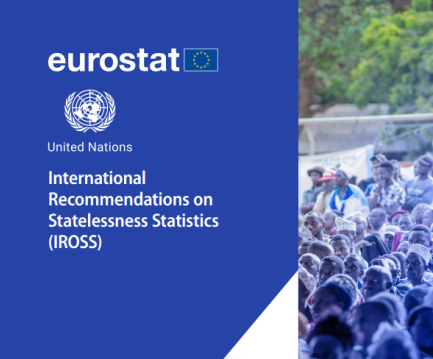
Reliable data on statelessness remains a major global gap. While at least 4.4 million people were reported as stateless or with undetermined nationality at the end of 2024 worldwide – based on data from 101 States submitted to UNHCR, the true scale is significantly higher due to gaps in data collection, inconsistent methodologies, and limited state reporting. In many contexts, stateless populations remain invisible in official statistics – whether due to technical limitations, lack of prioritization, or political sensitivities.
Against this backdrop, the International Recommendations on Statelessness Statistics (IROSS), adopted by the United Nations Statistical Commission (UNSC) in 2023, represent an important step forward. This guidance is highly relevant as states and partners seek to strengthen evidence-based responses to statelessness.
Developed by the Expert Group on Refugee, Internally Displaced Persons and Statelessness Statistics (ERGISS), bringing together around 40 countries and 30 international and regional organizations, the International Recommendations on Statelessness Statistics (IROSS), published by EUROSTAT in March 2026, aim to improve the production, overall quality, coordination, and dissemination of statistics on stateless populations.
The guidance provides a comprehensive statistical framework and recommendations to support national statistical systems and other relevant stakeholders in generating more reliable and comparable data. It encourages countries to systematically include statelessness in censuses, household surveys, and administrative data systems, and to better capture not only those formally recognized as stateless, but also people without a recognized nationality status.
At national level, stronger data can support more effective policies, helping governments identify populations affected by statelessness, understand root causes, and design targeted solutions. At global level, improved data contributes to more coherent international responses and strengthens accountability and cooperation.
The Global Alliance to End Statelessness welcomes IROSS as a practical and timely tool. Its implementation can help address persistent data gaps, improve visibility of affected populations, and support more effective advocacy and policy development.
States are encouraged to make full use of this guidance, including by integrating its recommendations into national statistical systems and engaging with international and regional partners to strengthen capacity and peer learning.
Improving data is not an end in itself – but it is a critical step towards ensuring that no one remains invisible, and that permanent solutions to statelessness can be achieved.
26 October 2026
Two Years On: Looking Ahead with Determination, Unity, and Purpose
As we mark the second anniversary of the Global Alliance to End Statelessness, we celebrate this milestone by reflecting on our progress and looking ahead with renewed determination. When the Alliance was launched, United Nations Secretary-General António Guterres captured the profound human stakes of our mission with a powerful core vision: “No matter who or where they are, every person belongs.” For millions of people, statelessness remains a barrier to rights, services and dignity. Ending it requires collective action across governments, international organizations, civil society, affected communities and other partners.
Read more22 October 2026
Standing To End Statelessness: A Conversation with ICDH in Haiti on the Frontlines of Human Rights
As the Global Alliance to End Statelessness marks its second anniversary and reaches a powerful network of 200 members strong, we are reminded that tangible progress on addressing and preventing statelessness is possible through our collective action, in particular supporting the most vulnerable and at risk of being left behind. To explore our shared vision and what it truly means to fight for the “right to have rights,” we sat down in a short conversation with Mr. Urbens Wilbert DIEUVEUIL, Director of Initiative Citoyenne pour les Droits de l’Homme, ICDH that proudly stepped forward as the 200th member of the Global Alliance.
Read more21 October 2026
African Human Rights Day: Call for Action on the Right to a Nationality and the Eradication of Statelessness in Africa
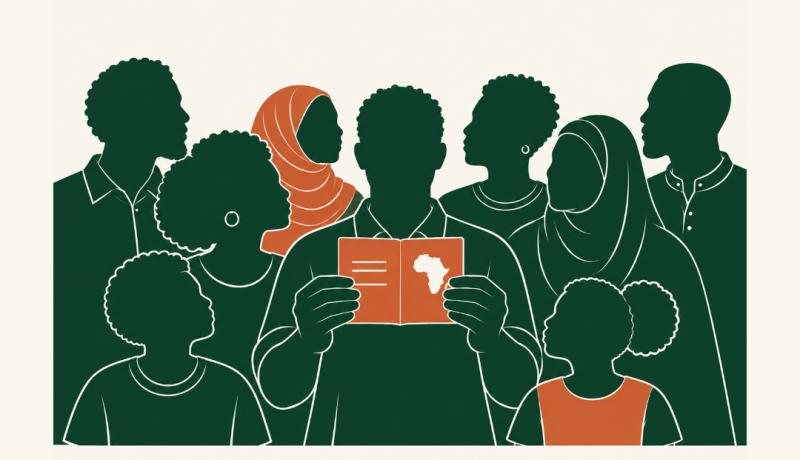
On African Human Rights Day, as we mark 40 years since the entry into force of the African Charter on Human and Peoples’ Rights, we are calling for renewed action to protect the right to a nationality and end statelessness across Africa.
A joint statement led by the Pan African Nationality Network (PANN), the South African Nationality Network (SANN), the Global Alliance to End Statelessness, Lawyers for Human Rights and other partner organizations highlights that nationality is fundamental to human dignity, equality, belonging and full participation in society.