Two Years On: Looking Ahead with Determination, Unity, and Purpose
As we mark the second anniversary of the Global Alliance to End Statelessness, we celebrate this milestone by reflecting on our progress and looking ahead with renewed determination.
When the Alliance was launched, United Nations Secretary-General António Guterres captured the profound human stakes of our mission with a powerful core vision: “No matter who or where they are, every person belongs.”
For millions of people, statelessness remains a barrier to rights, services and dignity. Ending it requires collective action across governments, international organizations, civil society, affected communities and other partners.
A Coalition That Has Doubled in Strength
We began our journey with a dedicated group of around 15 members. Today, just two years later, the Alliance has grown to a coalition of 200 members spanning states, international organizations, civil society, stateless-led organizations, academia, and the private sector.
This remarkable growth reflects a shared global commitment to ensuring everyone’s right to a nationality, free from discrimination. To mark this special milestone, we spoke with our 200th member, Mr Urbens Wilbert DIEUVEUIL, Director of Initiative Citoyenne pour les Droits de l’Homme (ICDH) in Haiti.
As he noted: “Having a nationality and an identity document are the foundational tools that allows a person to be recognized internationally and keeps them from falling into the devastating category of statelessness.”
ICDH’s work on birth registration and legal protection demonstrates how local action contributes to global progress.
Active Streams of Collaboration
The Alliance’s impact is driven through several core workstreams for collaboration and action.
Solution Seekers Programme
The Programme supports States and regional intergovernmental organizations to develop and implement concrete actions to prevent and reduce statelessness.
The Programme now includes six Solution Seekers: the Philippines, Costa Rica, Côte d’Ivoire, the Council of Europe, the Latin American and Caribbean Council for Civil Registration, Identity and Vital Statistics (CLARCIEV), and the Organization of American States (OAS). Across the six Solution Seekers, tangible progress has been achieved.
Costa Rica and the Philippines have developed or extended National Action Plans to End Statelessness. The Council of Europe published a Compendium of Promising Practices on Access to Nationality for Stateless Children and advanced work to revise Recommendation CM/Rec(2009).
In Latin America and the Caribbean, CLARCIEV campaign, “Latin America and the Caribbean: a Region without Invisibles, Identity for All”, facilitated 270,147 birth registrations and 51,533 legal identifications, benefiting a total of 321,680 people in 2026.
Thematic Working Groups
The Alliance’s three Thematic Working Groups focus on:
- Ending Childhood Statelessness
- Addressing Discrimination in Nationality Laws and Policies
- Protecting the Rights of Stateless Persons
Co-led by UNICEF and CHIP; GCENR and UN Women; and the Peter McMullin Centre on Statelessness and UNHCR, respectively, the groups bring together around 120 members.
The groups facilitate peer learning, practical guidance, advocacy and collaboration on some of the most persistent statelessness challenges.
Their work also connects with the Alliance’s Knowledge Webinar Series.
Regional Network Labs
Regional Network Labs (RNLs) help turn knowledge and commitments into context-sensitive action by bringing together regional and global actors. They recognize that effective responses to statelessness depend on sustained cooperation among governments, regional organizations, civil society, stateless-led organizations, academics and other partners.
The Alliance’s first Regional Network Lab with civil society regional networks and organizations took place in Geneva on 15–16 October 2024, following the Alliance’s launch. Organized in collaboration with the European Network on Statelessness (ENS), it provided a platform for trans-regional exchange and knowledge-sharing, laying the groundwork for stronger connections among networks and other actors working to end statelessness.
Subsequently, a Regional Network Lab with Regional Intergovernmental Organizations, held in May 2025, brought together regional bodies from Africa, Europe, the Americas and Southeast Asia to explore how regional organizations can support the prevention and reduction of statelessness through their political, normative and convening roles.
As we write this, the Alliance is holding a Regional Expert Roundtable on the Prevention of Childhood Statelessness in Europe and Central Asia in Warsaw, over 20-21 October 2026, bringing together government representatives, regional institutions, civil society organizations, experts and persons with lived experience from across the region.
Together, these initiatives have strengthened regional cooperation and generated practical opportunities to advance solutions.
Online Marketplace
The Marketplace is a platform that allows members to showcase concrete initiatives, projects and funding opportunities through concise “snapshots”, making it easier for partners, donors and technical experts to identify opportunities for collaboration and support. In just one year since its launch, over 40 snapshots have been published on the platform, covering a wide range of activities related to law reform, civil registration, legal identity, community engagement and statelessness determination.
Importantly, the Marketplace is already delivering results: ten initiatives have been fully or partially funded through connections facilitated by the platform, demonstrating its value as a tool for translating Alliance commitments into tangible action and impact.
Looking Ahead: A Vision of Lasting Belonging
Two years of progress have shown what is possible when governments, civil society, and affected communities align behind a shared purpose. As we look ahead, the Alliance will continue to expand partnerships, support action and promote solutions that help prevent and reduce statelessness.
While significant challenges remain, the progress achieved over the past two years demonstrates what is possible when all key stakeholders work collectively towards a shared goal: ensuring everyone’s right to belong.
22 October 2026
Standing To End Statelessness: A Conversation with ICDH in Haiti on the Frontlines of Human Rights
As the Global Alliance to End Statelessness marks its second anniversary and reaches a powerful network of 200 members strong, we are reminded that tangible progress on addressing and preventing statelessness is possible through our collective action, in particular supporting the most vulnerable and at risk of being left behind. To explore our shared vision and what it truly means to fight for the “right to have rights,” we sat down in a short conversation with Mr. Urbens Wilbert DIEUVEUIL, Director of Initiative Citoyenne pour les Droits de l’Homme, ICDH that proudly stepped forward as the 200th member of the Global Alliance.
Read more21 October 2026
African Human Rights Day: Call for Action on the Right to a Nationality and the Eradication of Statelessness in Africa
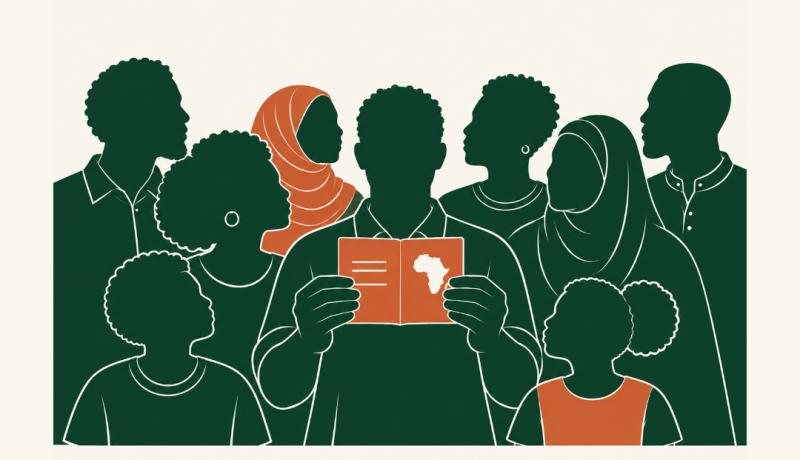
On African Human Rights Day, as we mark 40 years since the entry into force of the African Charter on Human and Peoples’ Rights, we are calling for renewed action to protect the right to a nationality and end statelessness across Africa.
A joint statement led by the Pan African Nationality Network (PANN), the South African Nationality Network (SANN), the Global Alliance to End Statelessness, Lawyers for Human Rights and other partner organizations highlights that nationality is fundamental to human dignity, equality, belonging and full participation in society.
10 September 2026
65th Anniversary of the 1961 Convention Global Event Highlights and Key Action to End Statelessness
On 2 September 2026, the Global Alliance to End Statelessness convened a high-level online event to mark the 65th anniversary of the 1961 Convention on the Reduction of Statelessness under the theme of Preventing and Resolving Statelessness in Practice.The event brought together governments, UN agencies, regional organizations, civil society, and stateless-led groups to exchange experiences and highlight practical solutions to ensure that no child is born without a nationality.
Read more