65th Anniversary of the 1961 Convention Global Event Highlights and Key Action to End Statelessness
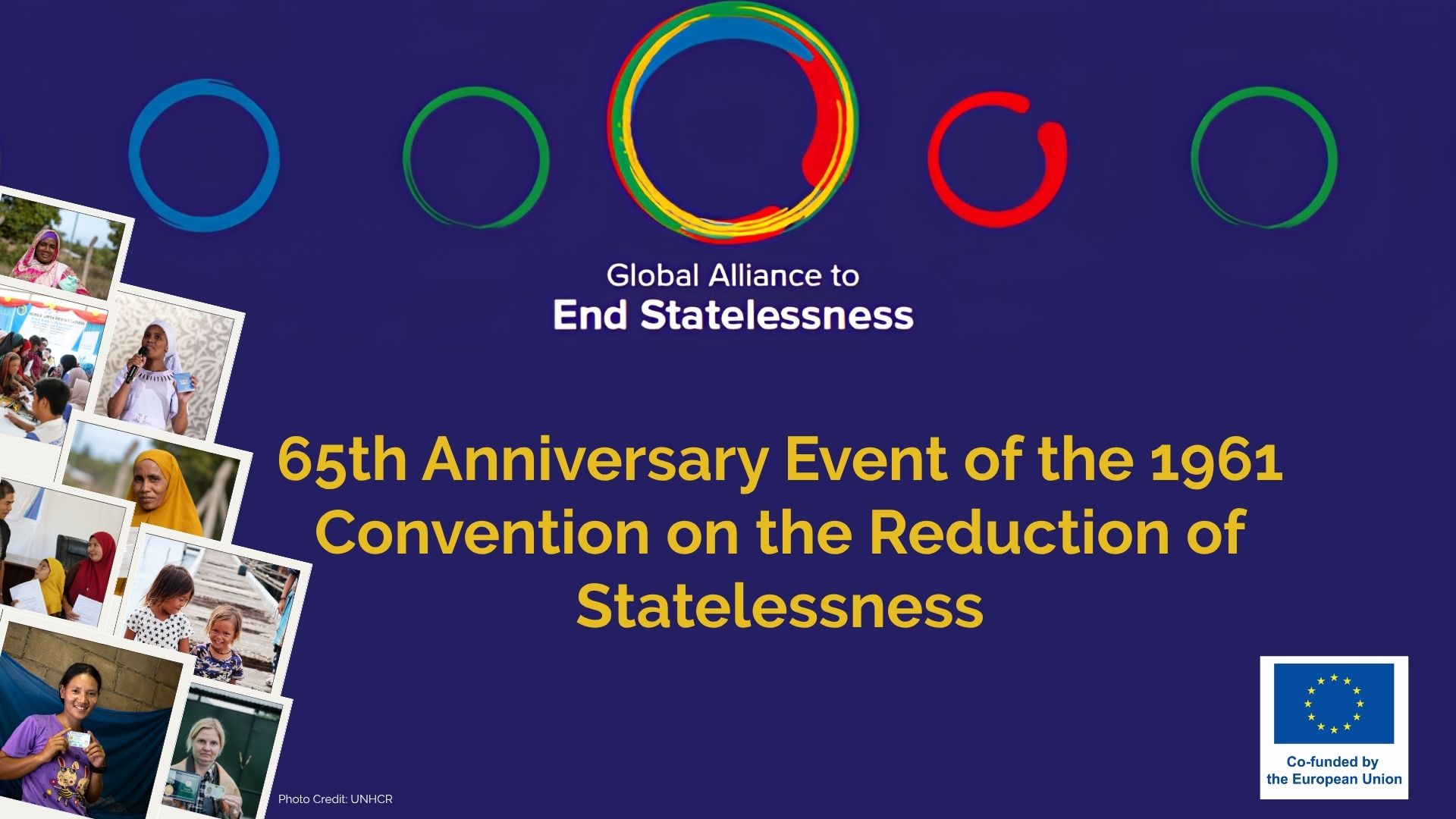
On 2 September 2026, the Global Alliance to End Statelessness convened a high-level online event to mark the 65th anniversary of the 1961 Convention on the Reduction of Statelessness under the theme of Preventing and Resolving Statelessness in Practice.
The event brought together governments, UN agencies, regional organizations, civil society, and stateless-led groups to exchange experiences and highlight practical solutions to ensure that no child is born without a nationality. Moderated by Aleksandra Semeriak Gavrilenok, Vice Chair of the Board of Trustees at the European Network on Statelessness, the discussion emphasized the human impact of statelessness, the importance of translating international standards into national action, and the vital role of lived experience in driving reform.
State Leadership and International Cooperation
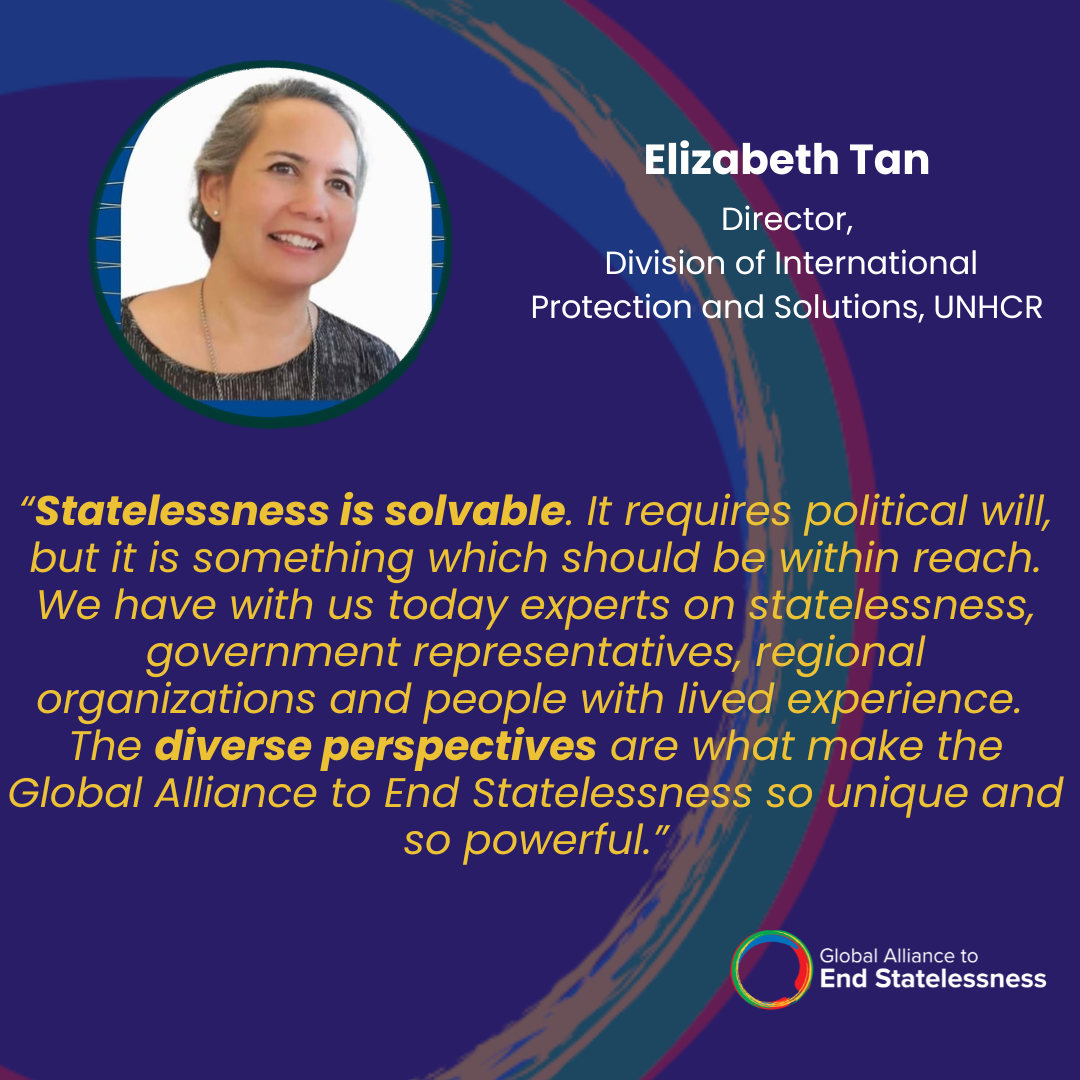
Opening the discussion, Elizabeth Tan, Director of UNHCR’s Division of International Protection and Solutions, highlighted that statelessness is a solvable issue that primarily requires political will. “Statelessness is solvable. It requires political will, but it is something which should be within reach,” Tan stated. She emphasized that the diverse perspectives represented at the event, spanning government officials, regional bodies, legal experts, and individuals with lived experience are what make the Global Alliance to End Statelessness unique and powerful.
Adding national operational perspectives, Frédéric Odzala Lendouma, Director of International Legal Affairs and Cooperation at the Ministry of Justice in the Republic of the Congo and Executive Secretary of the National Committee for the Eradication of Statelessness, stressed that accession to the 1961 Convention must be accompanied by an interministerial approach. He noted that through dialogue and awareness-raising across parliament and government ministries, cross-governmental support for accession and implementation can be successfully built.
Good Practices to Prevent Statelessness
Speakers emphasized that states play a central role in preventing statelessness through strong legal frameworks, robust non-discrimination safeguards, and effective administrative procedures.
Dr. Bronwen Manby, expert on statelessness, nationality laws, and legal identity, focused on the critical non-discrimination protections under Article 9 and Article 8 of the Convention. She emphasized that Article 9 strictly prohibits states from depriving any person or group of nationality on racial, ethnic, religious, or political grounds:
“Article 9 states that a contracting state may not deprive any person or group of persons of their nationality on racial, ethnic, religious, or political grounds… We see trends towards the concept that a person’s extremely strong connections to a particular territory give them a right to a nationality, and that denial of that nationality constitutes an arbitrary decision.”
Dr. Manby highlighted how human rights jurisprudence increasingly recognizes that discriminatory impact not just direct legal text must be addressed, and that strong ties and contributions to a country should grant individuals the right to acquire nationality.
Anne Laakko, Senior Statelessness Officer in the Division of International Protection and Solutions at UNHCR, underscored the generational impact of treaty safeguards:
“Article 1 is one of the 1961 Convention’s most important safeguards because it helps prevent childhood statelessness. In fact, it would stop statelessness from being passed from one generation to the next if implemented worldwide.”
Representing national implementation, Ms. Anna-Mari Wong Hämäläinen, Minister and Deputy Permanent Representative of the Permanent Mission of Finland to the United Nations Office in Geneva, highlighted Finland’s approach to the Article 1 safeguard of the 1961 Convention. She explained that the application of the safeguard is not dependent on the residence status of the child’s parents, reflecting the principle that a child’s rights cannot depend on their parents’ circumstances. Furthermore, she noted that Finnish citizenship generally cannot be renounced, lost, or revoked if doing so would result in statelessness.
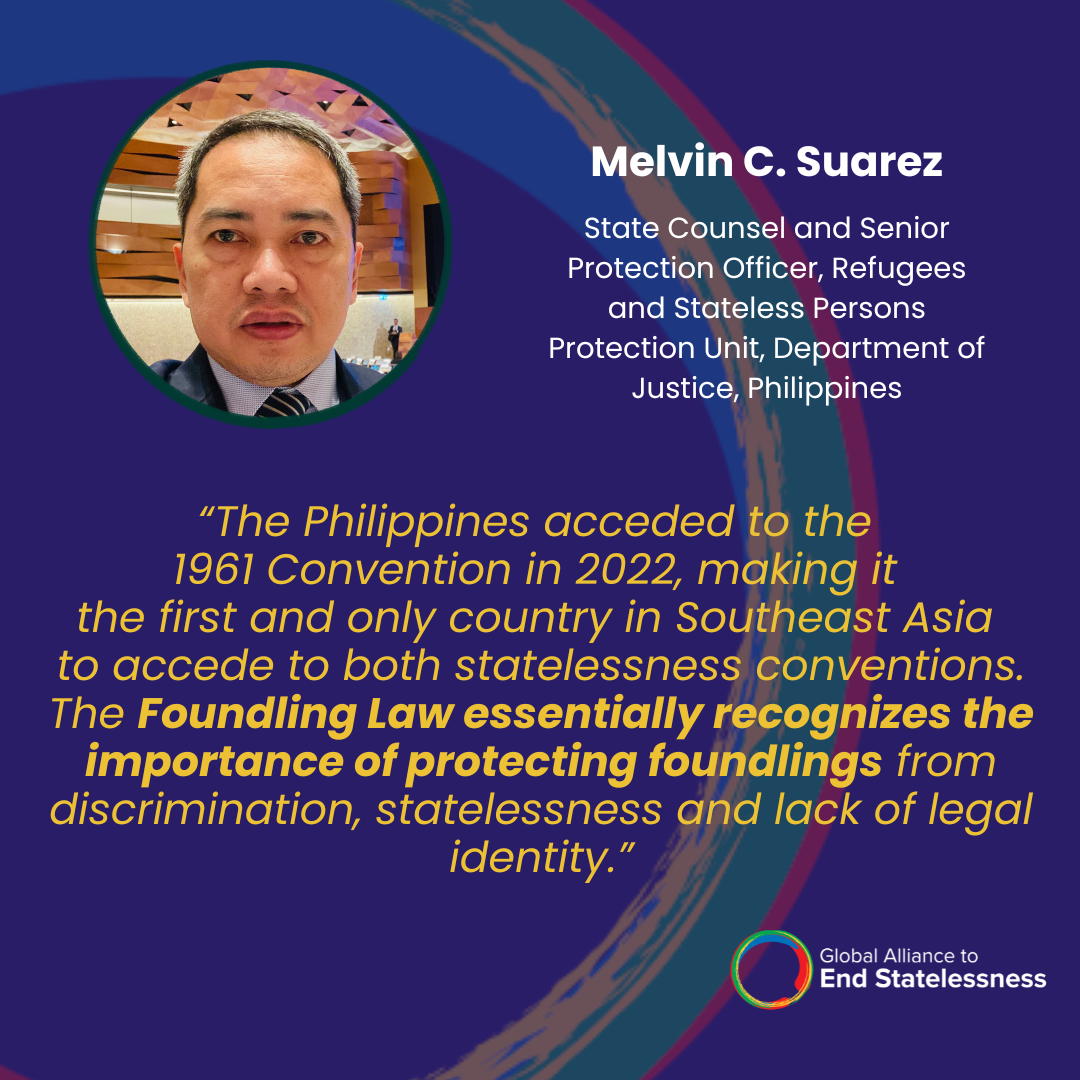
Providing a perspective from Southeast Asia, Melvin C. Suarez, State Counsel and Senior Protection Officer at the Department of Justice in the Philippines, shared his country’s milestones. The Philippines acceded to the 1961 Convention in 2022, becoming the first and only country in Southeast Asia to accede to both statelessness conventions. Suarez highlighted the domestic Foundling Law, which recognizes the critical importance of protecting foundlings from discrimination, statelessness, and a lack of legal identity.
Promising Practices and Practical Safeguards
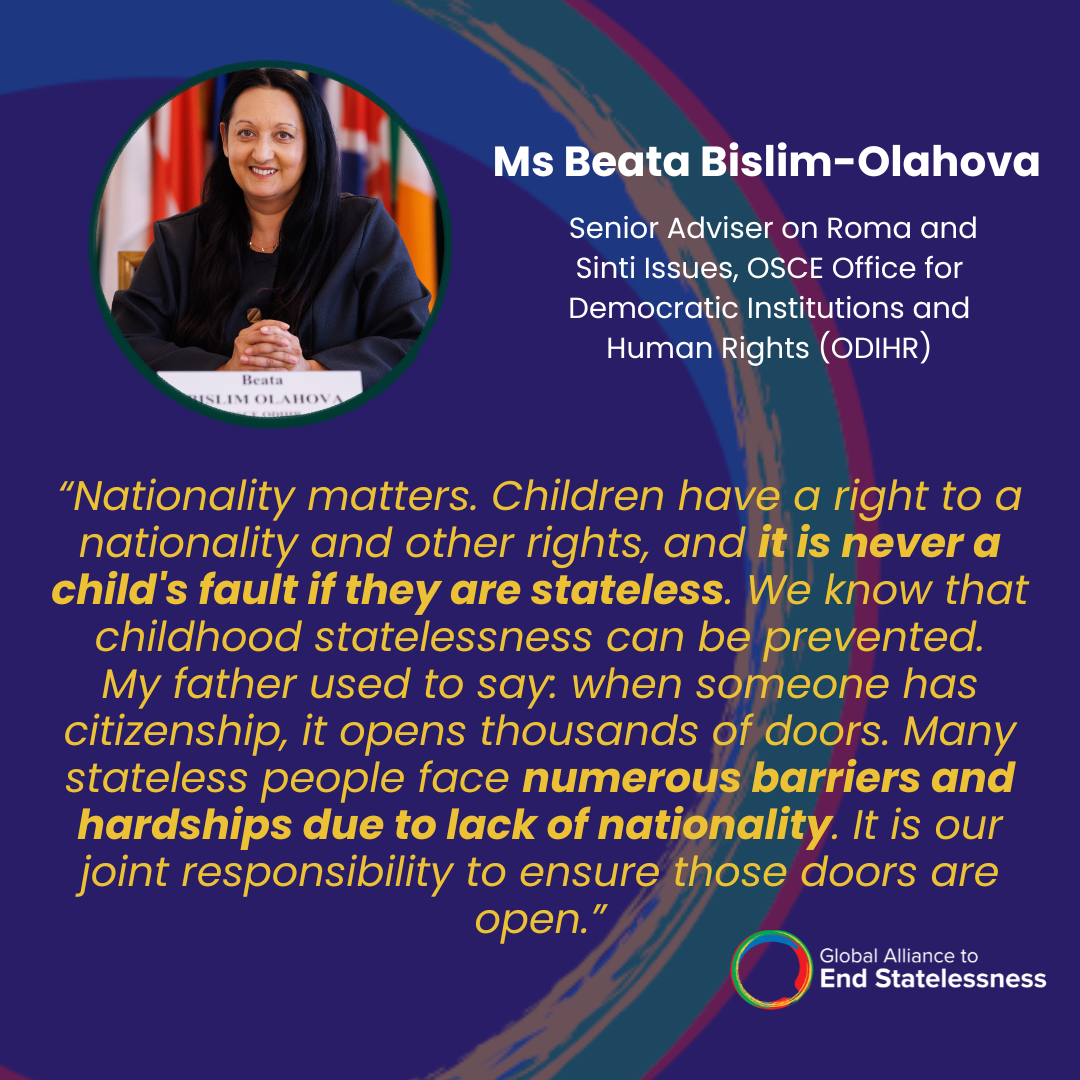
Adding a regional human rights perspective, Ms. Beata Bislim-Olahova, Senior Adviser on Roma and Sinti Issues at the OSCE Office for Democratic Institutions and Human Rights (ODIHR), emphasized that childhood statelessness is preventable and highlighted the importance of implementing practical safeguards to ensure every child acquires a nationality. Referring to the recently launched joint OSCE-ODIHR, OSCE High Commissioner on National Minorities (HCNM) and UNHCR publication, Opening Doors for Children: Prevention of Childhood Statelessness – Good Practices in the OSCE Area, she noted that States across the OSCE region have demonstrated effective legal and administrative measures to prevent childhood statelessness and uphold every child’s right to a nationality
“Nationality matters. Children have a right to a nationality and other rights, and it is never a child’s fault if they are stateless. We know that childhood statelessness can be prevented. My father used to say: when someone has citizenship, it opens thousands of doors. Many stateless people face numerous barriers and hardships due to lack of nationality. It is our joint responsibility to ensure those doors are open.”
Ensuring Accountability and Inclusion
The event gave prominent focus to voices of communities directly affected by statelessness, examining how legal frameworks operate in practice.
Sihle Nxumalo, a formerly stateless person and advocate from South Africa, pointed out the critical gap between legal protections on paper and administrative reality. “The safeguards are there on paper, but the resistance from officials to implement them is the biggest barrier,” Nxumalo shared. He described how it took 19 years of knocking on doors and seeking assistance from organizations before officials implemented what the law prescribed, resulting in nearly two decades of lost opportunities.
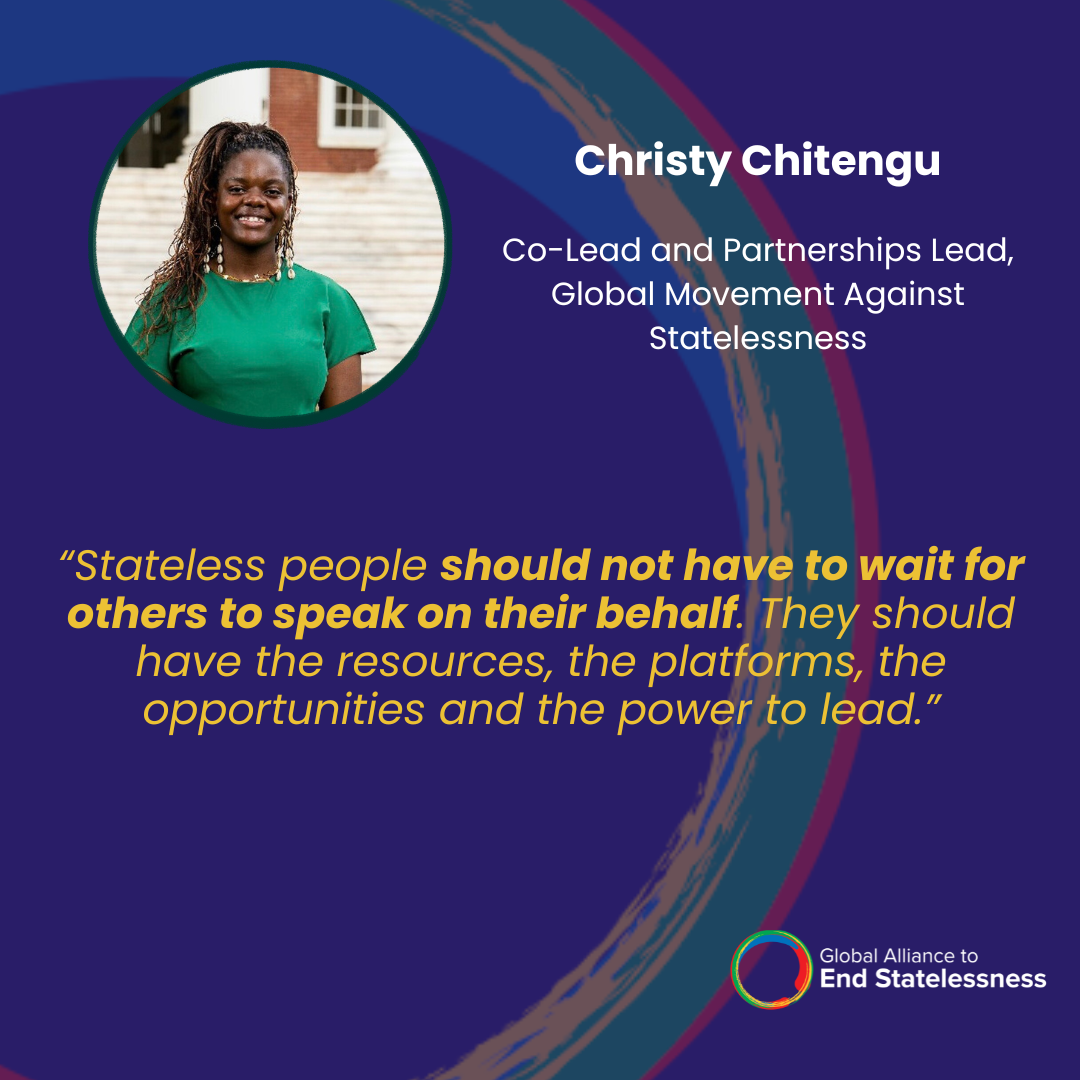
Emphasizing the necessity of leadership by affected communities, Christy Chitengu, Co-Lead and Partnerships Lead at the Global Movement Against Statelessness, called for direct empowerment. She affirmed that stateless people should not have to wait for others to speak on their behalf, but must instead have the resources, platforms, opportunities, and power to lead solutions.
Closing the event, Aleksandra Semeriak Gavrilenok reminded participants of the collective task ahead: to build on achieved progress, advance universal accession to and strengthen the implementation of the 1961 Convention safeguards, and work collectively toward a world where every individual enjoys the right to a nationality.
To learn more about the 1961 Convention and the efforts that are being made to prevent statelessness, watch the full webinar recording here.
26 October 2026
Two Years On: Looking Ahead with Determination, Unity, and Purpose

As we mark the second anniversary of the Global Alliance to End Statelessness, we celebrate this milestone by reflecting on our progress and looking ahead with renewed determination. When the Alliance was launched, United Nations Secretary-General António Guterres captured the profound human stakes of our mission with a powerful core vision: “No matter who or where they are, every person belongs.” For millions of people, statelessness remains a barrier to rights, services and dignity. Ending it requires collective action across governments, international organizations, civil society, affected communities and other partners.
Read more22 October 2026
Standing To End Statelessness: A Conversation with ICDH in Haiti on the Frontlines of Human Rights
As the Global Alliance to End Statelessness marks its second anniversary and reaches a powerful network of 200 members strong, we are reminded that tangible progress on addressing and preventing statelessness is possible through our collective action, in particular supporting the most vulnerable and at risk of being left behind. To explore our shared vision and what it truly means to fight for the “right to have rights,” we sat down in a short conversation with Mr. Urbens Wilbert DIEUVEUIL, Director of Initiative Citoyenne pour les Droits de l’Homme, ICDH that proudly stepped forward as the 200th member of the Global Alliance.
Read more21 October 2026
African Human Rights Day: Call for Action on the Right to a Nationality and the Eradication of Statelessness in Africa

On African Human Rights Day, as we mark 40 years since the entry into force of the African Charter on Human and Peoples’ Rights, we are calling for renewed action to protect the right to a nationality and end statelessness across Africa.
A joint statement led by the Pan African Nationality Network (PANN), the South African Nationality Network (SANN), the Global Alliance to End Statelessness, Lawyers for Human Rights and other partner organizations highlights that nationality is fundamental to human dignity, equality, belonging and full participation in society.