Global Alliance Webinar Highlights Practical Solutions to End Childhood Statelessness
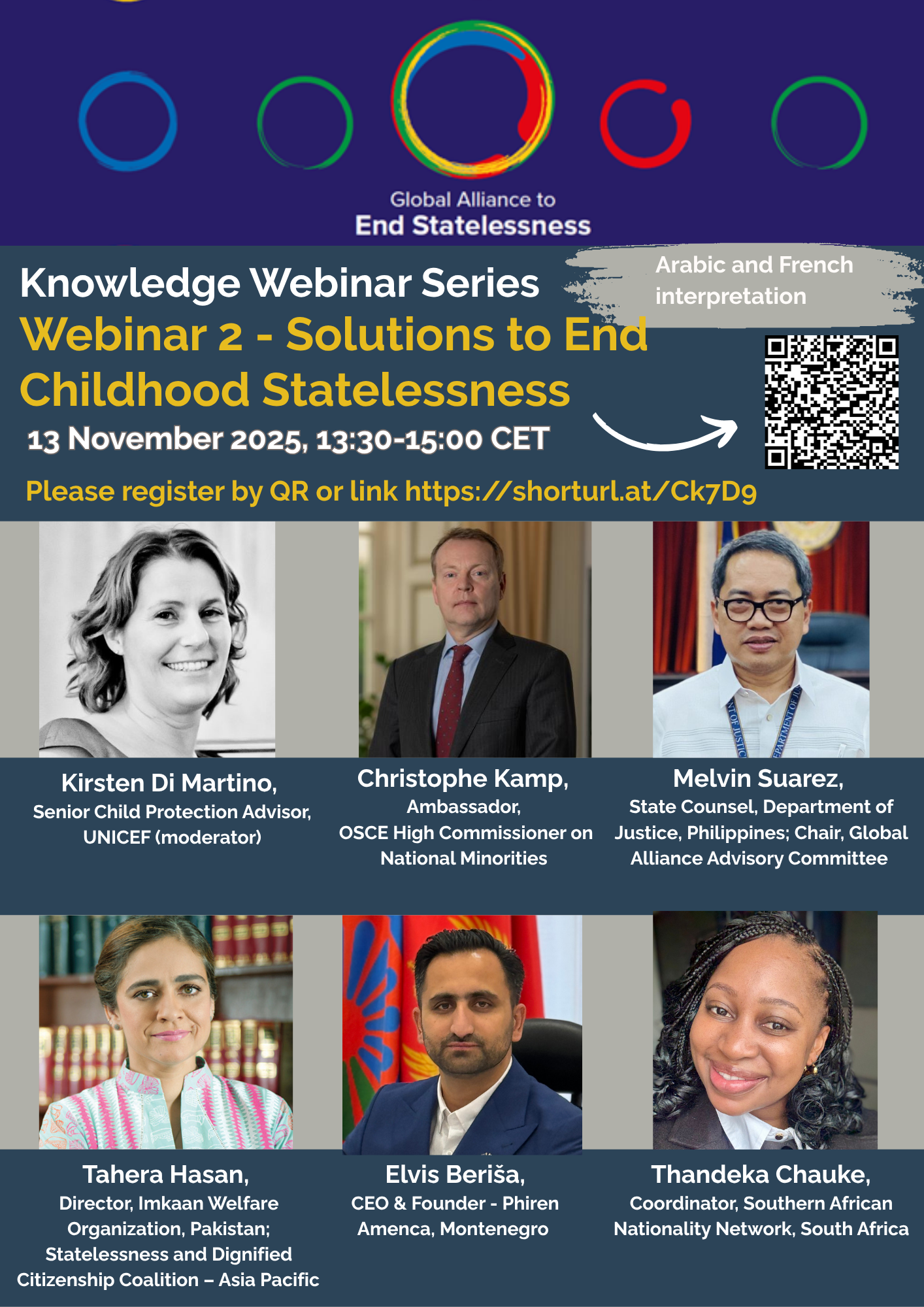
The Global Alliance to End Statelessness held its second Knowledge Webinar on 13 November, focusing on “Solutions to End Childhood Statelessness.” Childhood statelessness remains one of the most pressing issue, widely recognized by Global Alliance members and stakeholders as requiring intensified action, with governments carrying a clear legal and moral obligation under the Convention on the Rights of the Child (CRC) to ensure that every child acquires a nationality at birth or as early as possible.
Organized by the Thematic Working Group (TWG) on Ending Childhood Statelessness, the session was moderated by Kirsten Di Martino, Senior Child Protection Advisor at UNICEF and the TWG Co-Chair. She welcomed five distinguished speakers representing governments, regional organizations, and civil society across Asia-Pacific, Africa, and Europe.
Keynote speaker Ambassador Christophe Kamp, OSCE High Commissioner on National Minorities, emphasized the strong link between statelessness and social cohesion. “Preventing statelessness from the very start of life is one of the most effective ways to promote inclusion, strengthen social cohesion, and ensure equal opportunities for future generations,” he noted. Ambassador Kamp also highlighted close OSCE-UNHCR cooperation, including their 2025 publication on the Prevention of Childhood Statelessness, featuring best practices from countries such as North Macedonia and Kazakhstan.
Government Action: The Philippines’ Foundling Act
From a government perspective, Melvin Suarez, State Counsel at the Department of Justice of the Philippines and Chair of the Global Alliance Advisory Committee, shared the country’s legal developments to protect the rights of foundlings. He outlined key court cases that shaped the Foundling Act of 2022, demonstrating how jurisprudence can drive stronger guarantees against childhood statelessness.Humanizing Childhood Statelessness
Tahera Hasan, Director of Imkaan Welfare Organization, Pakistan, brought an on-the-ground lens. Her organization – Pakistan’s only organization dedicated to statelessness – supports communities in navigating bureaucracy, accessing mental health services to “repair what exclusion has damaged,” and empowering affected communities through vocational training. She highlighted the transformative role of sport through the powerful stories of young girls without documentation gaining confidence and reclaiming their rights through sports, with one even representing Pakistan internationally. She stressed that sport, combined with media, can humanize the issue of childhood statelessness: “Girls who were once invisible to the state are now wearing Pakistan’s colors, proving that identity is more than a document, it is a sense of belonging that cannot be denied.”
From Europe, Elvis Berisha, Founder and CEO of Phiren Amenca, which works with the Roma community in Montenegro, shared his personal and organizational experience. Once a stateless child himself, he underscored the real and painful implications of childhood statelessness: “For the people I meet every day, childhood statelessness is not a technical issue – it is deeply real and painful,” he said. He highlighted persistent implementation gaps in national legislation, emphasizing that legal provisions alone are insufficient without active enforcement and community awareness.
African Union Protocol and Grass-Roots Approaches
In Africa, the African Union adopted the Protocol to the African Charter on Human and Peoples’ Rights Relating to the Specific Aspects of the Right to a Nationality and the Eradication of Statelessness in Africa in February 2024. Thandeka Chauke, on behalf of the Southern African Nationality Network, presented an innovative approach to raising awareness among children and communities about their rights under the new Protocol. The Network developed an accessible booklet that translates complex legal texts into straightforward language and illustrations, available in multiple languages, with plans for an animated version for children. This approach empowers children and communities to understand and claim their rights.
A Shared Commitment to Ending Childhood Statelessness
The webinar showcased practical, diverse strategies – from legislation and regional frameworks to community empowerment and storytelling – all aligned with the Global Alliance’s mission to ensure every child’s right to a nationality. It also underscored how the Global Alliance contributes to exchange of expertise, strengthens collaboration among key stakeholders, and advances tangible solutions.
The Webinar recording can be found here.
26 October 2026
Two Years On: Looking Ahead with Determination, Unity, and Purpose
As we mark the second anniversary of the Global Alliance to End Statelessness, we celebrate this milestone by reflecting on our progress and looking ahead with renewed determination. When the Alliance was launched, United Nations Secretary-General António Guterres captured the profound human stakes of our mission with a powerful core vision: “No matter who or where they are, every person belongs.” For millions of people, statelessness remains a barrier to rights, services and dignity. Ending it requires collective action across governments, international organizations, civil society, affected communities and other partners.
Read more22 October 2026
Standing To End Statelessness: A Conversation with ICDH in Haiti on the Frontlines of Human Rights
As the Global Alliance to End Statelessness marks its second anniversary and reaches a powerful network of 200 members strong, we are reminded that tangible progress on addressing and preventing statelessness is possible through our collective action, in particular supporting the most vulnerable and at risk of being left behind. To explore our shared vision and what it truly means to fight for the “right to have rights,” we sat down in a short conversation with Mr. Urbens Wilbert DIEUVEUIL, Director of Initiative Citoyenne pour les Droits de l’Homme, ICDH that proudly stepped forward as the 200th member of the Global Alliance.
Read more21 October 2026
African Human Rights Day: Call for Action on the Right to a Nationality and the Eradication of Statelessness in Africa
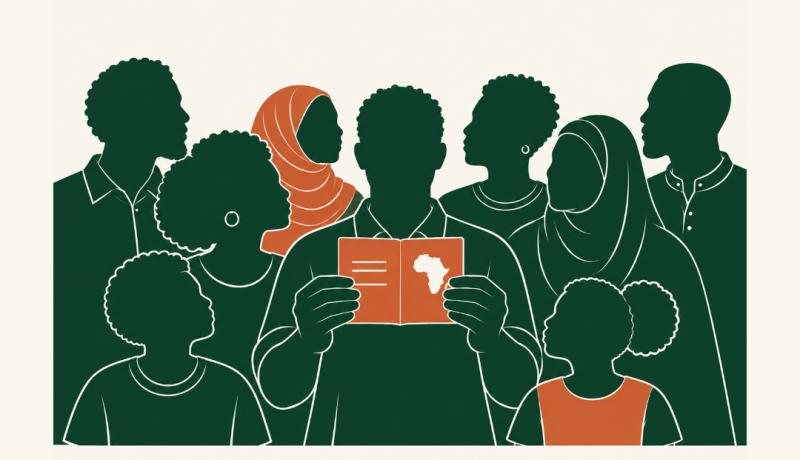
On African Human Rights Day, as we mark 40 years since the entry into force of the African Charter on Human and Peoples’ Rights, we are calling for renewed action to protect the right to a nationality and end statelessness across Africa.
A joint statement led by the Pan African Nationality Network (PANN), the South African Nationality Network (SANN), the Global Alliance to End Statelessness, Lawyers for Human Rights and other partner organizations highlights that nationality is fundamental to human dignity, equality, belonging and full participation in society.