Standing To End Statelessness: A Conversation with Initiative Citoyenne pour les Droits de l’Homme – ICDH on the Frontlines of Human Rights
As the Global Alliance to End Statelessness marks its second anniversary and reaches a powerful network of 200 members strong, we are reminded that tangible progress on addressing and preventing statelessness is possible through our collective action, in particular supporting the most vulnerable and at risk of being left behind.
At its core, statelessness remains one of the most profound violations of human rights. Without a nationality, an individual is stripped of legal recognition and basic protections, sliding into an invisible vulnerability that affects every facet of daily life. Yet, as this anniversary highlights, statelessness is not insurmountable; it can be solved through coordinated, multistakeholder action that starts firmly at the grassroots and national levels.
To explore this shared vision, the alignment of our ongoing efforts and work, and what it truly means to fight for the “right to have rights,” we sat down in a short conversation with Mr. Urbens Wilbert DIEUVEUIL, Director of Initiative Citoyenne pour les Droits de l’Homme, ICDH that proudly stepped forward as the milestone 200th member of the Global Alliance.
Q: From the perspective of universal human rights, why is the right to a nationality considered the indispensable foundation-the “right to have rights”-for all other human rights?
Mr. DIEUVEUIL: The right to a nationality is a fundamental right recognized by international law. This right guarantees every individual a legal and political bond with a State that offers them protection, rights, and duties.
Article 15 of the Universal Declaration of Human Rights guarantees this right, stipulating that everyone has the right to a nationality and that no one shall be arbitrarily deprived of it. Access to legal identity documents, including birth registration, can help individuals establish and prove their nationality, reducing the risk of statelessness and difficulties in accessing rights and services.
Q: If nationality is often described as the “right to have rights,” what are the human consequences when a person lacks a recognized nationality?
Mr. DIEUVEUIL: This expression comes directly from the philosopher Hannah Arendt, who considered the acquisition of nationality to be the indispensable prerequisite for being recognized and protected by a political community.
An individual deprived of nationality is deprived of several other rights: the right to education, access to banking services, etc. UNHCR has been working on this issue for years, through many initiatives and projects notably the I Belong Campaign. For example, many Haitians travel irregularly to the Dominican Republic without identity documents. They are not protected by the Haitian State and receive no support from the Dominican government, thus falling into a situation of risk of statelessness where there is an urgent need to act. ICDH, alongside UNHCR, is working tirelessly on this issue.
Q: ICDH officially joined the Global Alliance as its 200th member. What motivated ICDH to join this global coalition at this specific time?
Mr. DIEUVEUIL: This is excellent news for the entire ICDH team. Joining a global coalition will allow us to better advocate for the cause and be more effective in our birth registration programs in Haiti, which have been carried out with the technical and financial support of UNHCR for 16 years. It is another way of working together to finally put an end to statelessness, not only in Haiti, but across the world.
Q: Since 2010, ICDH has worked closely with UNHCR in Haiti on birth registration projects. How do these grassroots civil status efforts serve as a frontline defense against statelessness?
Mr. DIEUVEUIL: Haiti has unfortunately faced multiple natural disasters (such as the 2010 earthquake which caused over 350,000 deaths) and massive internal displacement caused by armed gang violence. These crises lead to the loss of identity documents, which further increases the risks of statelessness, particularly for those migrating to the Dominican Republic, the Caribbean, and Latin America.
At this level, alongside UNHCR, we act through various birth registration projects in Haiti, both in the capital and in rural areas, to document Haitians and give them access to identity documents, acting as a crucial defense against statelessness.
Q: As we celebrate the two-year anniversary of the Global Alliance, what is ICDH’s vision for how local organizations and international partners can collaborate over the next two years to eliminate the deprivation of nationality?
Mr. DIEUVEUIL: The integration of ICDH into the Global Alliance is a great coincidence because it aligns with the two-year anniversary of the Global Alliance. We will celebrate through awareness-raising and reflection meetings on statelessness in Haiti, the risks of statelessness, and the importance of birth registration.
Currently, according to estimates by Haitian authorities, there are about 3 million Haitians who do not have a birth certificate; representing nearly a third of the Haitian population deprived of this right. Helping these individuals obtain identity documents and passports is part of our intervention package for protection.
Q: What is your direct message to governments and civil society organizations that have not yet joined the Global Alliance?
Mr. DIEUVEUIL: “Join the Global Alliance.” Governments and civil society organizations that haven’t applied yet should join because the cause defended by the Global Alliance is everyone’s cause.
Looking Ahead
As the Global Alliance steps past its second anniversary and we reflect on what comes next, national efforts like ICDH’s show how sustained local action can help tackle statelessness and strengthen access to rights. By helping individuals obtain identity documents and birth certificates, frontline organizations are contributing to broader efforts to prevent and reduce statelessness, one person and one community at a time.
21 October 2026
African Human Rights Day: Call for Action on the Right to a Nationality and the Eradication of Statelessness in Africa
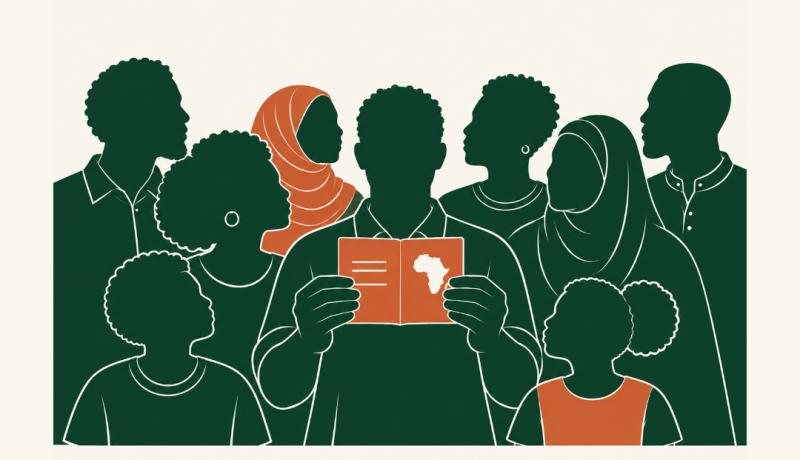
On African Human Rights Day, as we mark 40 years since the entry into force of the African Charter on Human and Peoples’ Rights, we are calling for renewed action to protect the right to a nationality and end statelessness across Africa.
A joint statement led by the Pan African Nationality Network (PANN), the South African Nationality Network (SANN), the Global Alliance to End Statelessness, Lawyers for Human Rights and other partner organizations highlights that nationality is fundamental to human dignity, equality, belonging and full participation in society.
10 September 2026
65th Anniversary of the 1961 Convention Global Event Highlights and Key Action to End Statelessness
On 2 September 2026, the Global Alliance to End Statelessness convened a high-level online event to mark the 65th anniversary of the 1961 Convention on the Reduction of Statelessness under the theme of Preventing and Resolving Statelessness in Practice.The event brought together governments, UN agencies, regional organizations, civil society, and stateless-led groups to exchange experiences and highlight practical solutions to ensure that no child is born without a nationality.
Read more19 August 2026
Thailand Strengthens its Commitment to Ending Statelessness Through a New National Action Plan
Thailand has taken a major step forward in addressing statelessness by approving its Action Plan for Resolving Statelessness (2025–2027). Approved in March 2026, the roadmap fulfills pledges made at the 2023 Global Refugee Forum and builds on the landmark Cabinet Resolution of October 29, 2024.
As host to more than 600,000 registered stateless persons, Thailand represents one of the largest stateless populations in the world. The two-year plan features collaboration within the relevant Governmental entities for resolving existing cases, preventing new ones, safeguarding fundamental rights, and modernizing civil registration systems.