Why the Global Alliance and why now?
We cannot stop now. Today, there are millions of women and men, girls and boys around the world that are stateless. These are people that have no nationality and no access to rights.
The Inter-Parliamentary Union (IPU) is the global organization of national parliaments from around the world, with 180 Member Parliaments. We have been working closely with UNHCR for almost 15 years to mobilize our Members to take action to put an end to statelessness.
The Global Alliance will be a unique and powerful tool. It brings together a diverse set of actors that each will bring their own added value, strengths, and opportunities. The Alliance will allow us to find common opportunities for cooperation, and to learn from, challenge and support one another in order to achieve change.
What inspires me about the collaboration in the Alliance is that it builds on the positive and values diversity. It is about accepting our differences and what we can do for each other.
I think the fact that we are launching a Global Alliance to End Statelessness is a sign of hope. It is a sign and sends a strong message that we can do things together, that human rights matter and that solidarity is still there. And that we can, again, agree to change things together, for millions of people around the world.
Kareen Jabre
Director – Division of Programmes, Inter-Parliamentary Union (IPU)
21 April 2026
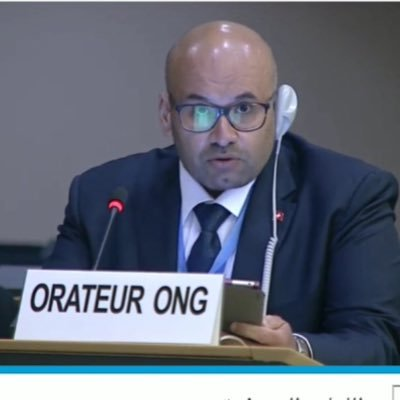
Strategic Advocacy for the Right to Nationality through the UN Human Rights Council’s Universal Periodic Review (UPR)
At the International Center for Supporting Rights and Freedoms (ICSRF), we consider the right to nationality one of the most fundamental human rights, no less important than the right to life. Based on this principle, and since joining the Global Alliance to End Statelessness, ICSRF has worked to ensure that statelessness risks are consistently taken into account within international human rights mechanisms, particularly the Universal Periodic Review (UPR).
Read more9 April 2026
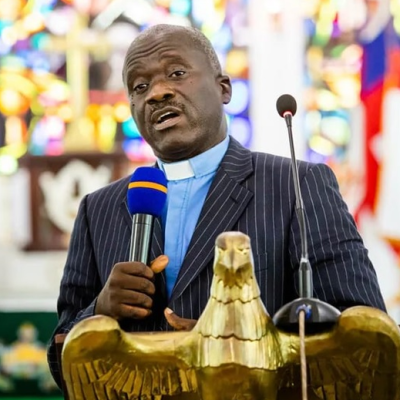
Churches Have a Responsibility to Act Against Statelessness
Churches and faith-based organizations have a moral responsibility and an important role to play in preventing and reducing statelessness. Drawing on their moral voice, community presence, and long-standing commitment to social justice, churches are well placed to support practical actions that protect vulnerable people and help ensure every person has a nationality.
In Liberia, Church Aid, Inc., together with its partners, has demonstrated this potential in practice. Through community-based initiatives to support birth registration, more than 20,000 children were able to obtain birth certificates, reducing their risk of statelessness and exclusion.
For many churches, engagement on statelessness is grounded in scripture and faith. The Bible reminds us not to oppress the foreigner, because we ourselves know what it means to be vulnerable. It calls believers to show hospitality to strangers and to stand up for those who cannot defend themselves. When people are hurting, the church has a responsibility to bring relief. A Christianity that ignores injustice and suffering does not reflect the character or mission of Christ.
Stateless persons are no exception.
Read more5 December 2025
Latin American and Caribbean Civil Registration Week: An Initiative Ensuring Identity for All
The Latin American and Caribbean Council for Civil Registration, Identity, and Vital Statistics (CLARCIEV) is the organization behind the campaign “Latin American and Caribbean Civil Registration Week,” held from September 1 to 16, 2025, and which sought to safeguard the fundamental right to identity.
Under the slogan “Latin America and the Caribbean, a region without invisible people: identity for all!”, CLARCIEV intensified its efforts to register births, covering both children and adults who still lacked a birth certificate. As a result of the campaign a total of 32,177 birth registrations were performed.
Read more