Strategic Advocacy for the Right to Nationality through the UN Human Rights Council’s Universal Periodic Review (UPR)
At the International Center for Supporting Rights and Freedoms (ICSRF), we consider the right to nationality one of the most fundamental human rights, no less important than the right to life. Based on this principle, and since joining the Global Alliance to End Statelessness, ICSRF has worked to ensure that statelessness risks are consistently taken into account within international human rights mechanisms, particularly the Universal Periodic Review (UPR).
ICSRF’s participation in the UPR reflects a strategic approach aimed at transforming legal analysis into tangible outcomes in international accountability. Rather than adopting a general advocacy approach, ICSRF focused on preparing evidence-based submissions grounded in international human rights law and directly linked to national legal frameworks.
One of the clearest examples of this approach is ICSRF’s contribution to the UPR of the Sultanate of Oman. In this context, ICSRF conducted a detailed legal analysis of the Omani Nationality Law issued by Royal Decree No. 17/2025. This analysis identified specific legal gaps and areas of concern, particularly provisions that place nationality decisions outside judicial review and grant broad discretionary powers regarding the revocation or withdrawal of nationality.
ICSRF’s methodology relied on examining specific legal provisions, including Articles 4, 7, and 26 of the law. Article 4 excludes judicial oversight of nationality disputes, while Article 7 restricts nationality decisions to the executive authority. Article 26, which regulates cases of nationality withdrawal, includes broad and vague criteria that could potentially be applied to activists, dissidents, and human rights defenders. By focusing on these provisions, ICSRF ensured that its analysis was precise, actionable, and directly linked to the national legal context.
To enhance the impact of its submission, ICSRF linked its recommendations to international human rights standards. It explicitly referenced Article 15 of the Universal Declaration of Human Rights, which affirms the right to a nationality and protection against arbitrary deprivation, as well as Article 7 of the Convention on the Rights of the Child, which guarantees every child’s right to birth registration and nationality . This linkage helped frame national issues within binding international obligations.
Operationally, ICSRF followed a structured and strategic approach in engaging with the UPR process, including early preparation of submissions, compliance with the formal requirements for stakeholder reports, and the development of concise and clear recommendations. Each recommendation was designed to directly address identified legal gaps and formulated in a way that is actionable for states participating in the review.
A key element of ICSRF’s strategy was linking statelessness to broader human rights issues. By connecting nationality issues to rights such as freedom of expression, access to justice, and the protection of human rights defenders, ICSRF was able to increase the visibility and relevance of the issue within the UPR process. This approach helped integrate statelessness into the broader human rights framework rather than treating it as an isolated issue.
These integrated efforts led to an important outcome: the inclusion of ICSRF’s analysis and recommendations in the UPR stakeholder report on the Sultanate of Oman (A/HRC/WG.6/51/OMN/3). Notably, the section on stateless persons in the report drew upon ICSRF’s submission and legal analysis. This demonstrates how evidence-based and strategic civil society engagement can directly influence the content of official UN documents.
This experience offers important lessons for civil society actors seeking to influence international human rights mechanisms.
First, grounding advocacy in rigorous legal analysis enhances credibility and impact.
Second, focusing on specific legal provisions enables the development of more precise and actionable recommendations.
Third, linking national issues to international standards is essential for ensuring their recognition within global processes.
Finally, framing specific issues, such as statelessness, within broader human rights priorities helps increase their visibility and likelihood of inclusion in official outcomes.
ICSRF’s experience also highlights the importance of engaging through collective platforms such as the Global Alliance to End Statelessness, which enhances access to international mechanisms, amplifies civil society contributions, and transforms local efforts into global impact.
In light of the ongoing challenges related to the right to nationality in various contexts, there remains a critical need to strengthen cooperation between civil society organizations, international mechanisms, and national actors. Strategic, evidence-based engagement can play a decisive role in advancing legal reforms, strengthening accountability, and ensuring the protection of the right to nationality for all.
Author: Ahmed Aly, Executive Director of the International Center for Supporting Rights and Freedoms (ICSRF)
4 June 2026

Reducing statelessness in Kazakhstan: joint efforts of the government and civil society
As part of efforts to reduce the number of stateless persons in Kazakhstan, the Kazakhstan International Bureau for Human Rights and the Rule of Law (KIBHR), in collaboration with the Ministry of Internal Affairs, conducted a joint campaign to identify and document stateless persons in late 2025. During the 2025 campaign, lawyers, together with migration service officials, identified 380 stateless persons. In the same period, 153 people were supported by KIBHR lawyers to confirm or acquire citizenship.
Read more9 April 2026
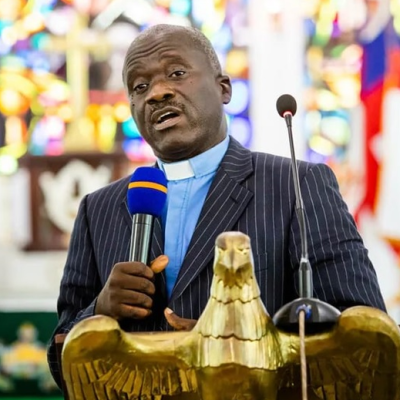
Churches Have a Responsibility to Act Against Statelessness
Churches and faith-based organizations have a moral responsibility and an important role to play in preventing and reducing statelessness. Drawing on their moral voice, community presence, and long-standing commitment to social justice, churches are well placed to support practical actions that protect vulnerable people and help ensure every person has a nationality.
In Liberia, Church Aid, Inc., together with its partners, has demonstrated this potential in practice. Through community-based initiatives to support birth registration, more than 20,000 children were able to obtain birth certificates, reducing their risk of statelessness and exclusion.
For many churches, engagement on statelessness is grounded in scripture and faith. The Bible reminds us not to oppress the foreigner, because we ourselves know what it means to be vulnerable. It calls believers to show hospitality to strangers and to stand up for those who cannot defend themselves. When people are hurting, the church has a responsibility to bring relief. A Christianity that ignores injustice and suffering does not reflect the character or mission of Christ.
Stateless persons are no exception.
Read more5 December 2025
Latin American and Caribbean Civil Registration Week: An Initiative Ensuring Identity for All
The Latin American and Caribbean Council for Civil Registration, Identity, and Vital Statistics (CLARCIEV) is the organization behind the campaign “Latin American and Caribbean Civil Registration Week,” held from September 1 to 16, 2025, and which sought to safeguard the fundamental right to identity.
Under the slogan “Latin America and the Caribbean, a region without invisible people: identity for all!”, CLARCIEV intensified its efforts to register births, covering both children and adults who still lacked a birth certificate. As a result of the campaign a total of 32,177 birth registrations were performed.
Read more