Human Rights Council side event highlights solutions to childhood statelessness
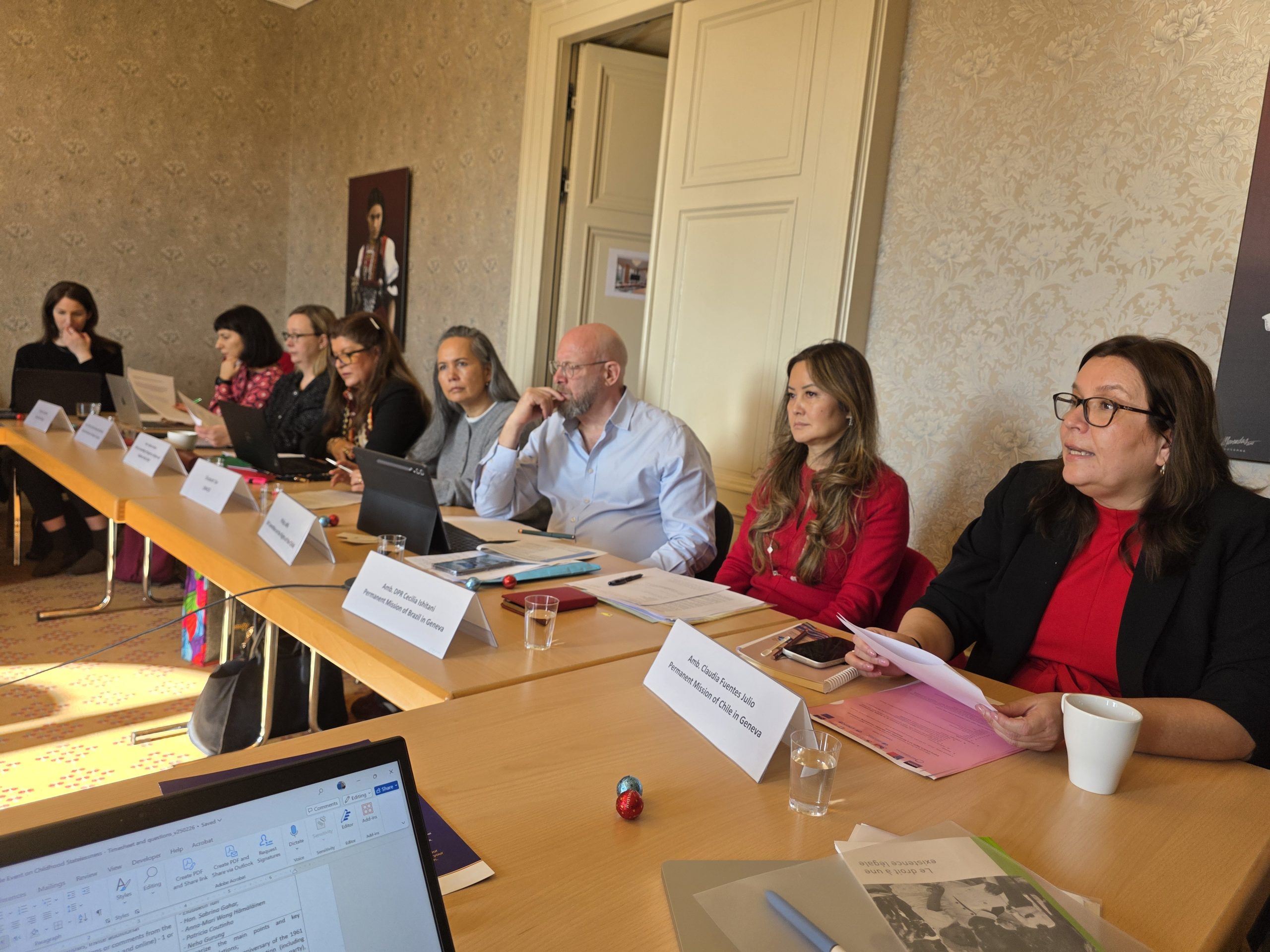
On 2 March 2026, the Global Alliance to End Statelessness and partners convened a side event during the 61st session of the UN Human Rights Council titled “Every Child’s Right to a Nationality and Identity: Preventing Childhood Statelessness.”
The event brought together governments, UN agencies, regional organizations, civil society and stateless-led groups to exchange experiences and highlight practical solutions to ensure that no child is born without a nationality.
Moderated by Professor Philip Jaffé, Vice-Chair of the United Nations Committee on the Rights of the Child, the discussion emphasized the human impact of statelessness and the importance of translating international standards into national action.

State leadership and international cooperation
Opening the discussion, Ambassador Claudia Fuentes Julio, Permanent Representative of Chile to the United Nations Office in Geneva, highlighted that nationality is fundamental to the enjoyment of many rights. “The child’s right to nationality and legal identity is a foundation for the effectiveness of so many rights,” she said, stressing that preventing statelessness is both a legal obligation and an investment in inclusive societies.
Ambassador Cecilia Ishitani, Deputy Permanent Representative of Brazil, reaffirmed Brazil’s longstanding commitment to ending statelessness and emphasized that no country is immune to legal or administrative gaps that can place children at risk.
Good practices to prevent childhood statelessness
Speakers emphasized that states play a key role in preventing statelessness through strong legal frameworks and effective administrative procedures.
Elizabeth Tan, Director of UNHCR’s Division of International Protection and Solutions, highlighted the importance of collaboration and knowledge sharing. She encouraged governments, civil society and organizations led by people with lived experience to work together through the Global Alliance to End Statelessness to identify concrete legal and administrative reforms.
From a regional perspective, Sabrina Gahar, Chairperson of the African Committee of Experts on the Rights and Welfare of the Child, emphasized the importance of strengthening birth registration systems and implementing safeguards under the African Charter on the Rights and Welfare of the Child to ensure children are not left without nationality.
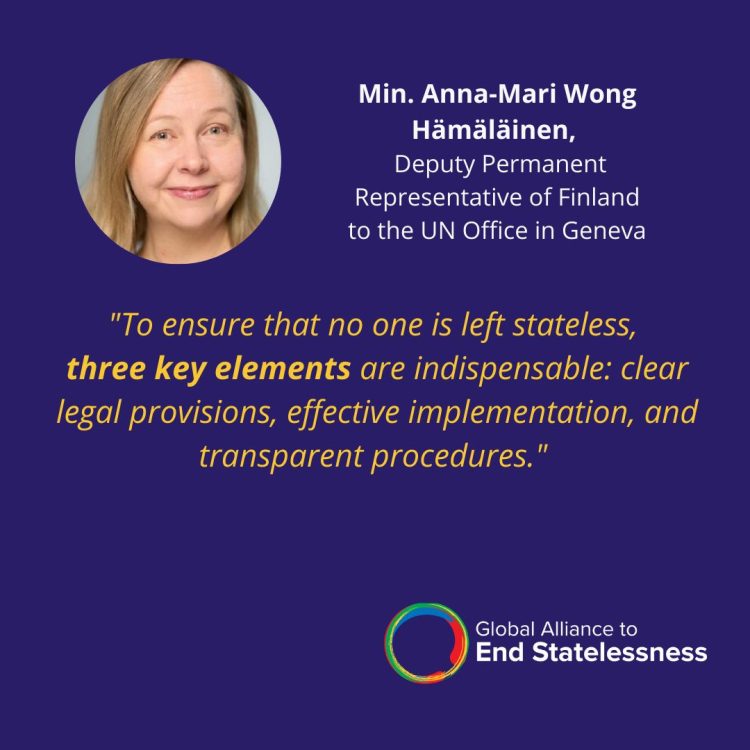
Providing a national perspective, Anna-Mari Wong Hämäläinen, Deputy Permanent Representative of Finland, highlighted three essential elements for effective protection: clear legal provisions, effective implementation and transparent procedures.
Promising practices and practical safeguards
Patricia Coutinho, Programme Manager at the Council of Europe, presented the Compendium of Promising Practices on Access to Nationality for Stateless Children , which identifies practical safeguards already implemented across Europe.
“Without nationality children may remain invisible to systems designed to protect them” she said.
The Compendium highlights practical measures that states can implement, including universal birth registration, automatic nationality safeguards for children who would otherwise be stateless, and child-friendly nationality procedures. These examples demonstrate that small legal or administrative changes can have a transformative impact in protecting children from statelessness.
Ensuring accountability and inclusion
Following a short video testimony illustrating the impact of statelessness across generations, Neha Gurung, co-founder of the Citizenship Affected People’s Network, shared the perspective of communities directly affected.

She stressed that legal identity often determines whether children can access education, services and protection, and called for greater accountability to ensure laws and administrative procedures work in practice.
A call for action
Participants concluded that childhood statelessness can be prevented when states translate international commitments into effective national safeguards.
As the international community marks the 65th anniversary and continues to implement the 1961 Convention on the Reduction of Statelessness, speakers emphasized the importance of sharing practical solutions and strengthening cooperation to close remaining gaps.
Through partnerships, dialogue and knowledge sharing, the Global Alliance to End Statelessness continues to support efforts to ensure that every child enjoys the fundamental right to a nationality and legal identity.
🎥 Watch the full recording of the event: Every child’s right to a nationality and identity: Preventing childhood statelessness – Global Alliance to End Statelessness


23 March 2026
Strengthening statelessness data: International Recommendations on Statelessness Statistics (IROSS)
Reliable data on statelessness remains a major gap. In many contexts, stateless populations remain invisible in official statistics. The International Recommendations on Statelessness Statistics (IROSS), represent an important step forward. Find out more by reading this article
Read more11 February 2026
Support the Joint Statement: Advancing Vocational Inclusion of Stateless People Across the UN

As part of a multi-pronged advocacy approach to scale up UNHCR’s good practice of removing barriers to the employment of stateless persons, the Joint Statement, drafted by Apatride Network, seeks to encourage all UN entities to follow suit. We are calling on Global Alliance members and other organizations to endorse it and sign on.
Read more6 February 2026
Call for Applications: UNHCR Global Advisory Board of Organizations Led by Forcibly Displaced and Stateless Persons
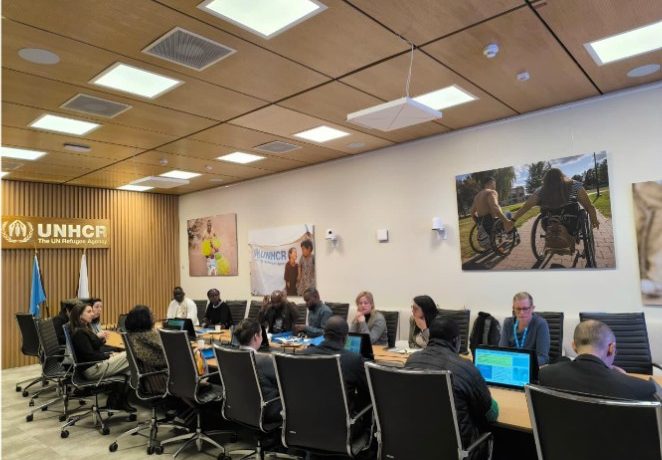
The United Nations High Commissioner for Refugees (UNHCR) has launched a Call for Expression of Interest for its Global Advisory Board of Organizations Led by Forcibly Displaced and Stateless (2026–2028). We strongly encourage stateless-led organizations within the Global Alliance network and beyond to apply by 8 February and bring their expertise and lived experience to this important global platform.
Read more