Knowledge Webinar Series – Webinar 1: Resolving statelessness together
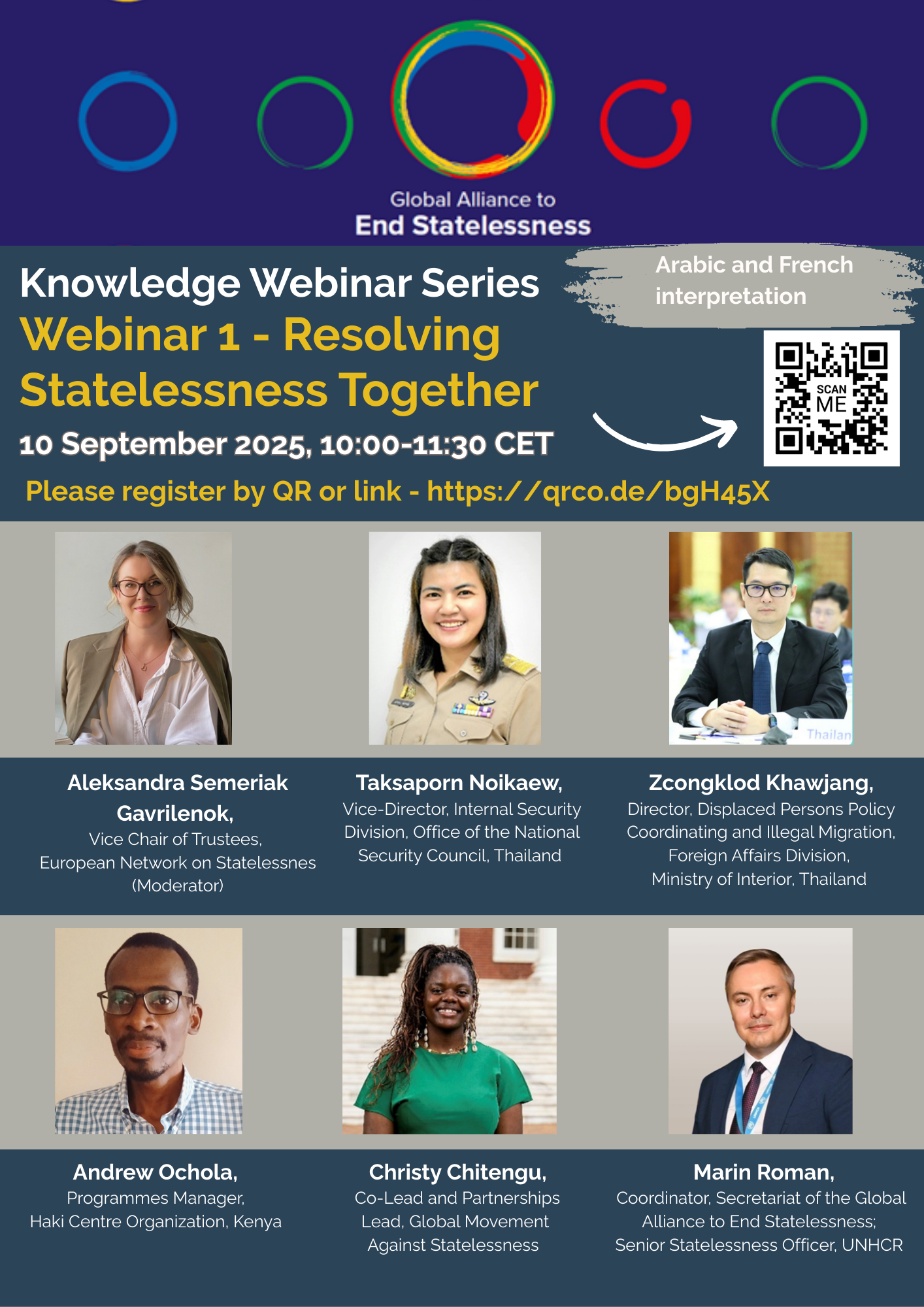
This September, the Global Alliance to End Statelessness launched its Knowledge Webinar Series, which aims at spotlighting concrete actions, lessons learned, and collaborative solutions from around the world. The first edition of the series took place online on 10 September 2025. Under the title “Resolving statelessness together”, Taksaporn Noikaew and Zcongklod Khawjang, represententing the Government of Thailand, Christy Chitengu from the stateless-led organization The Global Movement Against Statelessness and Andrew Ochola from the civil society organization Haki Centre Organization (Kenya) engaged in an interactive discussion followed by over 110 participants and moderated by Aleksandra Semeriak Gavrilenok.
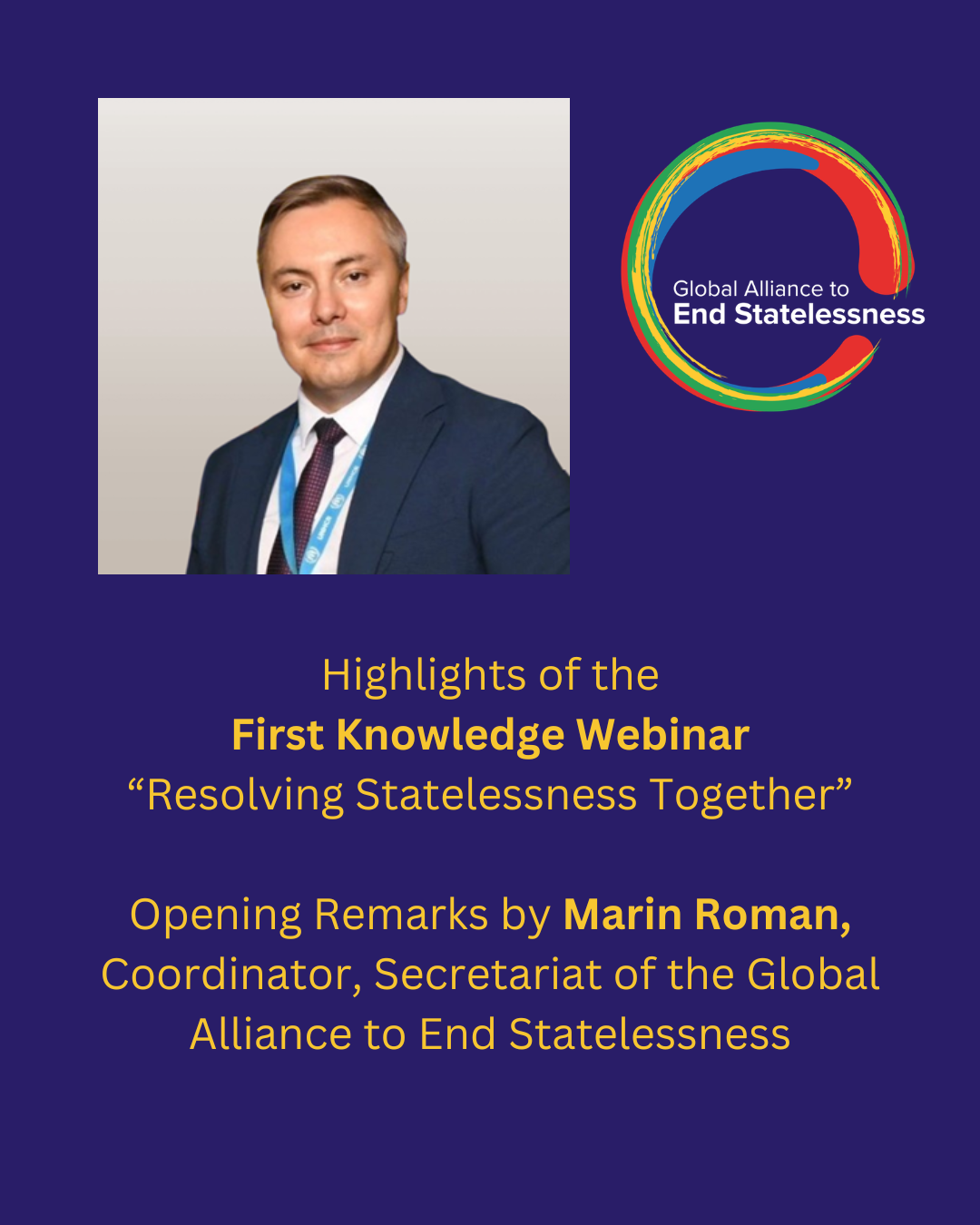
In his opening remarks, Marin Roman, Coordinator in the Secretariat of the Global Alliance, stressed that statelessness is solvable by bringing together different stakeholders committed to change. The Government of Thailand illustrated how such change can be realized in practice – it shared practical insights into its recent cabinet resolution and the advancements made under Action 1 of the Global Action Plan 2.0. The resolution was passed on 29 October 2024 and came into force on 1 May 2025 (see also here). It reduced the review period from 270 days to five days, decentralized the decision making authority, introduced the option to self-certify one’s qualifications, removed language barriers and reduced unnecessary paperwork such as school certificates for children born in Thailand. Through this legal reform, 330,000 individuals can gain permanent residency and 130,000 individuals can acquire Thai nationality in a faster, fairer and more inclusive way. Also the implementation started successfully:
“In the first ten weeks after the regulations came into force around 80 000 individuals permanently living in Thailand have been granted permanent residency and around 8 500 individuals have been granted nationality.” (Zcongklod Khawjang, Director of Displaced Persons Policy Coordinating and Illegal Migration, Foreign Affairs Division, Ministry of Interior, Thailand)
The Global Movement Against Statelessness highlighted the lived experiences of stateless persons and underscored the importance of their meaningful inclusion in policy reform.
“Statelessness is not just a technical legal issue, it’s a lived reality. It’s about waking up every day with your fundamental rights denied. True inclusion means not only giving stateless people a seat at the table but ensuring they are equal partners in designing solutions.” (Christy Chitengu, Co-lead and Partnerships lead, Global Movement Against Statelessness)
Before answering several questions of the audience in an extended Q&A-part, the panellists offered some reflections and recommendations.
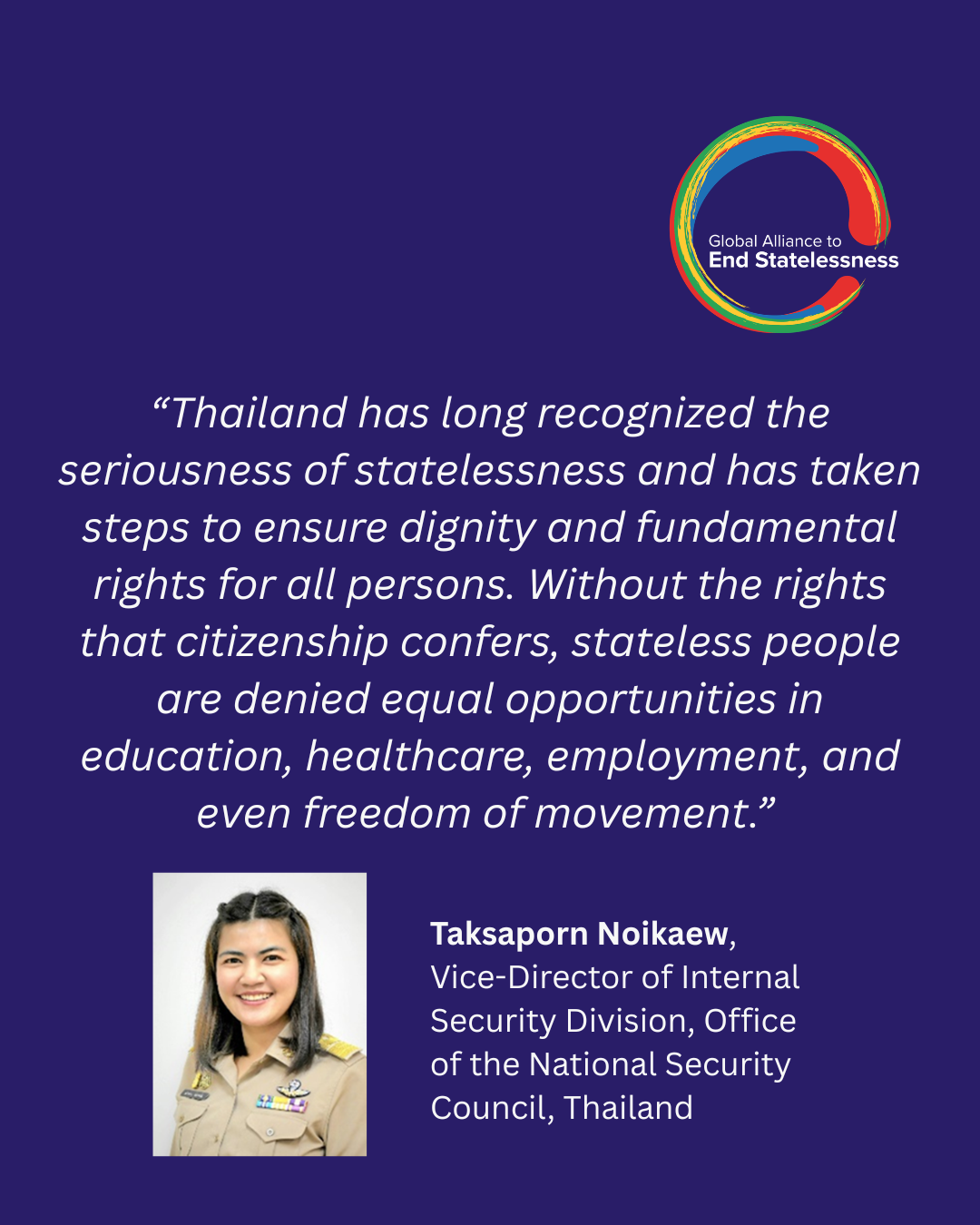
“The resolution reflects the Thai demonstration to balance humanitarian concerns with security considerations. When individuals are recognized, they become valuable contributors to the nation. In the long run, this strengthens social stability, national security and sustainable development.” (Taksaporn Noikaew, Vice-Director of Internal Security Division, Office of the National Security Council, Thailand)
The Global Movement Against Statelessness argued that the inclusion of stateless persons in reforms aiming at ending statelessness require genuine partnerships and not only token inclusion. The Haki Centre shared its experience that legal empowerment through paralegal community workers were essential for the Pemba and Makonde communities in acquiring Kenyan citizenship.
“By working with Civil Registration Services, paralegals promote timely birth registration and bring mobile services to remote areas – a vital step in preventing statelessness.” (Andrew Ochola, Programmes Manager, Haki Centre, Kenya)
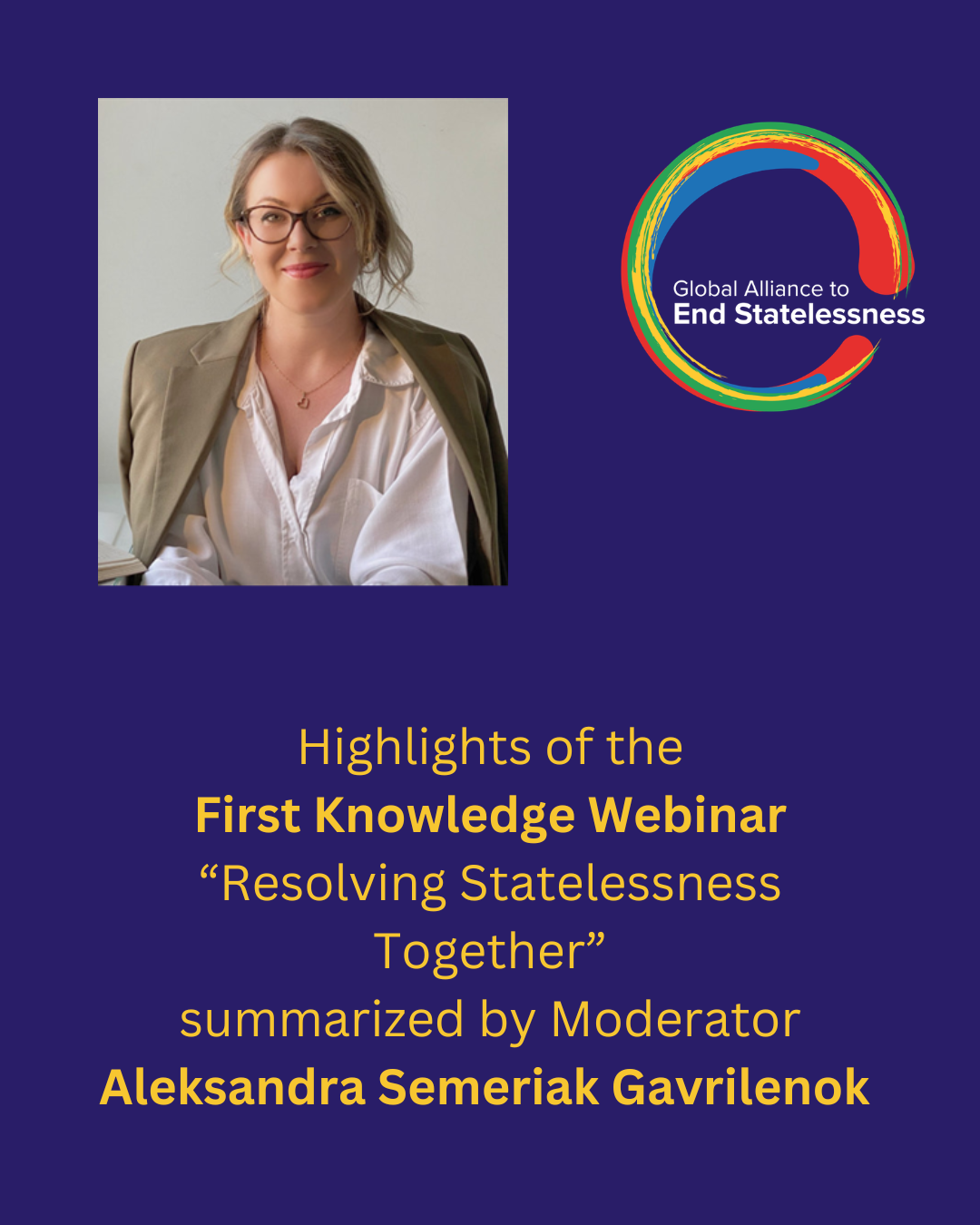
The speakers, representing the multi-stakeholder approach of the Global Alliance, showed how promising pathways for resolving statelessness together can look. Moderator Aleksandra Semeriak Gavrilenok concluded that Thailand’s cabinet resolution demonstrated how government leadership can drive systemic change while the Haki Centre made clear that civil society partnerships and grassroots approaches are essential to reach the people who need it the most. The Global Movement illustrated meanwhile that Stateless-led organizations must be at the center of solutions as they bring unique knowledge, perspective, legitimacy and experience. By bringing these approaches and this variety of stakeholders together, we are hopefully a step closer to resolving statelessness together.
The Webinar recording can be found here.
23 March 2026
Strengthening statelessness data: International Recommendations on Statelessness Statistics (IROSS)
Reliable data on statelessness remains a major gap. In many contexts, stateless populations remain invisible in official statistics. The International Recommendations on Statelessness Statistics (IROSS), represent an important step forward. Find out more by reading this article
Read more11 March 2026
Human Rights Council side event highlights solutions to childhood statelessness

On 2 March 2026, the Global Alliance to End Statelessness and partners convened a side event during the 61st session of the UN Human Rights Council titled “Every Child’s Right to a Nationality and Identity: Preventing Childhood Statelessness.” The event brought together governments, UN agencies, regional organizations, civil society and stateless-led groups to exchange experiences and highlight practical solutions to ensure that no child is born without a nationality.
Read more11 February 2026
Support the Joint Statement: Advancing Vocational Inclusion of Stateless People Across the UN

As part of a multi-pronged advocacy approach to scale up UNHCR’s good practice of removing barriers to the employment of stateless persons, the Joint Statement, drafted by Apatride Network, seeks to encourage all UN entities to follow suit. We are calling on Global Alliance members and other organizations to endorse it and sign on.
Read more