Navigating a Difficult Funding Landscape: New Approaches to Resource Mobilization for Ending Statelessness

Efforts to address statelessness operate within a highly challenging fundraising landscape, characterized by declining official development assistance from governments and multilateral agencies. At the same time, raising resources for statelessness remains difficult due to limited donor awareness and a lack of understanding of the broader human rights implications of the issue.
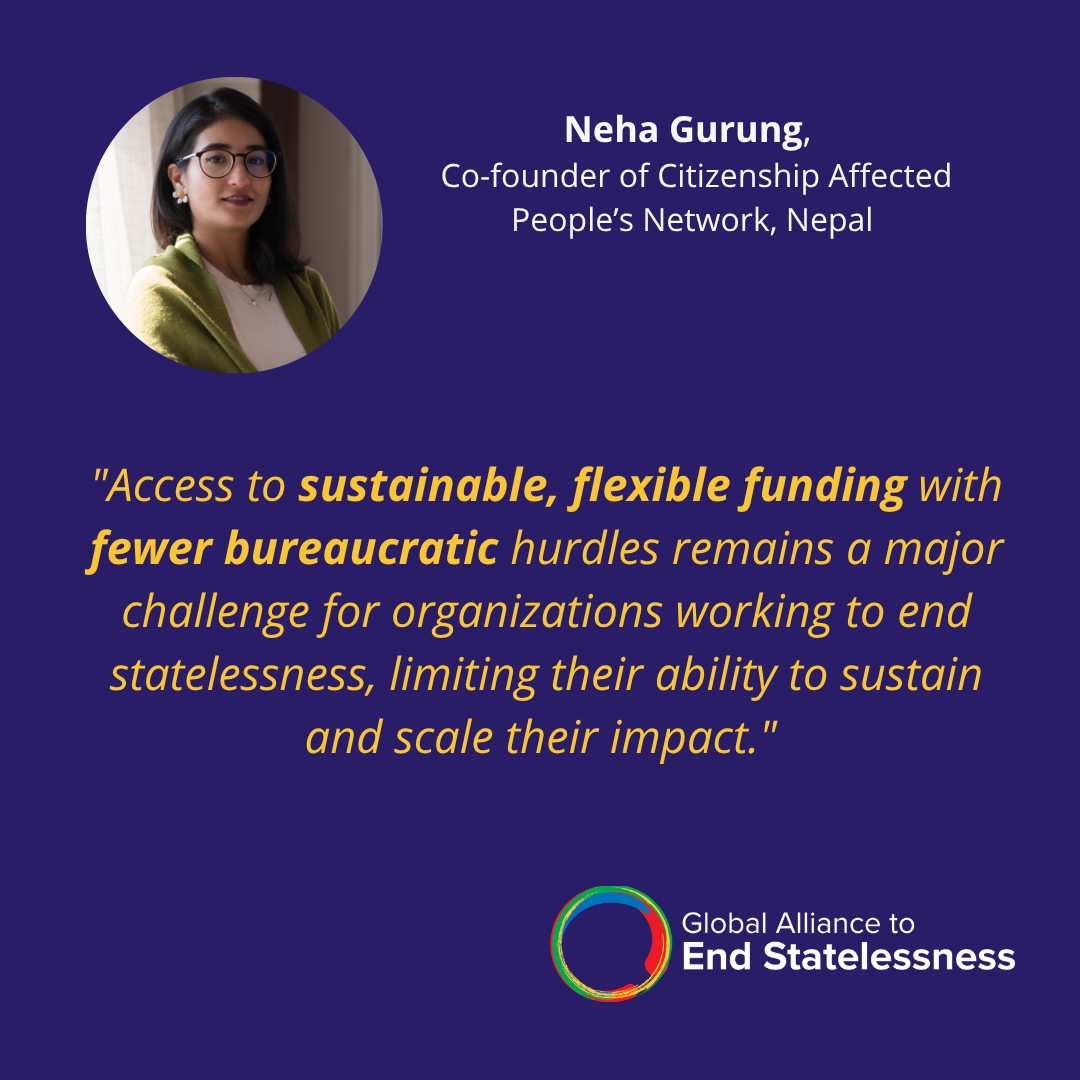
On 20 November 2025, Neha Gurung, Co-founder of the Citizenship Affected People’s Network in Nepal, moderated the Global Alliance Knowledge Webinar #3 titled Fundraising for Impact: Mobilizing Resources to End Statelessness, during which she welcomed a series of expert speakers with direct, hands-on experience in fundraising for statelessness. The discussion identified practical strategies that civil society and stateless-led organizations, as well as other stakeholders, can implement to navigate these constraints and sustain progress toward ending statelessness.
Expanding Funding Horizons: Core Funding and New Donors
All panelists emphasized the critical importance of core, multi-year funding, which allows statelessness-led organizations to sustain advocacy, maintain operations, and respond flexibly to evolving challenges.
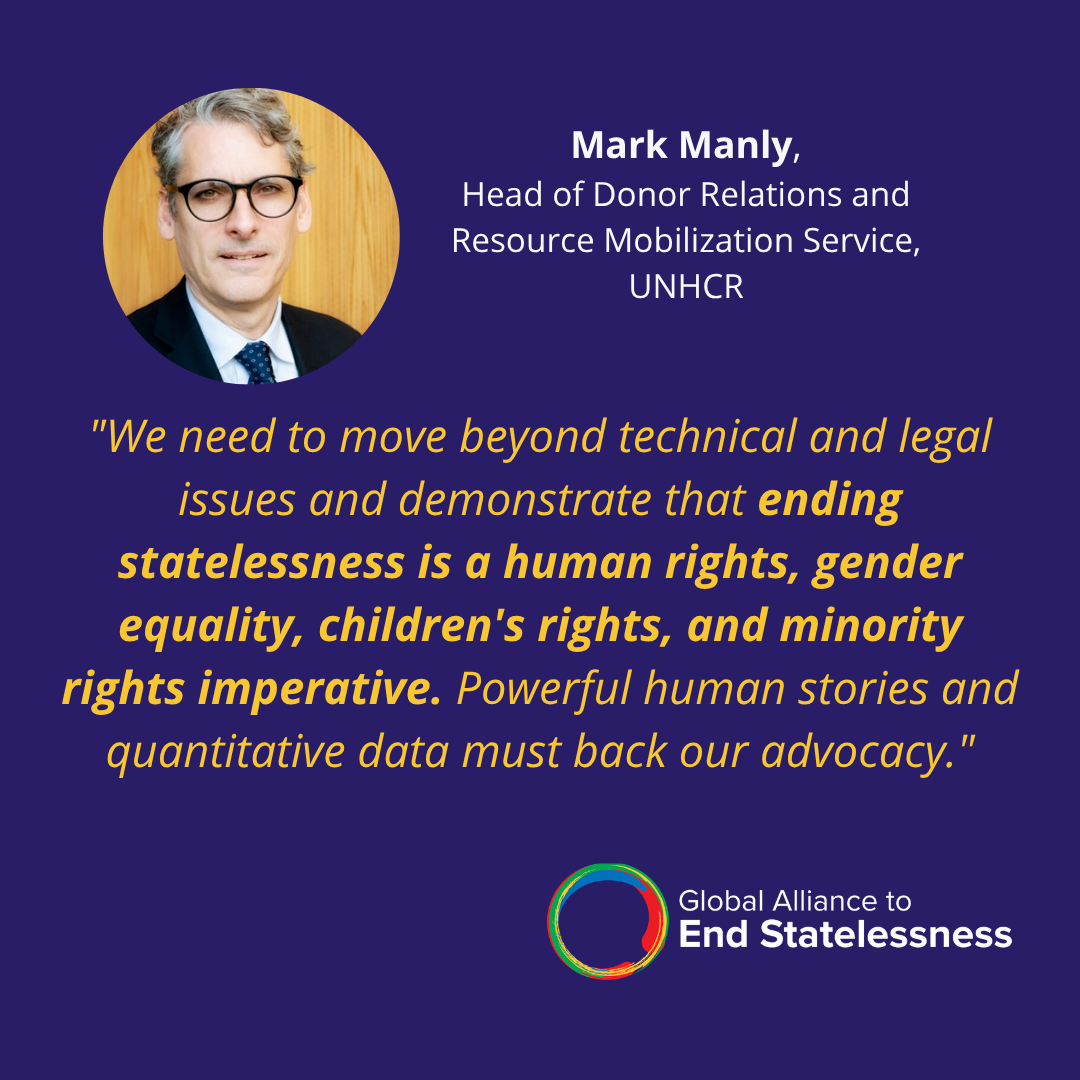
Mark Manly, Head of Donor Relations and Resource Mobilization Service at UNHCR,
outlined that small-scale grants from UNHCR, as well as the Refugee-Led Innovation Fund support stateless-led organizations with both funding and organizational development, and stressed the growing opportunities from philanthropic foundations and private donors, including high-net-worth individuals seeking participatory engagement. These donors are not only providing funds but also offering expertise, mentorship, and active collaboration. They are particularly drawn to transformational organizations that can clearly demonstrate a problem and illustrate community mobilization around solutions.
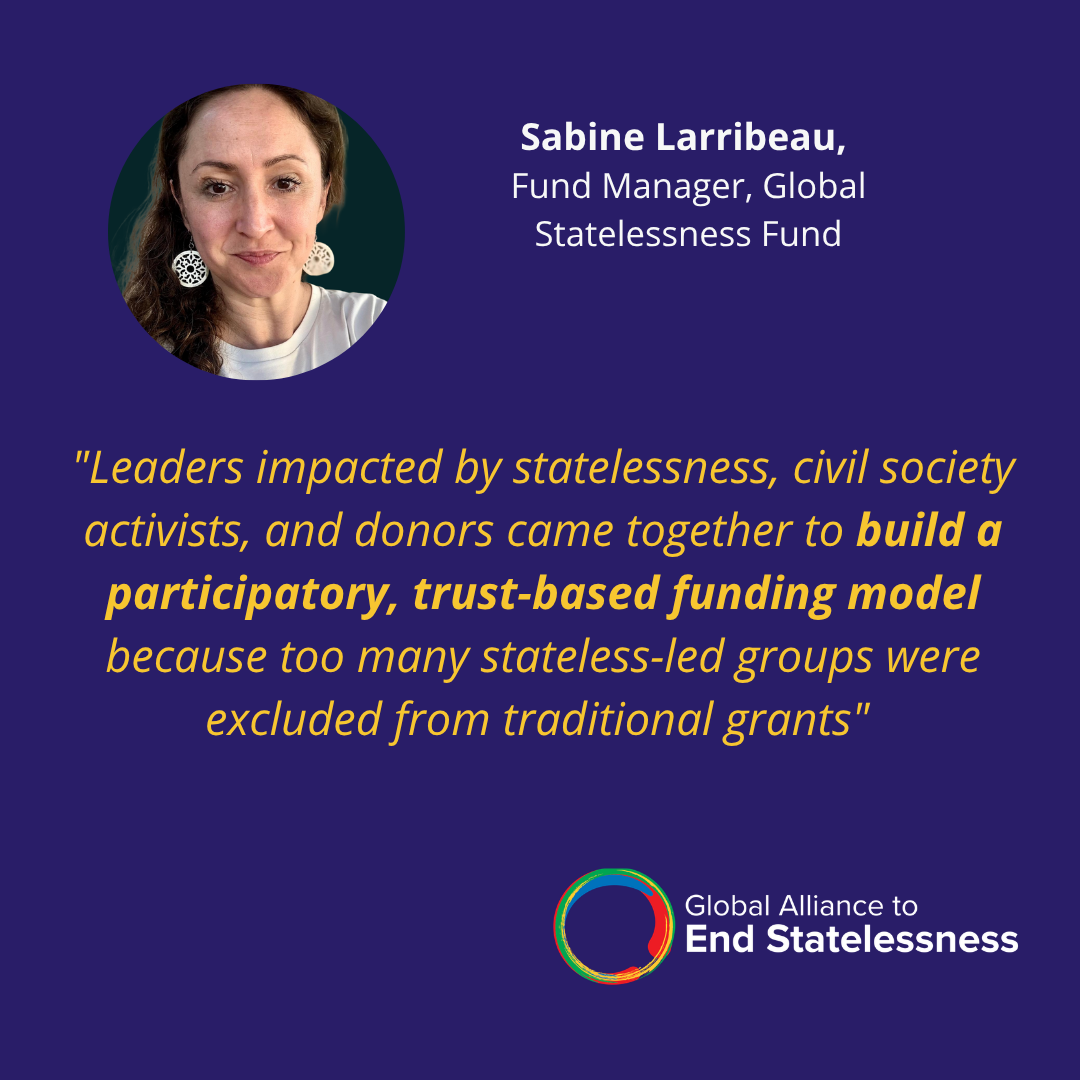
Sabine Larribeau, Fund Manager at the Global Statelessness Fund, highlighted the Global Statelessness Fund as a model that goes further by adopting a participatory, trust-based grantmaking approach. The fund was developed through collaboration among statelessness-impacted leaders, activists, and donors to provide unrestricted, multi-year funding. It also reduced bureaucratic barriers, such as lengthy applications, stringent reporting, and rigid due diligence, to ensure that smaller or stateless-led organizations can access critical resources. This approach strengthens equity in access to funding and amplifies impacted-person leadership.
Linking Fundraising to Effective Outcomes and Donors’ Priorities
All speakers stressed that fundraising must use storytelling to show both individual and societal impacts. Framing statelessness in terms of human rights, gender equality, children’s rights, minority rights, poverty reduction, and rule of law provides a strategic entry point.
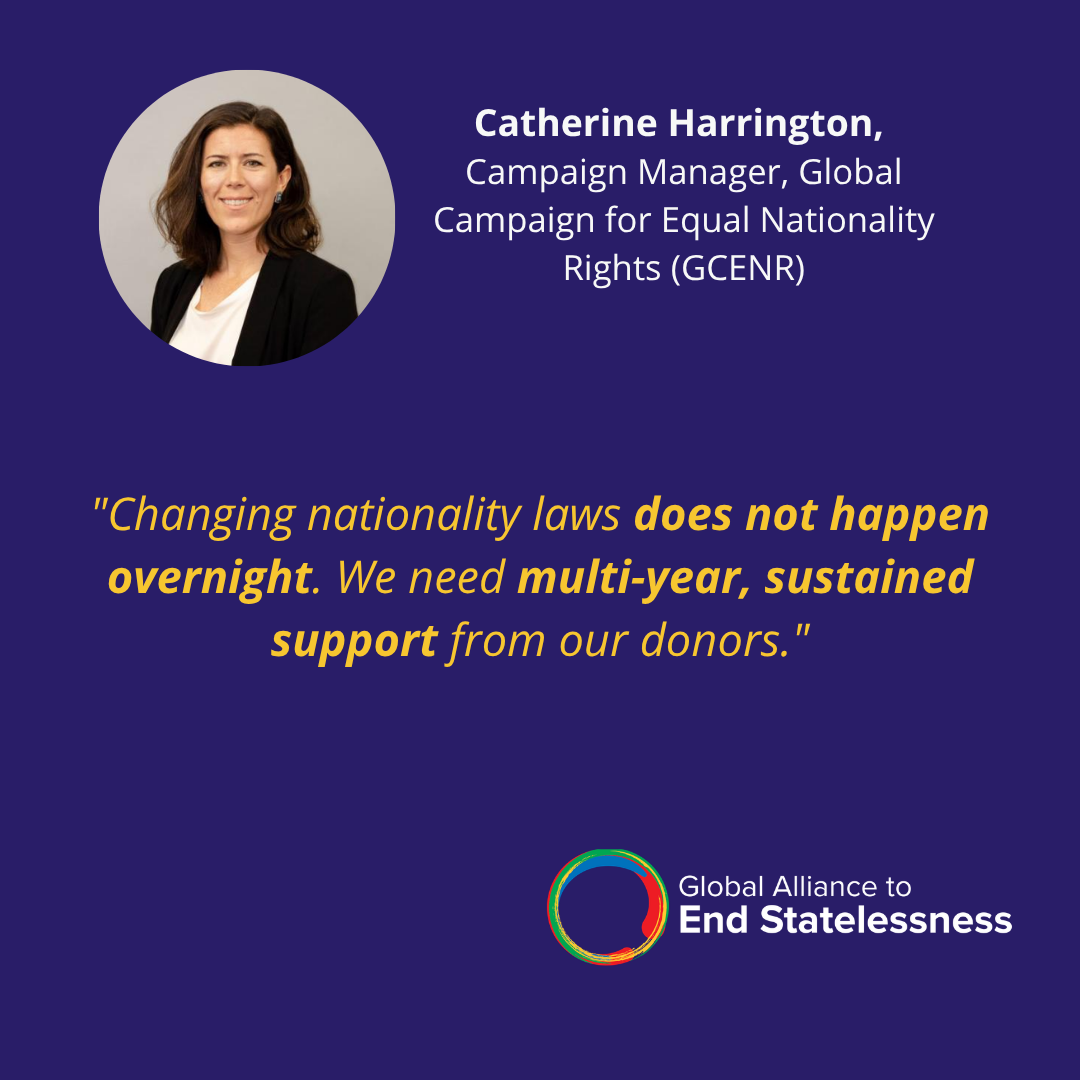
Catherine Harrington, Campaign Manager of the Global Campaign for Equal Nationality Rights (GCENR), highlighted the importance of demonstrating to donors why efforts to combat statelessness and advance equal nationality rights are critical to realizing global goals, including sustainable development and nondiscrimination. By convening multi-stakeholder summits and facilitating collaboration among governments, civil society, and UN agencies, the campaign showcases how nationality rights advocacy drives support for the principle of equal citizenship. Catherine noted that donors often lack awareness of the importance of equal nationality rights; showing how reforms advance broader donor priorities – such as gender equality and children’s rights – is key to securing support.
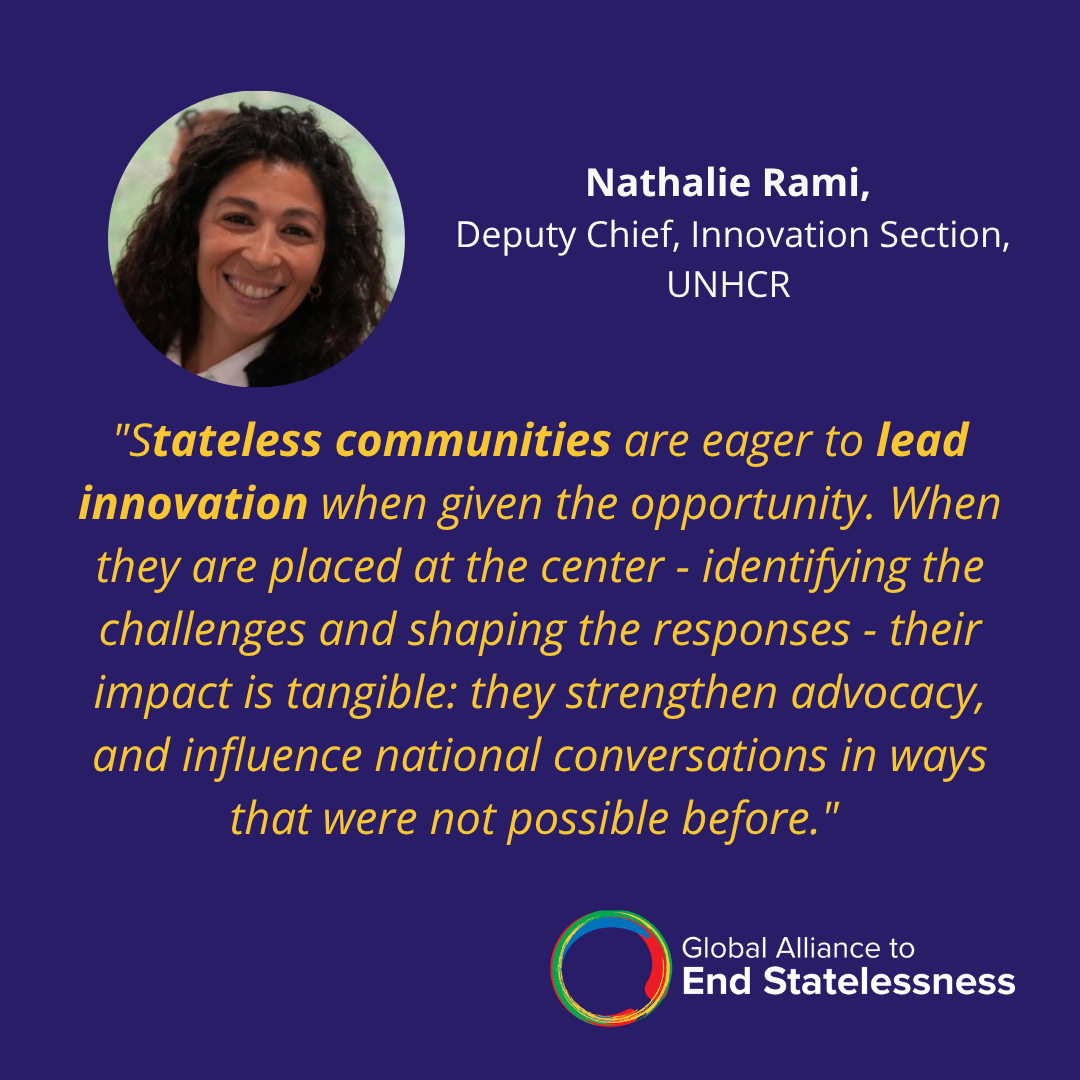
Nathalie Rami, Deputy Chief of the Innovation Section at UNHCR, presented the Refugee and Statelessness Innovation Fund, which was created to transform how humanitarian innovation is designed and led, putting displaced and stateless communities at the center. It provides grants, accompanied by tailored technical support and capacity-building designed to meet the specific needs of each organization. The fund helps grassroots groups raise their profile, collect evidence of impact, and connect with donors who might otherwise be inaccessible.
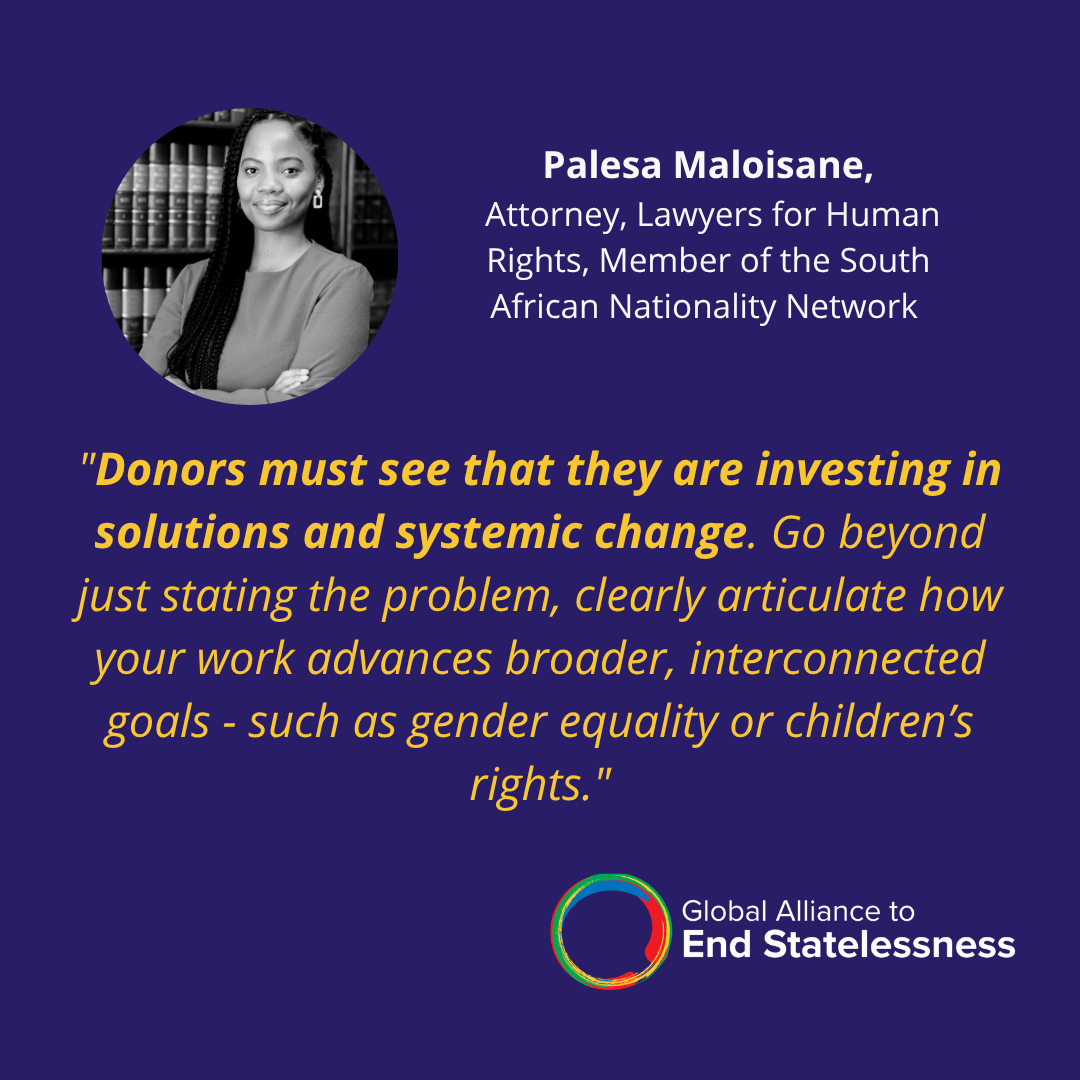
Palesa Maloisane, from the Lawyers for Human Rights and member of the South African Nationality Network (SANN), highlighted how the Global Alliance’s Online Marketplace funding is strengthening regional advocacy and supports the development of resources. In particular, SANN is supported to organize a side event at the African Committee on the Rights and Welfare of the Child, to build advocacy capacity and political momentum for ratifying the AU protocol. A key output was the development of a CSO advocacy toolkit to monitor protocol ratification. By providing a central hub of project snapshots, the Marketplace makes it easier for donors to review and identify initiatives for funding, at the same time it reduces the burden on organizations with limited capacity to produce full proposals, especially in the absence of guaranteed funding.
The final part of the webinar focused on recommendations on how to strengthen fundraising strategies and how donors can better support efforts to address and prevent statelessness. Panelists highlighted the importance of building strong relationships with donors and peers, clearly linking advocacy goals to donor priorities, and demonstrating systemic impact. They also stressed the role of UNHCR in raising the visibility of grassroots groups and helping them access new funding opportunities. Across the discussion, panelists encouraged donors to provide multi-year, flexible funding, reduce administrative barriers, and place greater trust in the leadership and expertise of stateless-led organizations.
As Mark Manley noted, global movements uniting grassroots SCOs, regional organizations, UN agencies, governments, and private actors, play a key role in helping stateless-led organizations access resources and engage effectively in systemic advocacy. The Global Alliance plays exactly this role.
For further insights, you can view the webinar recording here.
23 March 2026
Strengthening statelessness data: International Recommendations on Statelessness Statistics (IROSS)
Reliable data on statelessness remains a major gap. In many contexts, stateless populations remain invisible in official statistics. The International Recommendations on Statelessness Statistics (IROSS), represent an important step forward. Find out more by reading this article
Read more11 March 2026
Human Rights Council side event highlights solutions to childhood statelessness
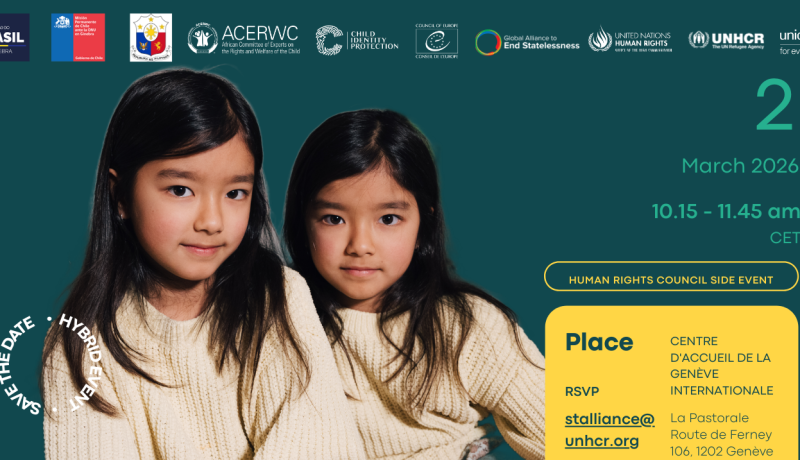
On 2 March 2026, the Global Alliance to End Statelessness and partners convened a side event during the 61st session of the UN Human Rights Council titled “Every Child’s Right to a Nationality and Identity: Preventing Childhood Statelessness.” The event brought together governments, UN agencies, regional organizations, civil society and stateless-led groups to exchange experiences and highlight practical solutions to ensure that no child is born without a nationality.
Read more11 February 2026
Support the Joint Statement: Advancing Vocational Inclusion of Stateless People Across the UN
As part of a multi-pronged advocacy approach to scale up UNHCR’s good practice of removing barriers to the employment of stateless persons, the Joint Statement, drafted by Apatride Network, seeks to encourage all UN entities to follow suit. We are calling on Global Alliance members and other organizations to endorse it and sign on.
Read more