Realizing the Right to Education for Stateless Persons
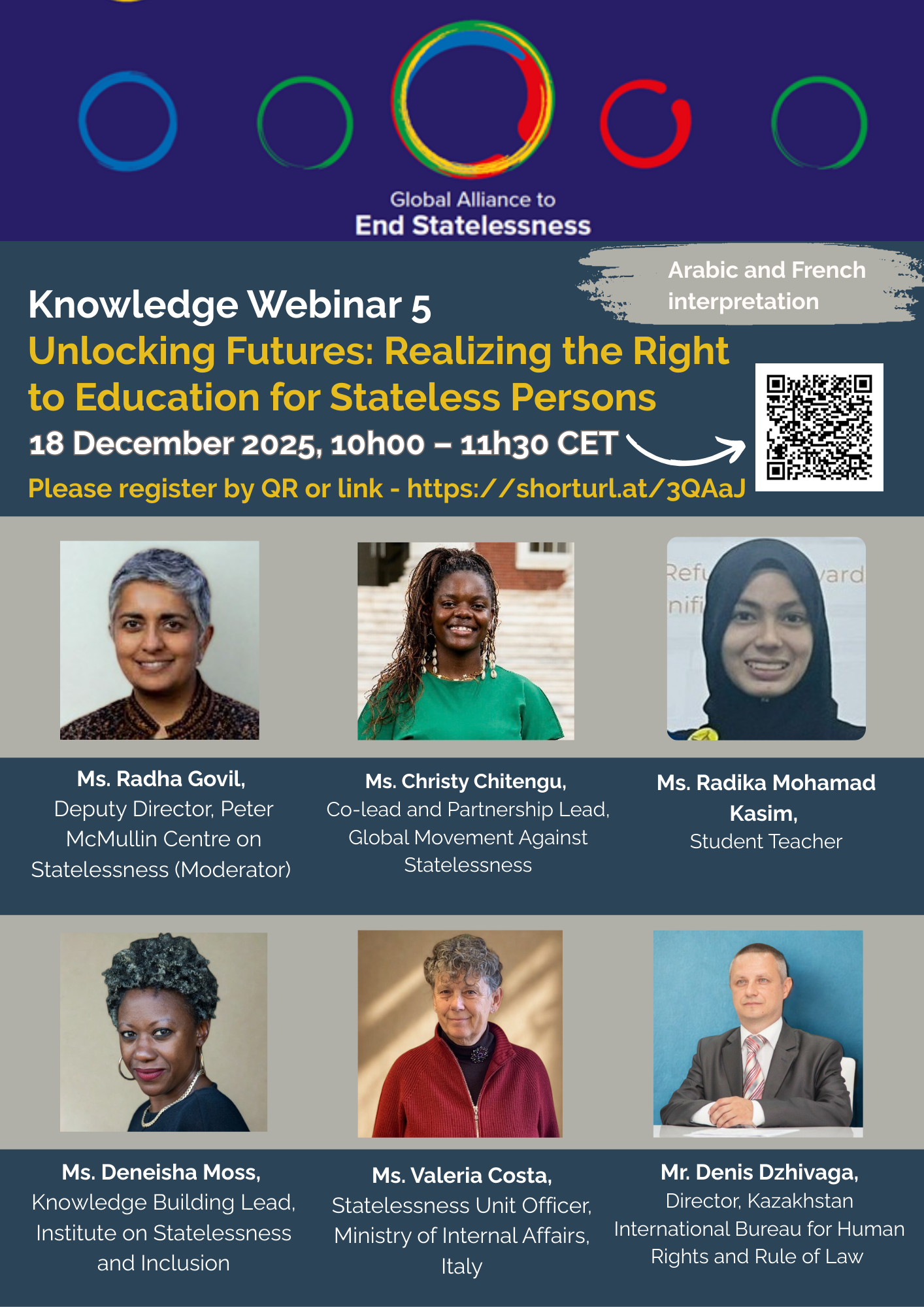
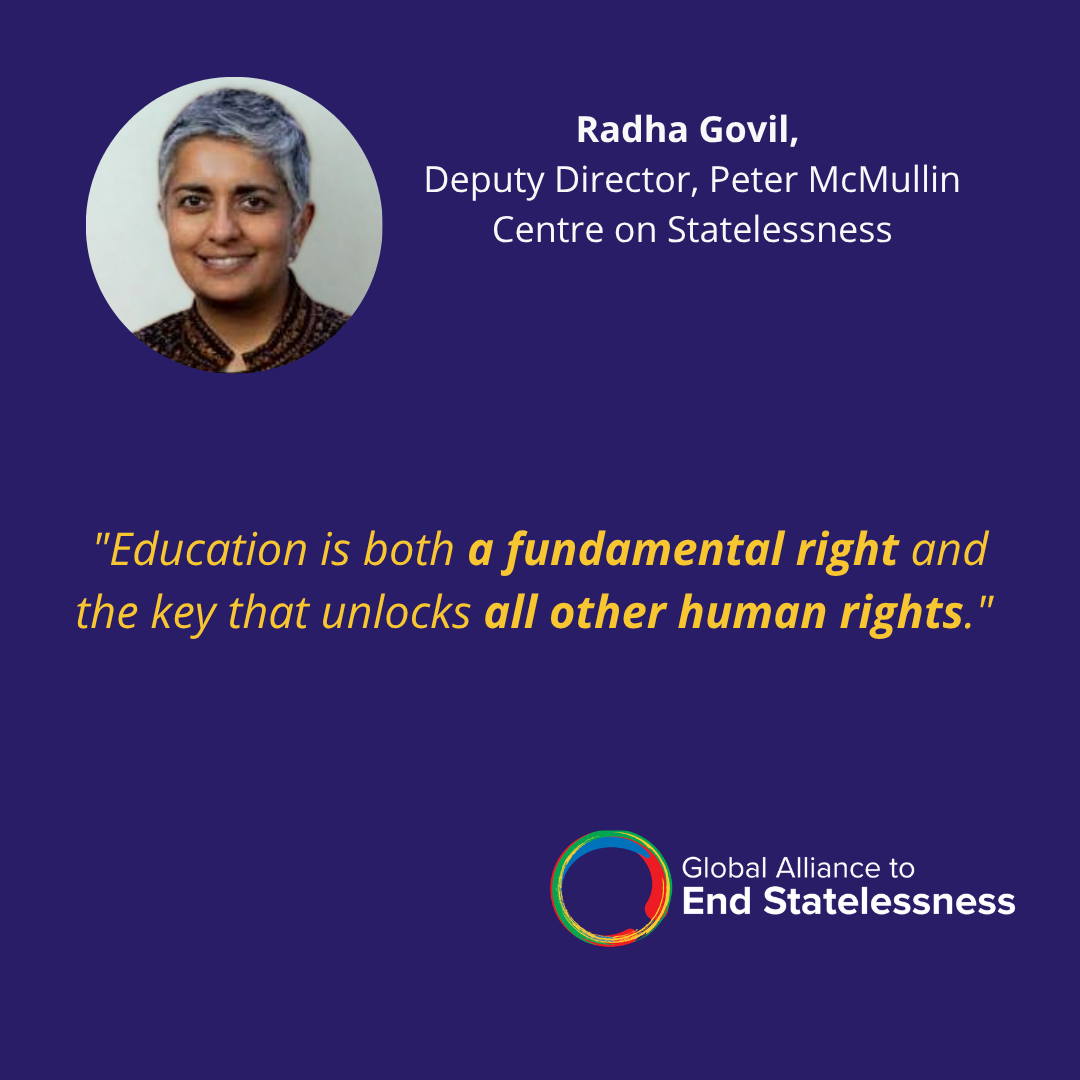
On 18 December 2025, Radha Govil, Deputy Director of the Peter McMullin Centre on Statelessness and Co-lead of the Thematic Working Group (TWG) on Protecting the Rights of Stateless Persons, moderated the fifth and final Global Alliance webinar of the year: “Unlocking Futures: Realizing the Right to Education for Stateless Persons.” Radha emphasized that education is not only a fundamental human right but also a powerful driver of dignity, social inclusion, and economic development. She then introduced five speakers to explore the legal, administrative, and practical barriers that hinder access to education at all levels—from early childhood to tertiary education and lifelong learning.
From One Country to Another, Constitutional Guarantees and Implementation Challenges
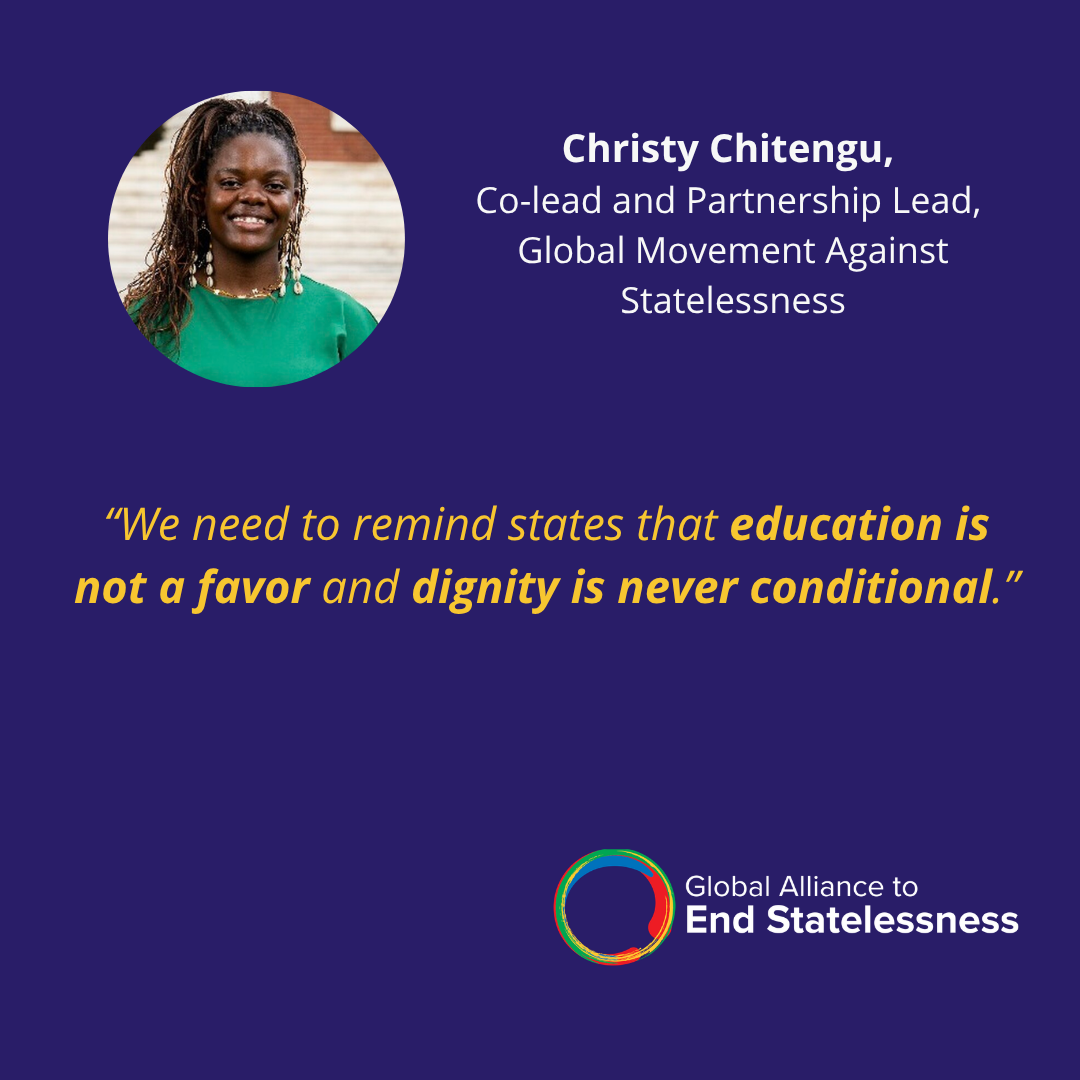
Christy Chitengu, Co-lead for Partnerships at the Global Movement Against Statelessness, began by sharing her lived experience as a stateless person from South Africa. She explained that, because of the country’s apartheid past, the constitution broadly guarantees the right to education—including for stateless people—but implementation remains far from straightforward. Administrative practices often create barriers, with schools requesting proof of identification mid-process—even when it wasn’t required at registration—effectively acting as gatekeepers rather than impartial facilitators.
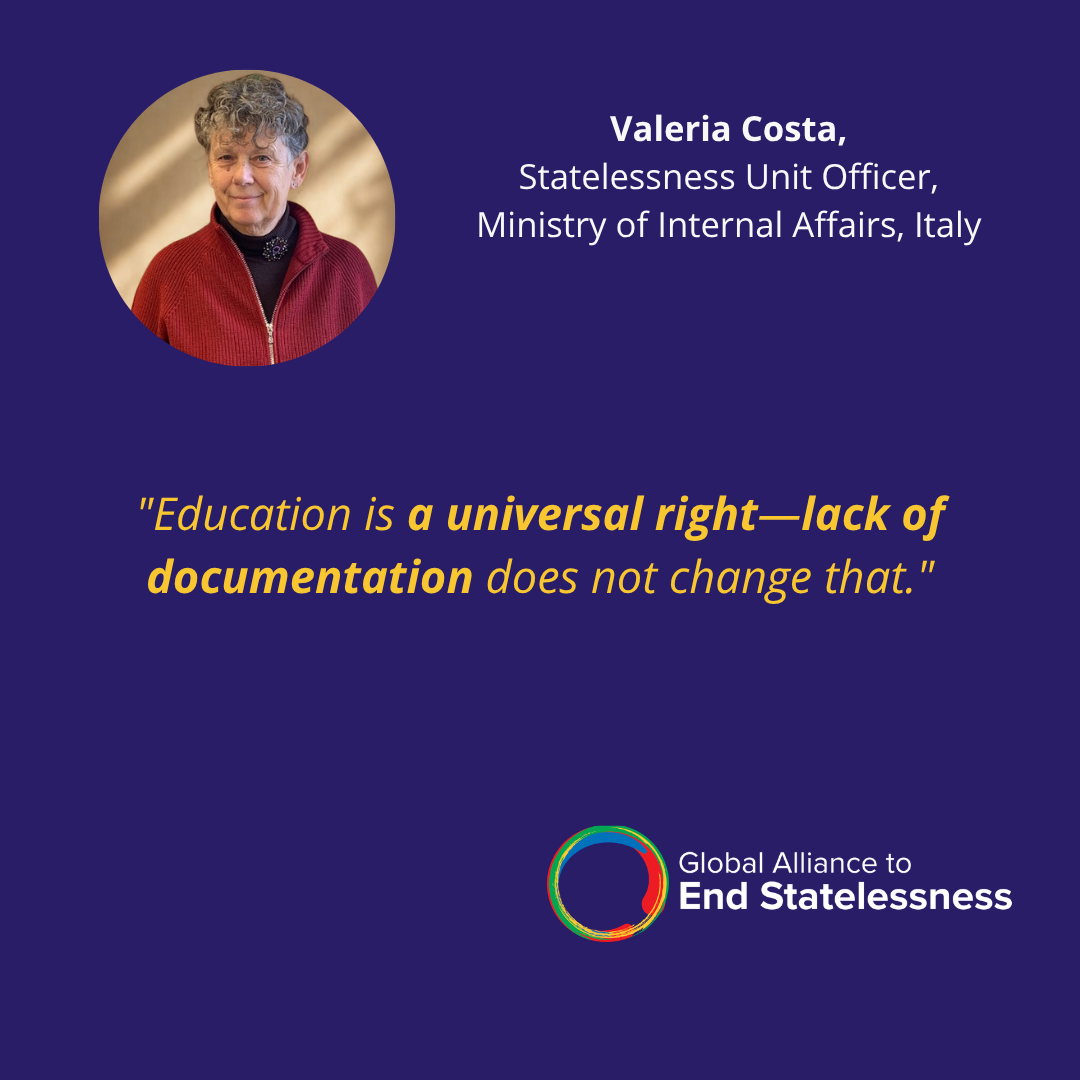
From Italy, Valeria Costa of the Ministry of Interior highlighted strong constitutional protections and robust implementation measures. Valeria explained that Italy’s constitution guarantees the right to education for all children, including stateless and undocumented minors, and that schools are required to enroll students regardless of their documentation status, based on parents’ declarations and with no obligation to report irregular residency.
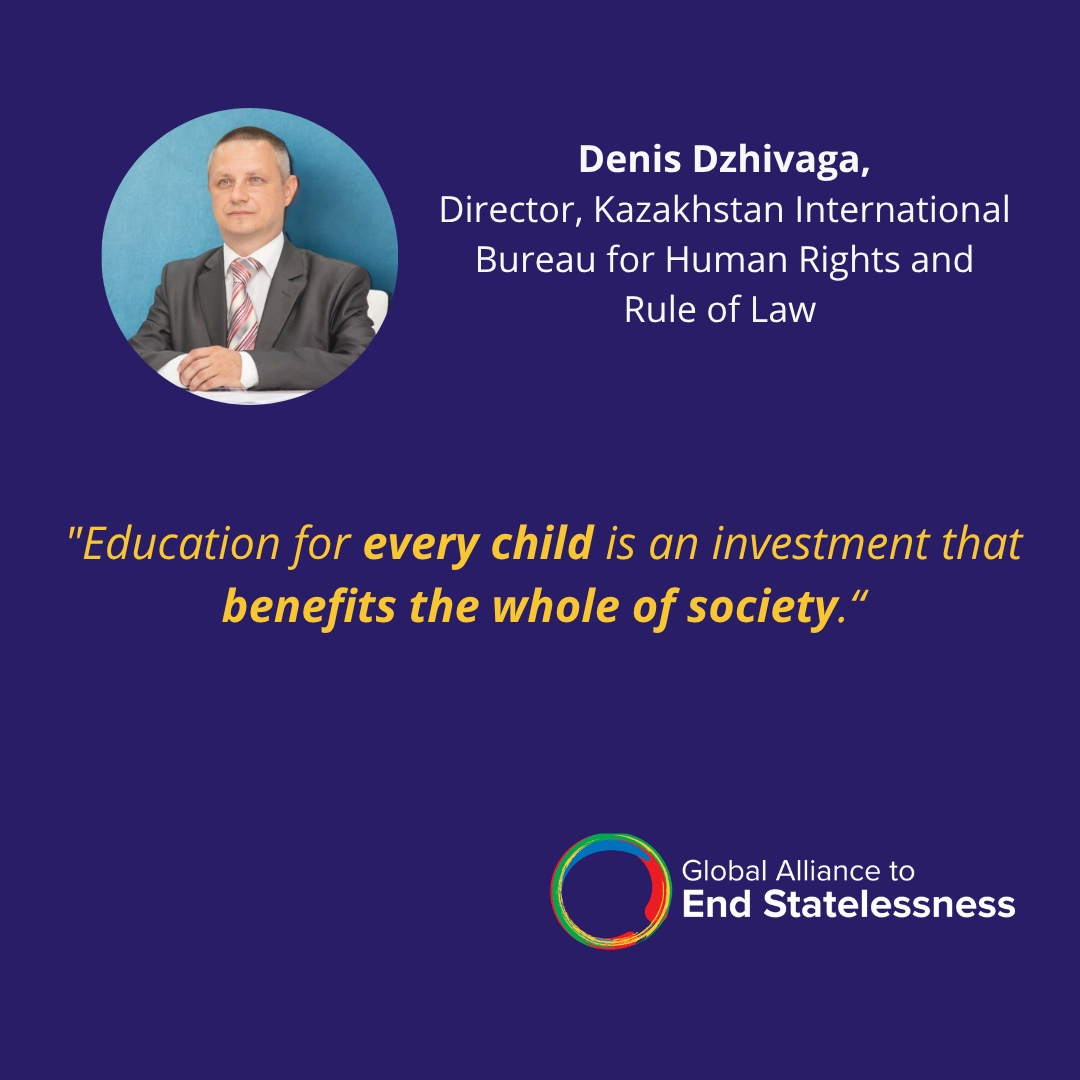
Denis Dzhivaga, Director of the Kazakhstan International Bureau for Human Rights and Rule of Law, affirmed that statelessness in Kazakhstan is not politicized, and all children—including stateless and undocumented—receive free education. He stressed the importance of cooperation between government agencies and NGOs to identify stateless children, facilitate their school enrollment, and address gaps in awareness among local officials through training and advocacy campaigns.
Practical and Multidimensional Challenges
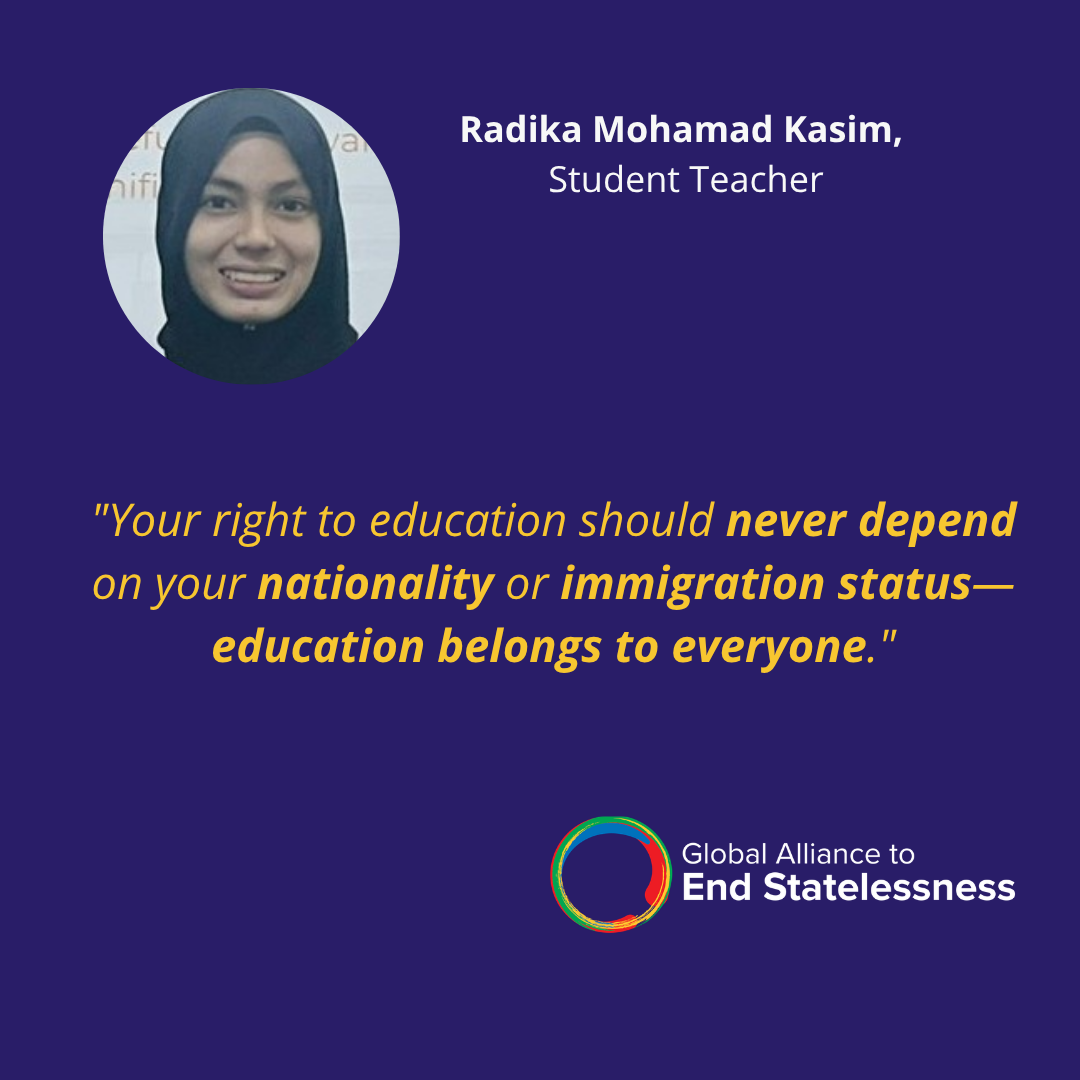
Radika Mohamad Kasim, a student teacher, delivered a powerful account of her experience as both stateless and a refugee in Malaysia. From an early age—when children should be free from such struggles—she had to fight for access to education. Living in a refugee camp, she highlighted the crucial role of community-based and refugee-led schools, even though these are limited to certain areas and often provide only primary and secondary education. Driven by determination and ambition, she continues to fight for access to higher education.
Universal Barriers and Impacts
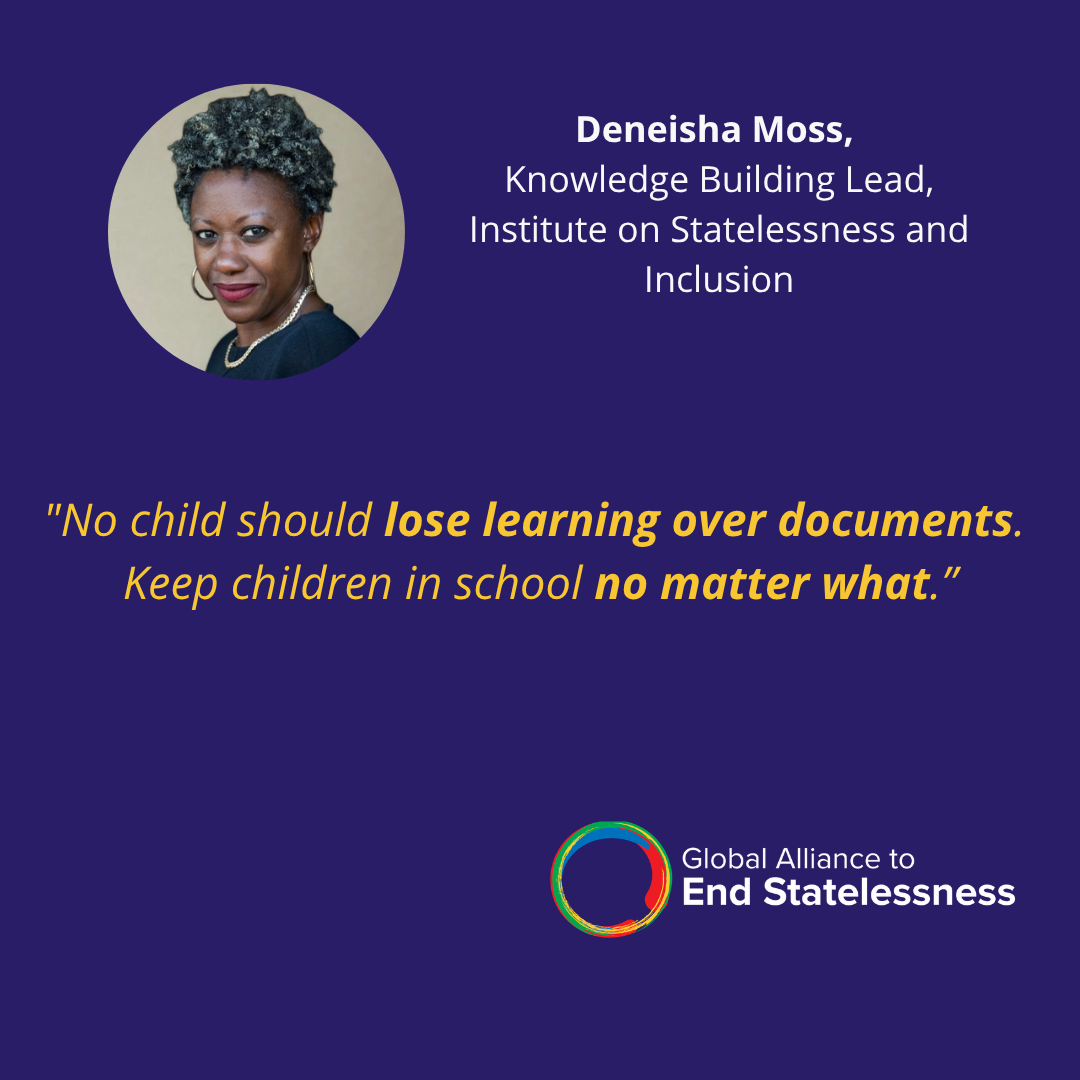
Deneisha Moss, Knowledge Building Programme Lead at the Institute on Statelessness and Inclusion (ISI), highlighted findings from a recent research report showing that barriers to education for stateless children are consistent across regions. The lack of documentation remains the primary obstacle at every stage, leading to fragmented educational journeys, high dropout rates, psychological hurdles that limit future prospects. She called on governments to adopt flexible approaches and provide alternative solutions to keep children enrolled until their documentation issues are resolved.
To learn more about the challenges and solutions for realizing the right to education for stateless persons, watch the full webinar recording here.
23 March 2026
Strengthening statelessness data: International Recommendations on Statelessness Statistics (IROSS)
Reliable data on statelessness remains a major gap. In many contexts, stateless populations remain invisible in official statistics. The International Recommendations on Statelessness Statistics (IROSS), represent an important step forward. Find out more by reading this article
Read more11 March 2026
Human Rights Council side event highlights solutions to childhood statelessness
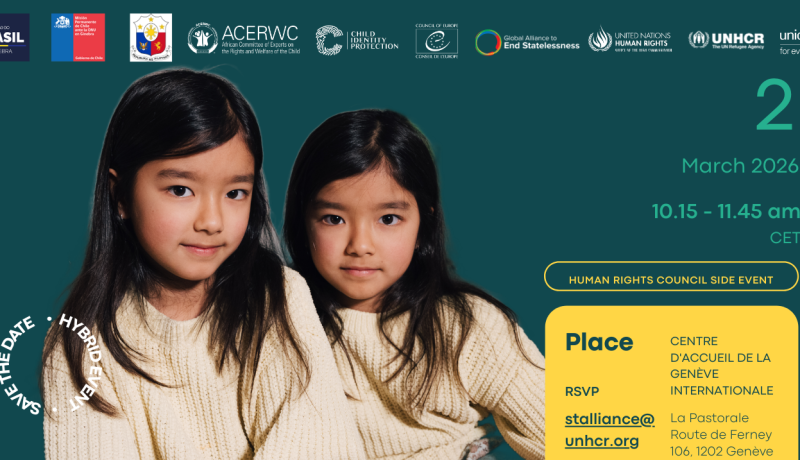
On 2 March 2026, the Global Alliance to End Statelessness and partners convened a side event during the 61st session of the UN Human Rights Council titled “Every Child’s Right to a Nationality and Identity: Preventing Childhood Statelessness.” The event brought together governments, UN agencies, regional organizations, civil society and stateless-led groups to exchange experiences and highlight practical solutions to ensure that no child is born without a nationality.
Read more11 February 2026
Support the Joint Statement: Advancing Vocational Inclusion of Stateless People Across the UN

As part of a multi-pronged advocacy approach to scale up UNHCR’s good practice of removing barriers to the employment of stateless persons, the Joint Statement, drafted by Apatride Network, seeks to encourage all UN entities to follow suit. We are calling on Global Alliance members and other organizations to endorse it and sign on.
Read more