Ensuring the Resources to End Statelessness Together
The financial resourcing of statelessness research is one of the most challenging aspects of our work. Funders have heard of many other human right issues but, due to the often-unseen nature of statelessness, it remains an outlier. As a result, it is difficult for donors who are hearing about the issue for the first time to believe that such a problem can exist in the 21st century, let alone get to the point that they are convinced that this is an area that is worthy of their funding support.
As members of the Global Alliance to End Statelessness, we are committed to collaborative, coordinated action. This means helping ensure that we have the financial and other resources needed to catalyse and accelerate positive change. We believe that statelessness is solvable through a well-resourced whole-of-society approach.
The Peter McMullin Centre on Statelessness, which I serve as Deputy Director, is the world’s only university-based centre focused on addressing statelessness through education, research and public policy engagement activities. Due to a generous grant from Peter and Ruth McMullin, the Centre was established seven years ago at the University of Melbourne Law School in response to the deficit in awareness, research and impactful policy engagement on statelessness globally.
The Centre is committed to producing robust, and cutting-edge research. It offers up-to-date teaching and training to scholars and practitioners through its intensive online course, law masters elective and stateless legal clinic. It produces independent, evidence-based analysis to support progressive law and policy reform on nationality and statelessness issues in Australia and the Asia Pacific. The Asia Pacific region hosts the largest known population of stateless people in the world.
We have worked closely within the Global Alliance Taskforce since its inception, and we are incredibly excited about the Global Alliance’s potential to bring together relevant actors to prevent and reduce statelessness more holistically and quickly than ever before.
Working with organisations – from scholars and researchers to governments, and civil society organisations, as well as stateless communities – is critical to ensure that our activities remain relevant and useful, and so that our work can benefit from the richness and nuance that is only possible by adopting an interdisciplinary approach. Sustained, flexible funding is integral to this work, and vital to the promise of finally consigning statelessness to history.
Statelessness affects every facet of a human being’s life and has untold impacts on the communities and countries where it is allowed to persist. Working collaboratively to bring together the expertise and power of advocacy from all sectors of society is absolutely necessary, not only to end statelessness, but to ensure that those who have experienced it, can live fulfilling, dignified and happy lives.
Radha Govil
Deputy Director, Peter McMullin Centre on Statelessness
4 June 2026
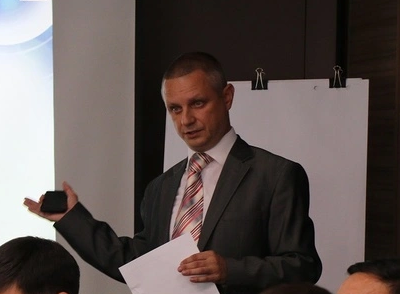
Reducing statelessness in Kazakhstan: joint efforts of the government and civil society
As part of efforts to reduce the number of stateless persons in Kazakhstan, the Kazakhstan International Bureau for Human Rights and the Rule of Law (KIBHR), in collaboration with the Ministry of Internal Affairs, conducted a joint campaign to identify and document stateless persons in late 2025. During the 2025 campaign, lawyers, together with migration service officials, identified 380 stateless persons. In the same period, 153 people were supported by KIBHR lawyers to confirm or acquire citizenship.
Read more21 April 2026
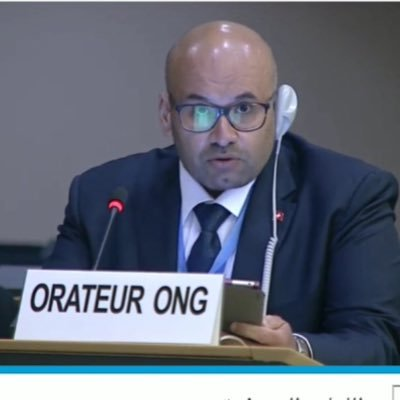
Strategic Advocacy for the Right to Nationality through the UN Human Rights Council’s Universal Periodic Review (UPR)
At the International Center for Supporting Rights and Freedoms (ICSRF), we consider the right to nationality one of the most fundamental human rights, no less important than the right to life. Based on this principle, and since joining the Global Alliance to End Statelessness, ICSRF has worked to ensure that statelessness risks are consistently taken into account within international human rights mechanisms, particularly the Universal Periodic Review (UPR).
Read more9 April 2026
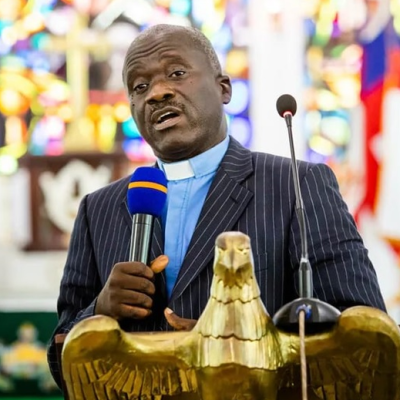
Churches Have a Responsibility to Act Against Statelessness
Churches and faith-based organizations have a moral responsibility and an important role to play in preventing and reducing statelessness. Drawing on their moral voice, community presence, and long-standing commitment to social justice, churches are well placed to support practical actions that protect vulnerable people and help ensure every person has a nationality.
In Liberia, Church Aid, Inc., together with its partners, has demonstrated this potential in practice. Through community-based initiatives to support birth registration, more than 20,000 children were able to obtain birth certificates, reducing their risk of statelessness and exclusion.
For many churches, engagement on statelessness is grounded in scripture and faith. The Bible reminds us not to oppress the foreigner, because we ourselves know what it means to be vulnerable. It calls believers to show hospitality to strangers and to stand up for those who cannot defend themselves. When people are hurting, the church has a responsibility to bring relief. A Christianity that ignores injustice and suffering does not reflect the character or mission of Christ.
Stateless persons are no exception.
Read more