The Global Alliance: Stronger Together
Addressing statelessness effectively requires a multi-stakeholder approach. We must combine different expertise, ideas, resources, and experiences to tackle the diverse issues that underpin statelessness. Working with a variety of other organizations can give the issue greater visibility and attention and, as a result, change can be realized much faster is there is sufficient commitment from all stakeholders.
I work for Haki Centre Organization (HCO), a non-governmental organization that is promoting equal and non-discriminatory access to nationality and an end to statelessness in Kenya. We support stateless communities, as well as other local communities that are facing citizenship challenges to realize their rights, access civil documentation, and undertake advocacy efforts.
Our model involves working with paralegals from affected populations to provide legal empowerment and strengthen capacity of the community to participate in seeking solutions. HCO has a decade of experience on statelessness, working closely with the government and UNHCR to resolve statelessness and to protect the rights of stateless persons. We have worked with the formerly stateless Makonde and Pemba groups and are currently supporting people of Rwandese and Burundian origin to access their right to a nationality.
One of the challenging aspects of our work is convincing people who have been stateless for a protracted period that change is possible but only if they are part of it – because we must walk the journey together. The shift from a non-believer to an active ambassador takes time, effort and trust by the community.
But the more challenging aspect is keeping the community engaged and motivated when a solution is not coming fast enough. It is painful to see people abandon the fight, resign to fate and resort to coping mechanisms. This is why the multi-stakeholder approach is so important – it will take all of us working together to resolve this critical issue once and for all.
As the #IBelong campaign comes to an end, HCO believes that the Global Alliance provides an excellent opportunity for its members to learn from and be motivated by the gains, lessons, challenges, and opportunities of the last 10 years. More importantly, it gives us a new collaborative approach to work together with renewed enthusiasm and commitment to accelerate prevention and eradication of statelessness.
HCO is excited at the prospect of working together with diverse stakeholders leveraging the immense experience (lived and learned) – as well as the resources, expertise, tools, networks, and workstreams that the Global Alliance will offer – to super-charge effective solutions. We have an opportunity to mobilise and strengthen national level work, bolster cross-regional learning and share best practices through the Global Alliance’s Regional Network Labs.
We believe that the Global Alliance will strengthen collaboration with the Government of Kenya in terms of pledge implementation toward the eradication of statelessness and lend HCO global visibility and an opportunity to network and access new funding streams. As HCO, we will bring to our knowledge and learned experience of statelessness, while also lending our grassroots presence to ensure strong connection with affected people and the local context.
The Global Alliance centers stateless-led organizations and persons with lived experience of statelessness, which is commendable because it ensures accountability to and meaningful participation by those affected by statelessness. Acknowledging their lived experience and expertise in seeking durable solutions to the problem. Further, we think the Solution Seeker program is a game-changer, as it ensures that states commit to taking concrete measures to address statelessness within their territories and beyond.
We need to come together in this new Global Alliance to end statelessness. Together, we are stronger than the sum of our parts and our collective action is critical in accelerating effective solutions to wipe out statelessness.
31 August 2026
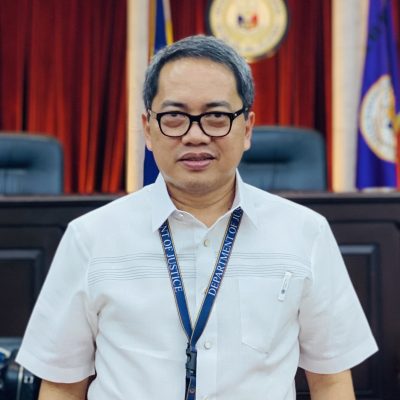
Foundlings at risk of statelessness in the Philippines: Progress and challenges
Legal change in recent years has significantly improved the rights of deserted or abandoned children in the Philippines to be granted citizenship, but there remain problems with implementation on the ground.
Read more29 July 2026

From Policy to People: Closing the Gap on Statelessness in Thailand
Thailand’s journey toward addressing statelessness has been shaped by decades of policy reform, community advocacy, and growing national recognition that legal identity is fundamental to human dignity, inclusion, and development. Over the years, Thailand has taken important steps to reduce statelessness and resolve long-standing issues of undocumented status, particularly among ethnic minorities, border communities, long-term migrants, and people whose births or family records were never properly registered.
A major milestone came with the 29 October 2024 Cabinet Resolution, which was designed to create clearer and faster pathways to nationality or secure legal status for more than 480,000 people. The resolution marked a historic turning point by shortening processing timelines significantly.
Read more4 June 2026
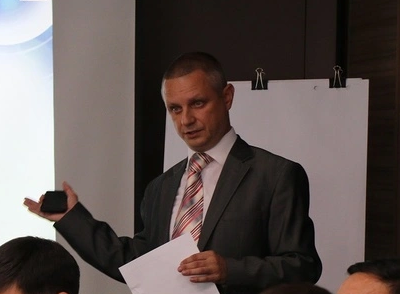
Reducing statelessness in Kazakhstan: joint efforts of the government and civil society
As part of efforts to reduce the number of stateless persons in Kazakhstan, the Kazakhstan International Bureau for Human Rights and the Rule of Law (KIBHR), in collaboration with the Ministry of Internal Affairs, conducted a joint campaign to identify and document stateless persons in late 2025. During the 2025 campaign, lawyers, together with migration service officials, identified 380 stateless persons. In the same period, 153 people were supported by KIBHR lawyers to confirm or acquire citizenship.
Read more