Why the Global Alliance and why is it important?
The Global Alliance is both a space and a communicative energy to bring forward our commitment for no statelessness anywhere in the world. The global landscape and statelessness are fundamentally needed now because it creates a platform, an initiative and an energy that works to finally end statelessness worldwide.
The community of the Global Alliance will be a workspace that is inspiring, that shines a light on how together we can work on a common human rights problem. And how a diversity of views from the people most affected, stateless people themselves, to experts, civil society organizations, to UN agencies, to governments can come together, discuss, think, examine good practice, and ultimately take the steps necessary to end statelessness.
From all those myriads of problems, this issue, statelessness, is a fundamentally fixable one. And so, we are confident that if we pull together and do the work and mobilize the resources, we can arrive at the year 2030 with every single person on earth carrying a nationality and participating fully in their own societies.
Claude Cahn
Human Rights Officer, UN Human Rights Office (OHCHR)
4 June 2026
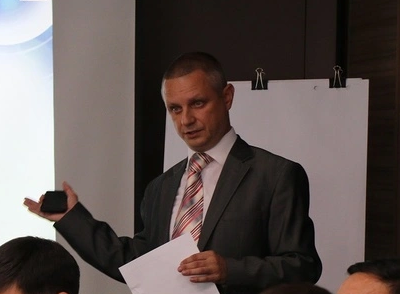
Reducing statelessness in Kazakhstan: joint efforts of the government and civil society
As part of efforts to reduce the number of stateless persons in Kazakhstan, the Kazakhstan International Bureau for Human Rights and the Rule of Law (KIBHR), in collaboration with the Ministry of Internal Affairs, conducted a joint campaign to identify and document stateless persons in late 2025. During the 2025 campaign, lawyers, together with migration service officials, identified 380 stateless persons. In the same period, 153 people were supported by KIBHR lawyers to confirm or acquire citizenship.
Read more21 April 2026
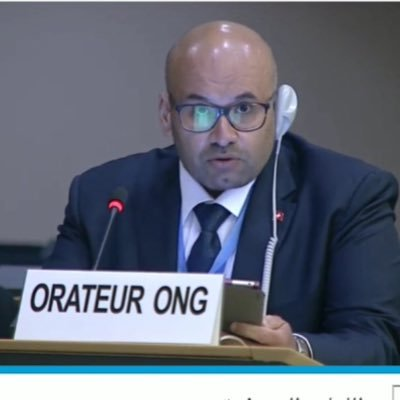
Strategic Advocacy for the Right to Nationality through the UN Human Rights Council’s Universal Periodic Review (UPR)
At the International Center for Supporting Rights and Freedoms (ICSRF), we consider the right to nationality one of the most fundamental human rights, no less important than the right to life. Based on this principle, and since joining the Global Alliance to End Statelessness, ICSRF has worked to ensure that statelessness risks are consistently taken into account within international human rights mechanisms, particularly the Universal Periodic Review (UPR).
Read more9 April 2026
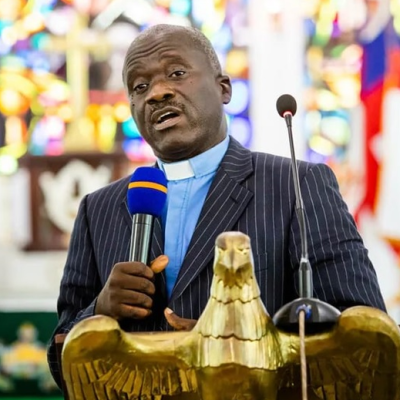
Churches Have a Responsibility to Act Against Statelessness
Churches and faith-based organizations have a moral responsibility and an important role to play in preventing and reducing statelessness. Drawing on their moral voice, community presence, and long-standing commitment to social justice, churches are well placed to support practical actions that protect vulnerable people and help ensure every person has a nationality.
In Liberia, Church Aid, Inc., together with its partners, has demonstrated this potential in practice. Through community-based initiatives to support birth registration, more than 20,000 children were able to obtain birth certificates, reducing their risk of statelessness and exclusion.
For many churches, engagement on statelessness is grounded in scripture and faith. The Bible reminds us not to oppress the foreigner, because we ourselves know what it means to be vulnerable. It calls believers to show hospitality to strangers and to stand up for those who cannot defend themselves. When people are hurting, the church has a responsibility to bring relief. A Christianity that ignores injustice and suffering does not reflect the character or mission of Christ.
Stateless persons are no exception.
Read more