Thinking of a Gift for Mother’s Day? Support Equal Nationality Rights for Mothers
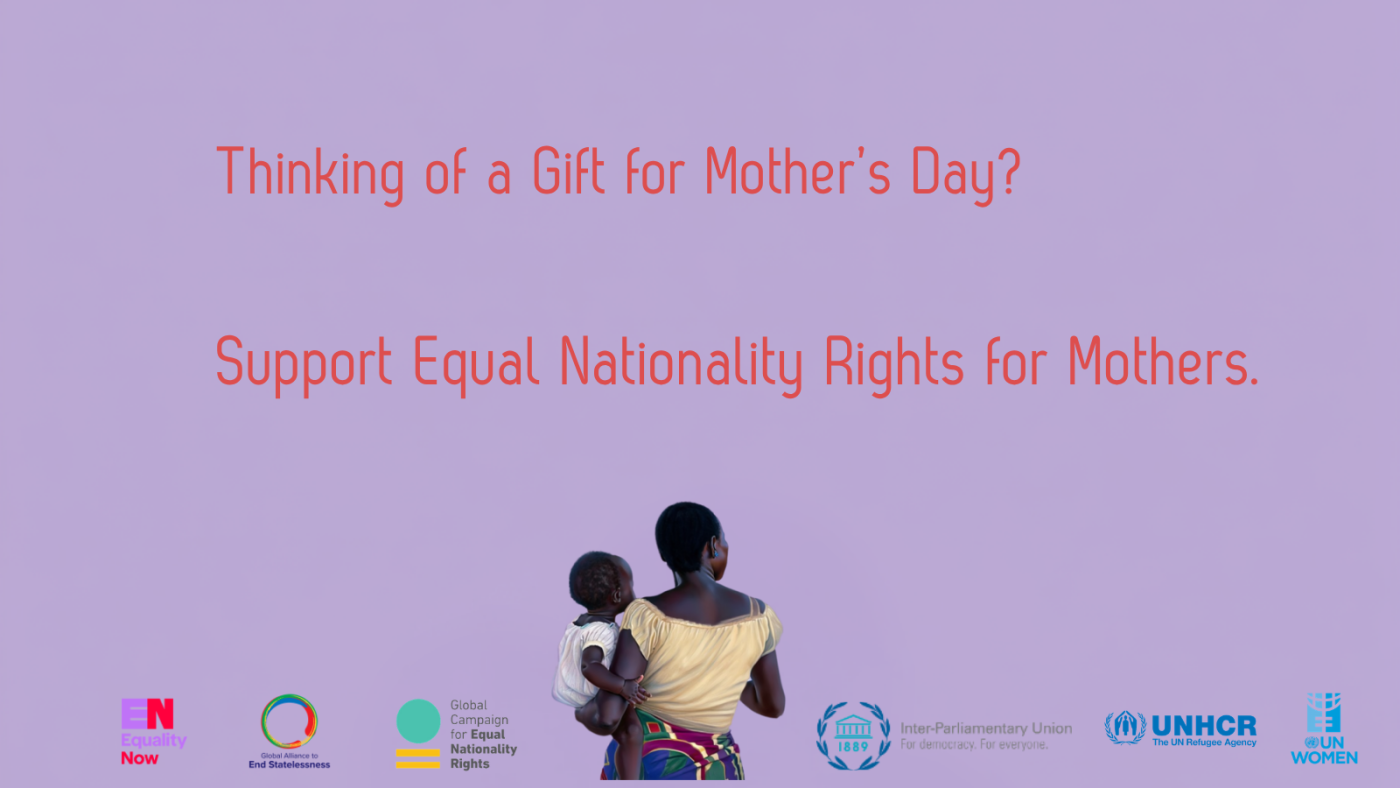
This Mother’s Day, countries across Africa will celebrate mothers and the importance of family life. Yet as we honor motherhood and the important role of families, seven countries in Africa continue to be among the 24 globally with nationality laws that deny women the right to confer nationality on their children on an equal basis with men. Additionally, nationality laws in approximately 40% of African countries do not provide women with the same rights as men to confer nationality on a noncitizen spouse.
Gender-discriminatory nationality laws undermine African women’s equal citizenship, cause other wide-ranging rights violations and hardships, are a leading cause of statelessness, contribute to gender-based violence, including child marriage and human trafficking, and inhibit sustainable development. Children denied their mother’s nationality face obstacles in accessing education, healthcare, social services, employment as adults, property rights and even family unity. Some are rendered stateless, not counted as a citizen of any country.
The Global Campaign for Equal Nationality Rights (GCENR), a coalition of national and international organizations dedicated to ending gender discrimination in nationality laws, recently joined with longstanding partners Equality Now, the Global Alliance to End Statelessness, the Inter-Parliamentary Union, the UN Refugee Agency, and UN Women to hold the Africa Multistakeholder Convening on Achieving Gender Equality in Nationality Laws to expedite action to realize gender equality in nationality laws across the continent.
Equality in nationality rights is not only a legal obligation – it is fundamental to human dignity and to the protection of families. When women are denied the equal right to confer nationality, the consequences are profound: children risk statelessness, families face separation and hardship.
“Discriminatory nationality laws perpetuate exclusion across generations. But we at UNHCR know that change is within reach. By working together with States, civil society, and international partners, we can end this injustice, uphold every child’s right to a nationality, and build more inclusive, resilient societies for all.” – Ruvendrini Menikdiwela, Assistant High Commissioner for Refugees, UNHCR
“My children, born of my body, raised with my love, rocked by my stories of our native land, were considered as foreigners at home. Our household was divided in two: the citizen mother; and the stateless children. It was not only an administrative problem. It was an intimate wound….I felt less of a citizen than my father, than my brothers. The law sent me back the image of a second-class woman, incapable of protecting her own offspring….
When the President promulgated the reform something magical happened in me. It was not just a new rule in a code. It was a recognition….For the first time, the State looked me in the eyes and said to me: ‘You are a citizen fully. Your place in the nation is as legitimate as that of a man. Your link with your child is as sacred and recognized as that of the father.’”
– Clarisse Nirinasoa, Impacted Madagascan Mother
Momentum for All Nationality Laws to Uphold Women’s Equal Citizenship
We have seen the willingness of African governments, parliamentarians, and civil society to address this man-made problem that is holding countries back. The Protocol to the African Charter on Human and Peoples’ Rights on the Specific Aspects of the Right to a Nationality and the Eradication of Statelessness in Africa provides a clear legal and political framework for reform and firmly grounds the imperative to end gender discrimination in nationality laws in Africa’s own human rights system.
Anna Mutavati, Regional Director for East and Southern Africa, UN Women, explains, “Gender discrimination in nationality laws is first and foremost a gender equality issue. We therefore call on all Member States to embody the principle of gender equality in line with CEDAW, and the new African Union Protocol on the Right to a Nationality and the Eradication of Statelessness, across all aspects of their legal systems, including by reforming discriminatory laws.”
At the Africa Multistakeholder Convening on Achieving Gender Equality in Nationality Laws, held in Nairobi in February, participants including government, parliamentary and civil society representatives from Burundi, Eswatini, Mauritania, Somalia and Togo affirmed their strong commitment to mobilize support for reforms to uphold women’s right to confer nationality on an equal basis with men. The convening resulted in the development of clear road maps for multistakeholder action to achieve reforms needed for gender-equal nationality laws.
“Gender-equal nationality laws are not only the right thing to do – to uphold women and men’s equal citizenship – but they are the smart thing to do, to support inclusive, sustainable development and secure, peaceful societies. Several African countries with gender-discriminatory nationality laws have already demonstrated their commitment to uphold equal nationality rights, including through constitutional provisions upholding equality. Now reforms are needed in those countries to bring nationality laws into alignment to clarify this commitment to gender equality.”
– Catherine Harrington, Global Campaign for Equal Nationality Rights Director
Parliaments Called to Action to End Gender Discrimination in Nationality Laws
On Mother’s Day and the International Day of the Family, we urge African governments and parliaments to act now by amending discriminatory nationality laws and ratifying and domesticating the African Union Protocol on the Right to a Nationality.
“We must no longer let gender discriminatory nationality laws condemn women and men, girls and boys from our continent to statelessness and exclusion. Parliaments have the tools and opportunity to make a change. They can foster strong political will. As decision-makers, parliamentarians can push for legislative reforms on nationality laws, even amidst complex and sensitive settings. Parliaments can be the voice of the voiceless. They are well-positioned to listen and address misconceptions, alleviate misunderstandings and lead by example. Addressing gender inequality requires a societal change and parliamentarians can be the champions of such a change.” – Martin Chungong, IPU Secretary General
Women’s Equal Nationality Rights Will Protect Families and Prevent Statelessness
African mothers and their children cannot wait: equal nationality rights must be guaranteed in law and in practice to protect families, uphold women’s equal citizenship, and prevent statelessness. We pledge our support to realizing gender-equal nationality rights across Africa and beyond.
“Discriminatory laws are not only founded on stereotypes; they also reinforce stereotypical roles for both women and men. When gender-equal nationality laws are guaranteed, they create ripple effects that transform societies. Our rallying call is for Member States of the African Union to repeal and/or amend sexist nationality laws to ensure that women are able to pass on their nationality and all its benefits to their children and spouses on the same basis with men. We also urge them to sign and ratify the Protocol to the African Charter on Human and Peoples’ Rights on Specific Aspects of the Right to a Nationality and the Eradication of Statelessness in Africa to fulfil their obligations on equal nationality rights.”- Esther Waweru, Associate Director, Legal Equality, Equality Now
End
Notes to editors:
For media requests, please contact Catherine Harrington, Global Campaign for Equal Nationality Rights Director ([email protected]) and Michelle Tuva, Regional Communications Officer ([email protected])
Read the full joint statement below

Joint Statement by Equality Now, Global Alliance to End Statelessness, Global Campaign for Equal Nationality Rights, Inter-Parliamentary Union, UNHCR and UN WOMEN
Thinking of a Gift for Mother’s Day?
Support Equal Nationality Rights for Mothers for the Wellbeing of African Families
22 October 2026
Standing To End Statelessness: A Conversation with ICDH in Haiti on the Frontlines of Human Rights
As the Global Alliance to End Statelessness marks its second anniversary and reaches a powerful network of 200 members strong, we are reminded that tangible progress on addressing and preventing statelessness is possible through our collective action, in particular supporting the most vulnerable and at risk of being left behind. To explore our shared vision and what it truly means to fight for the “right to have rights,” we sat down in a short conversation with Mr. Urbens Wilbert DIEUVEUIL, Director of Initiative Citoyenne pour les Droits de l’Homme, ICDH that proudly stepped forward as the 200th member of the Global Alliance.
Read more21 October 2026
African Human Rights Day: Call for Action on the Right to a Nationality and the Eradication of Statelessness in Africa
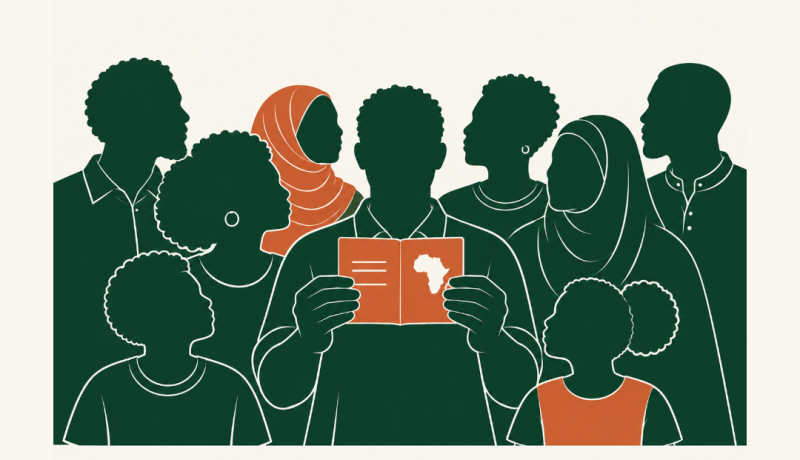
On African Human Rights Day, as we mark 40 years since the entry into force of the African Charter on Human and Peoples’ Rights, we are calling for renewed action to protect the right to a nationality and end statelessness across Africa.
A joint statement led by the Pan African Nationality Network (PANN), the South African Nationality Network (SANN), the Global Alliance to End Statelessness, Lawyers for Human Rights and other partner organizations highlights that nationality is fundamental to human dignity, equality, belonging and full participation in society.
10 September 2026
65th Anniversary of the 1961 Convention Global Event Highlights and Key Action to End Statelessness
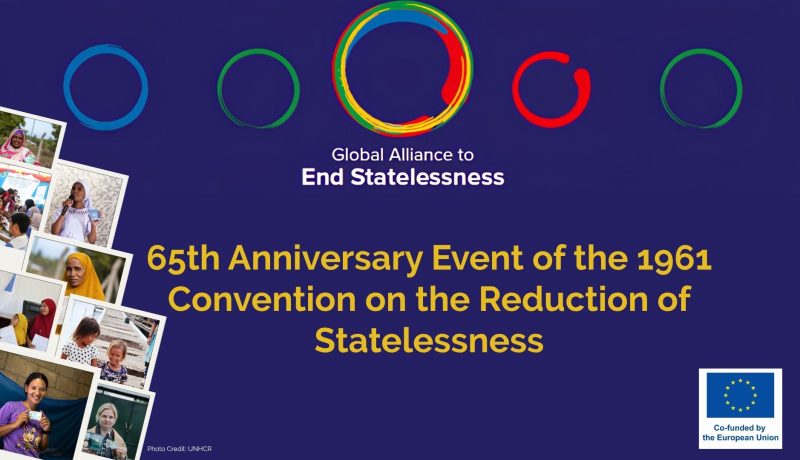
On 2 September 2026, the Global Alliance to End Statelessness convened a high-level online event to mark the 65th anniversary of the 1961 Convention on the Reduction of Statelessness under the theme of Preventing and Resolving Statelessness in Practice.The event brought together governments, UN agencies, regional organizations, civil society, and stateless-led groups to exchange experiences and highlight practical solutions to ensure that no child is born without a nationality.
Read more