Welcome to the Global Alliance to End Statelessness
Statelessness affects millions worldwide, often stemming from deep-rooted discrimination. Yet, unlike many of humanity’s challenges, statelessness is solvable. The solutions are within our reach and benefit everyone.
As we approach the end of the #IBelong campaign, we stand at a pivotal moment in our collective efforts towards a world free from statelessness. Anticipating the launch of the Global Alliance to End Statelessness at the High-Level Event on statelessness during the UNHCR’s Executive Committee meeting in October 2024, our vision is ambitious yet achievable: a world where everyone has the right to a nationality without discrimination.
In my previous capacity as a UNHCR Regional Statelessness Officer for Central Asia, I was personally inspired by, and had the honour to contribute to Kyrgyzstan’s and other Central Asian states’ remarkable achievements in addressing statelessness. Kyrgyzstan’s historic resolution of all known stateless cases in 2019 and the significant statelessness reduction across Central Asia stand as testaments to the effectiveness of the multi-stakeholder approach and the power of collaborative action.
The Global Alliance embodies this ‘whole of society’ approach, recognizing that the involvement of diverse actors, including the stateless-led organizations and communities, is crucial. In the lead-up to our launch, we are focused on mobilizing all actors, including Member States, regional intergovernmental organization, civil society and stateless-led organizations, academic institutions, faith-based groups, and UN entities, to join the Global Alliance and collaboratively work to expedite permanent solutions and ensure the right of every individual to a nationality, free from discrimination.
The Solution Seeker Programme, a cornerstone activity of the Global Alliance, will be introduced at the Global Refugee Forum Parallel High-level event on statelessness on 15 December 2023, and we extend a warm welcome to all stakeholders committed to relegating statelessness to history and call on them to sign-up as members of the new Global Alliance to End Statelessness.
4 June 2026

Reducing statelessness in Kazakhstan: joint efforts of the government and civil society
As part of efforts to reduce the number of stateless persons in Kazakhstan, the Kazakhstan International Bureau for Human Rights and the Rule of Law (KIBHR), in collaboration with the Ministry of Internal Affairs, conducted a joint campaign to identify and document stateless persons in late 2025. During the 2025 campaign, lawyers, together with migration service officials, identified 380 stateless persons. In the same period, 153 people were supported by KIBHR lawyers to confirm or acquire citizenship.
Read more21 April 2026
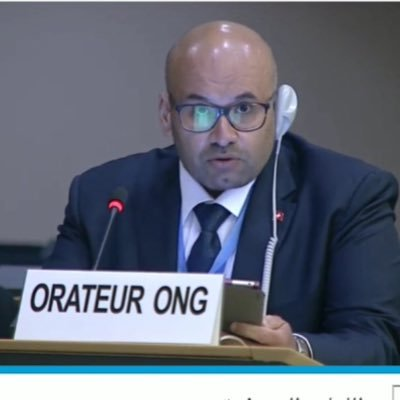
Strategic Advocacy for the Right to Nationality through the UN Human Rights Council’s Universal Periodic Review (UPR)
At the International Center for Supporting Rights and Freedoms (ICSRF), we consider the right to nationality one of the most fundamental human rights, no less important than the right to life. Based on this principle, and since joining the Global Alliance to End Statelessness, ICSRF has worked to ensure that statelessness risks are consistently taken into account within international human rights mechanisms, particularly the Universal Periodic Review (UPR).
Read more9 April 2026
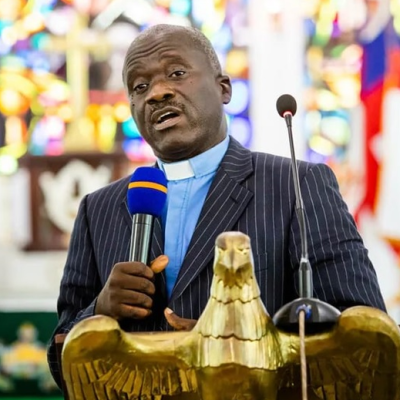
Churches Have a Responsibility to Act Against Statelessness
Churches and faith-based organizations have a moral responsibility and an important role to play in preventing and reducing statelessness. Drawing on their moral voice, community presence, and long-standing commitment to social justice, churches are well placed to support practical actions that protect vulnerable people and help ensure every person has a nationality.
In Liberia, Church Aid, Inc., together with its partners, has demonstrated this potential in practice. Through community-based initiatives to support birth registration, more than 20,000 children were able to obtain birth certificates, reducing their risk of statelessness and exclusion.
For many churches, engagement on statelessness is grounded in scripture and faith. The Bible reminds us not to oppress the foreigner, because we ourselves know what it means to be vulnerable. It calls believers to show hospitality to strangers and to stand up for those who cannot defend themselves. When people are hurting, the church has a responsibility to bring relief. A Christianity that ignores injustice and suffering does not reflect the character or mission of Christ.
Stateless persons are no exception.
Read more