Why the Global Alliance and why together?
*This piece is an extract from a filmed interview conducted in December 2023.
Ten years ago, statelessness was almost invisible, despite the scale of the problem and the devastating impact. Millions of people worldwide were (and still are) living without a nationality. Thanks to UNHCR’s #IBelong Campaign and the efforts of civil society, statelessness is now firmly on the agenda. But we need to launch the Global Alliance now to catch and continue that momentum. I think that is critically important.
At its heart, the Global Alliance is about convening, catalyzing, and capacitating. That is exactly what we at the European Network on Statelessness (ENS) do as a civil society network working to address statelessness in Europe. We bring together our member organizations and stateless activists in 40 European countries as a catalyst for change and we help build their capacity to take action.
As a member of the Global Alliance Taskforce, it has been an honour to help set up the foundational elements of the Global Alliance, its mission statement, terms of reference and modalities of working. I am now really excited to continue to be part of the Global Alliance and to translate these ideas into action.
Firstly, I think the Global Alliance is a critical opportunity to put stateless people at the centre and ensure that they can claim power as leaders of change. Secondly, I am really excited by the opportunity to share our learning and expertise with sister networks and partners in other regions, as well as to learn from them. For example, through regional network labs. And thirdly, I think the Global Alliance is a critical opportunity to attract donors to this cause. Without adequate resourcing we won’t be able to translate our ambitious ideas into action.
At ENS, we often say that we are only as strong as our members and the same is true for the Global Alliance. Only by pulling together all relevant stakeholders in a committed and collaborative spirit, will it be possible to achieve the ambitious goal of ending statelessness. Only by adopting a truly multi-stakeholder approach can the Global Alliance put in all the know-how, experience and resourcing necessary to achieve its objectives.
Ultimately, statelessness is a human-made problem, which means that we as people and in our professional capacities have the power to change it. In that respect, it is different from some other existential challenges facing humanity. And I don’t mean that in a naive way, or to underestimate the challenge involved, but I think working on statelessness as an issue does offer hope. Because change is achievable, and it is in sight. Working together in a collaborative way and with sufficient buy-in from the UN, governments, and donors, I really believe that the Global Alliance can make a significant contribution towards ending statelessness.
29 July 2026

From Policy to People: Closing the Gap on Statelessness in Thailand
Thailand’s journey toward addressing statelessness has been shaped by decades of policy reform, community advocacy, and growing national recognition that legal identity is fundamental to human dignity, inclusion, and development. Over the years, Thailand has taken important steps to reduce statelessness and resolve long-standing issues of undocumented status, particularly among ethnic minorities, border communities, long-term migrants, and people whose births or family records were never properly registered.
A major milestone came with the 29 October 2024 Cabinet Resolution, which was designed to create clearer and faster pathways to nationality or secure legal status for more than 480,000 people. The resolution marked a historic turning point by shortening processing timelines significantly.
Read more4 June 2026
Reducing statelessness in Kazakhstan: joint efforts of the government and civil society
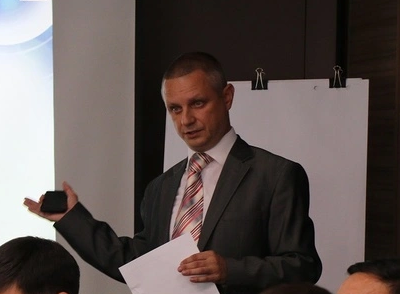
As part of efforts to reduce the number of stateless persons in Kazakhstan, the Kazakhstan International Bureau for Human Rights and the Rule of Law (KIBHR), in collaboration with the Ministry of Internal Affairs, conducted a joint campaign to identify and document stateless persons in late 2025. During the 2025 campaign, lawyers, together with migration service officials, identified 380 stateless persons. In the same period, 153 people were supported by KIBHR lawyers to confirm or acquire citizenship.
Read more21 April 2026
Strategic Advocacy for the Right to Nationality through the UN Human Rights Council’s Universal Periodic Review (UPR)
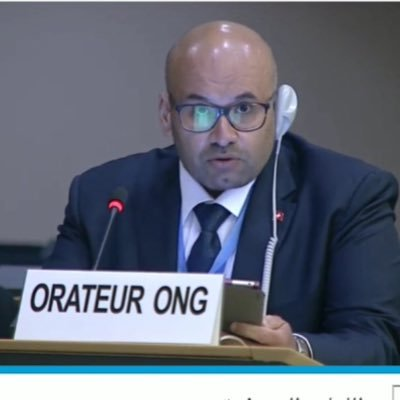
At the International Center for Supporting Rights and Freedoms (ICSRF), we consider the right to nationality one of the most fundamental human rights, no less important than the right to life. Based on this principle, and since joining the Global Alliance to End Statelessness, ICSRF has worked to ensure that statelessness risks are consistently taken into account within international human rights mechanisms, particularly the Universal Periodic Review (UPR).
Read more